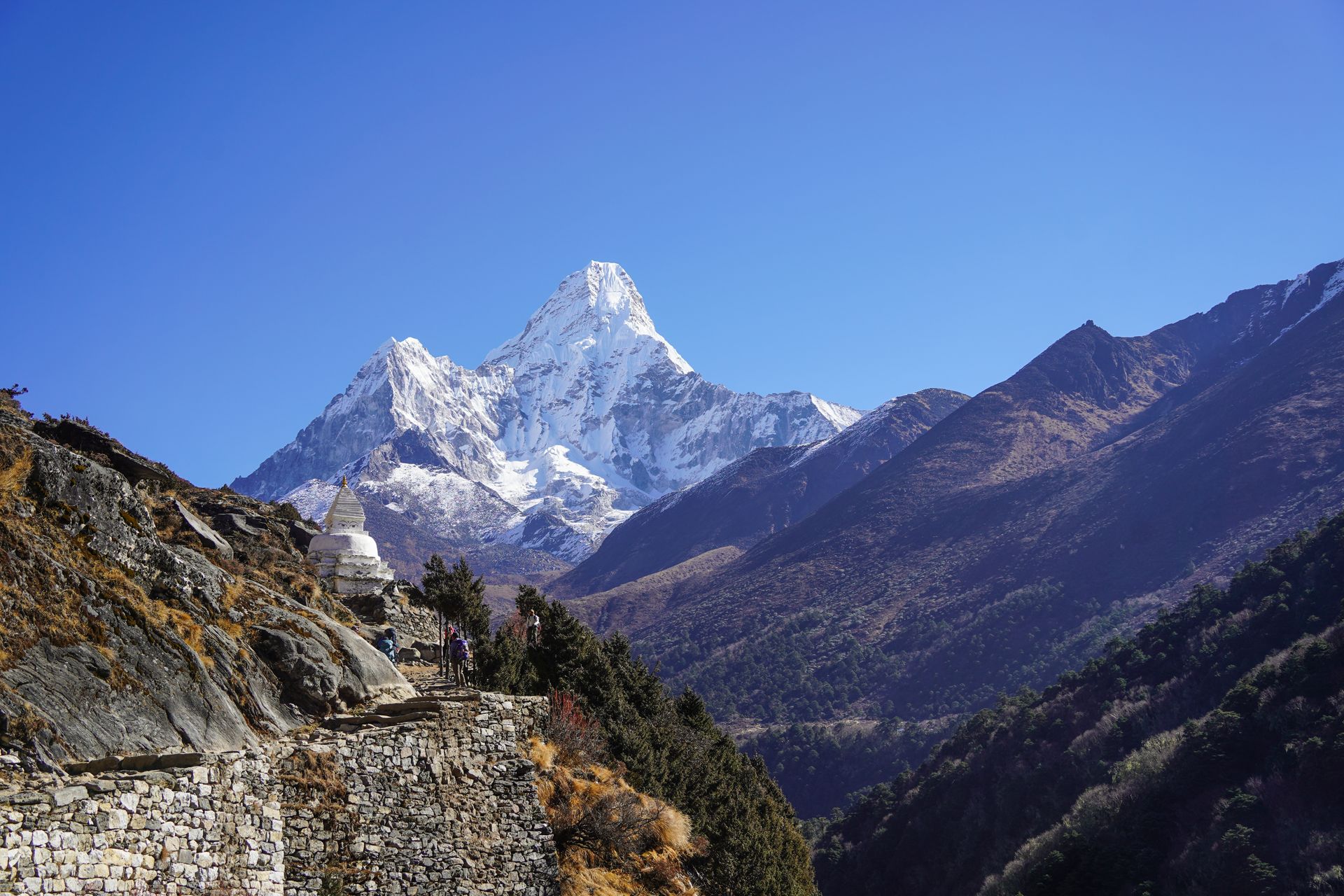
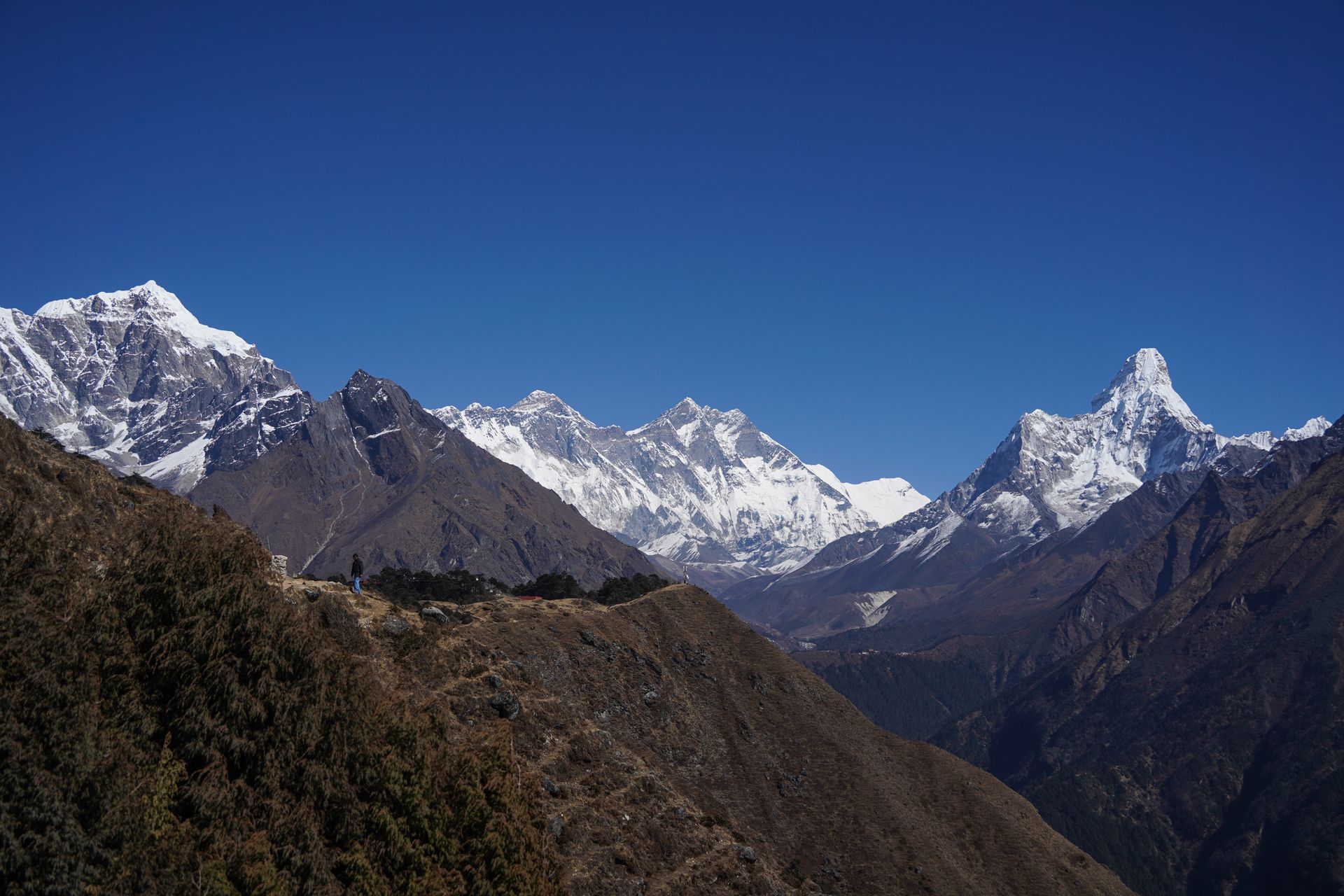
Whether you’re planning to hike the Everest Base Camp Trek, or you’re just considering it, you’re in the right place! This bucket list trek allows you to walk among some of the highest mountains in the world.
The Everest Base Camp hike includes endless views of mountain peaks, raging rivers, glaciers, and more. Plus, you’ll get to learn about the Sherpa culture along the way. You’ll hike through several towns, and will have an opportunity to visit a Monastery, try local dishes, and meet people along the way.
A trek like this can be life changing. It may be challenging, but it’s an incredible way to get out of your comfort zone, push yourself and immerse yourself in a place.
Keep reading for helpful tips for the Everest Base Camp trek. I’m sharing some things I wish I knew beforehand, and several aspects of the trip that you’ll need to be prepared for. This is based on my experience doing the Everest Base Camp Trek in November 2025.
25 Tips and Things To Know Before the Everest Base Camp Trek
1. How long is the hike to Everest Base Camp?
Your route to Everest Base Camp can vary and some operators may recommend additional days, or have optional add ons. However, I think that what I did was pretty typical. I spent 11 days hiking, and two of those days were considered acclimatization days (which means you stay an extra night somewhere and do a day hike). Of those 11 days, 8 days were spent hiking up towards base camp, and 3 days were spent hiking back down.
As far as mileage and elevation gain, these are the numbers that I tracked. I hiked 76.6 miles total (an average of 6.9 miles per day) and gained a total of over 21,000 feet of elevation (an average of 1,917 feet of elevation gain per day).
The highest point of the trek is 18,192 feet. Read more about the altitude below.
2. Come prepared for the altitude (as much as you can).
The elevation of the Everest Base Camp trek is easily the most challenging part. If you’re not used to hiking at high altitudes (or even if you are somewhat used to it), you’re likely to feel the effects of the high elevation. Mild versions of altitude sickness include headaches, nausea, loss of appetite, difficulty sleeping, and more. Severe altitude sickness, which can include slurred speech and an inability to walk in a straight line, can lead to death. Seek help immediately if your symptoms are severe.
Altitude sickness can happen to anyone, but there are a few ways you can help prevent it. First, spend time training at higher altitudes if possible. You should also drink a lot of water, ascend gradually and avoid too much alcohol.
You also may want to get a prescription for Diamox, a medication to help with altitude sickness. I took it on both the Everest Base Camp trek and the hike to Mt Kilimanjaro, and I’ve found it to be helpful. In the US, you’ll need a doctor to prescribe it for you. Your doctor can also talk to you about common side effects and dosage.
3. Learn about the Sherpa people and culture before you go.
The Sherpa people refers to an ethnic group in the mountainous regions of Nepal, India and Tibet. It’s estimated that they’ve been in the region for 500 - 800 years, and many Sherpa people work as mountaineering and climbing guides in the Himalayas.
The Sherpa people were instrumental in the first climbs of Everest and other Himalayan peaks. One of the most notable Sherpa mountaineers was Tenzing Norgay. Norgay, along with Edmund Hillary from New Zealand, were the first people confirmed to reach the summit of Mount Everest in 1953.
The Sherpa people consider many of the Himalayan mountains to be sacred. In fact, the Tibetan name for Mount Everest is Chomolungma, which means “Goddess Mother of the World.” Some of the other peaks in the region are not allowed to be climbed because they are considered sacred.
Sherpa is not only the name of the ethnic group, but it’s also the surname of most of the people in the region. You’ll notice a lot of similar names as you meet people in the region.
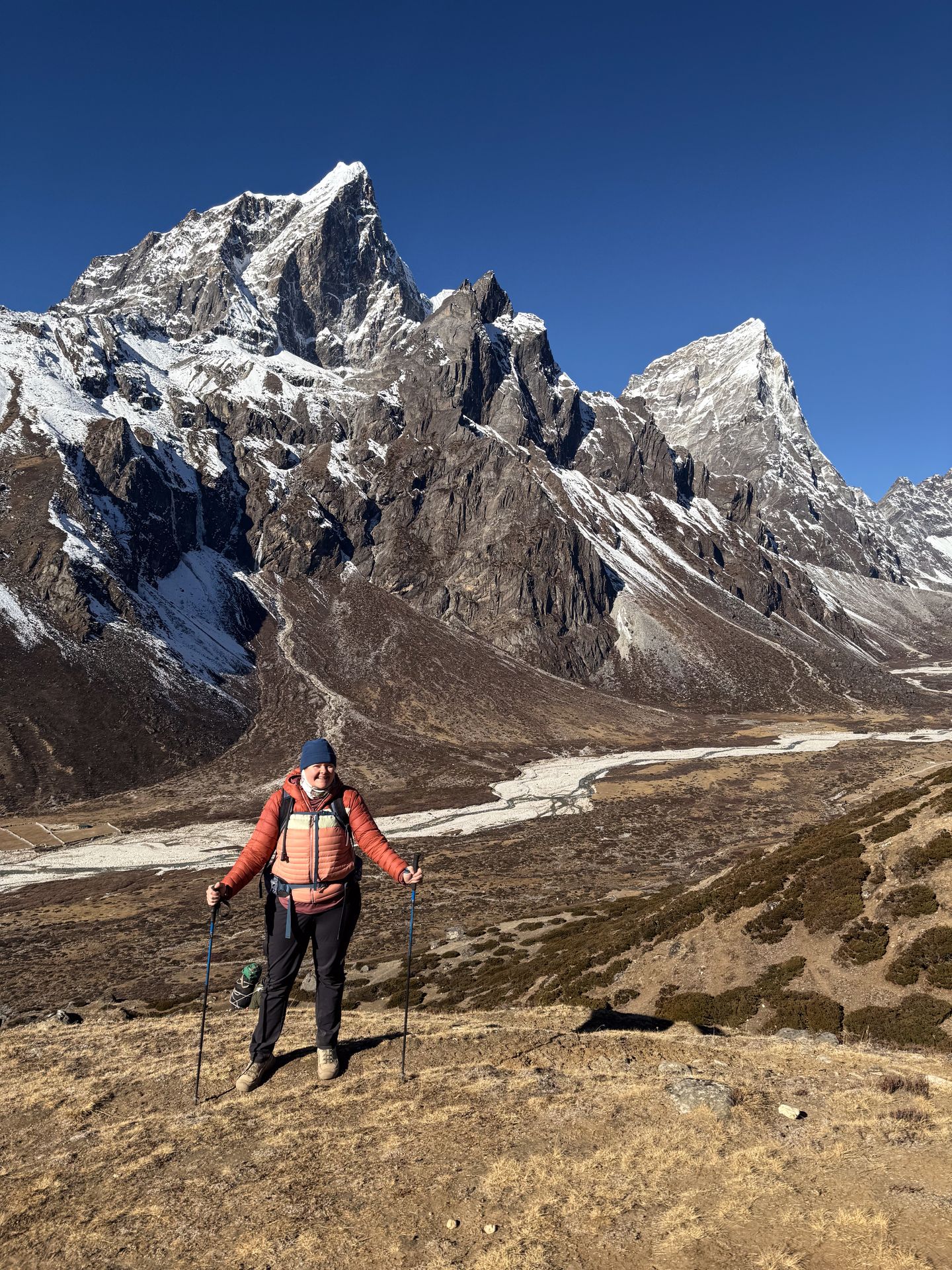
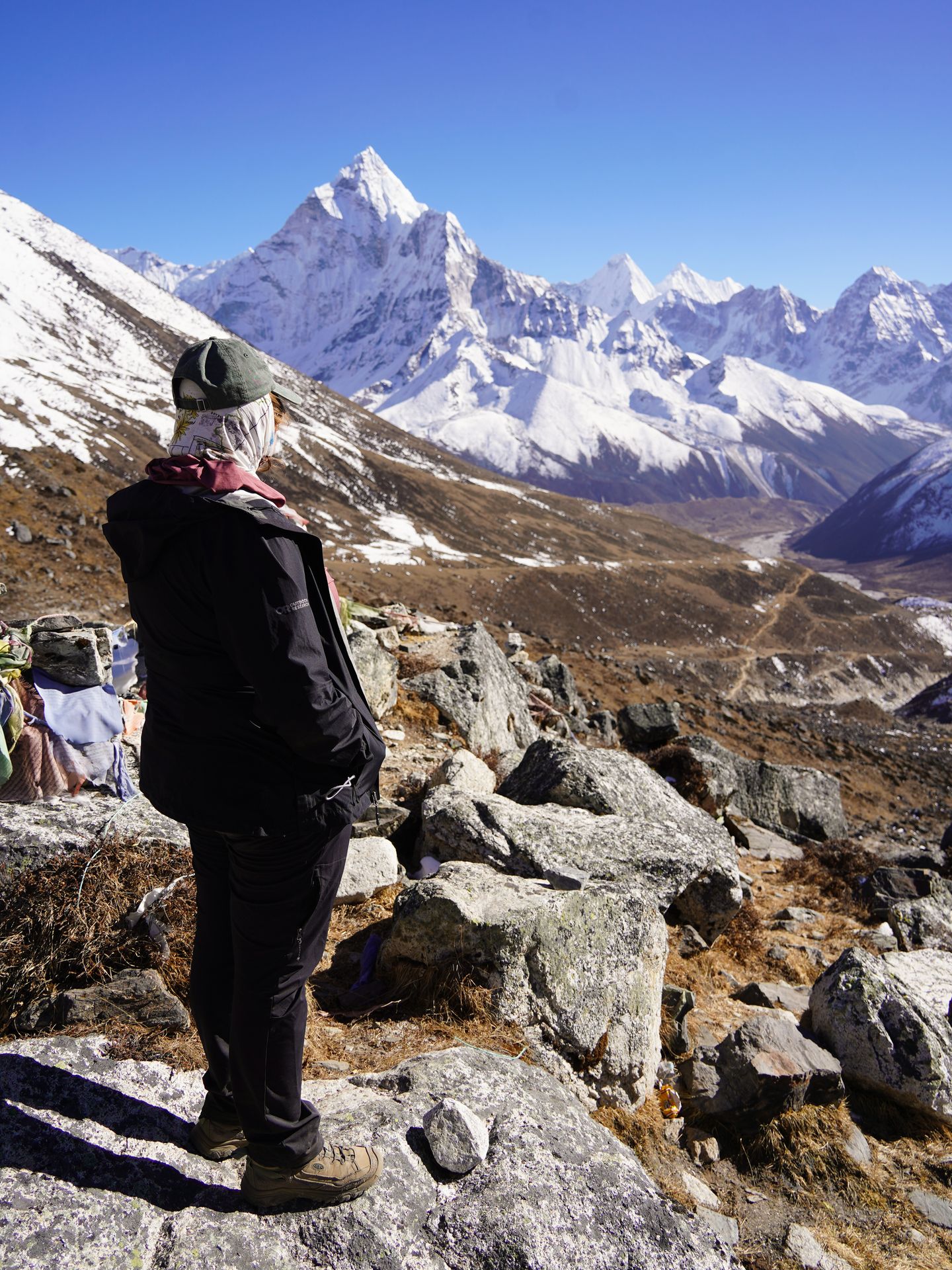
4. Going with a guide makes everything a lot easier.
Technically, you do not need a guide to hike to Everest Base Camp. However, I recommend going with a guide for many reasons. Most guide companies take care of the logistics for you, so you won’t have to worry about transportation to start the trek, where you’ll be staying each night, and things like that. Your guide will also ensure that you arrive safely, and will be there each day to lead the way and provide support.
I had an amazing experience with ITREKEVEREST and our guide Lhakpa. ITREK was easy to communicate with, answered all of our questions quickly, and handled everything so that we didn’t have to stress over the logistics.
5. You can hire a porter, but there’s a weight limit.
You can carry all of your own gear if you’d like, but you have the option of hiring a porter to carry the gear that you don’t need during the day. When you book the trek through a company, they will coordinate hiring the porters for you.
Our company asked that our porter bag weigh no more than 9kg (20 lbs). Typically a porter supporting EBC trekkers carries two bags of about that weight. The porters work very hard - make sure to tip them well! Typically, you’ll have a chance to tip them at the end of your trek. Our company recommended tipping them $8 - $10 per day.
You’ll be carrying your own day pack each day, with your water, snacks, layers, and other essentials. This bag has to be a certain weight for the plane ride: 5kg (11 lbs).
6. The teahouses will probably be VERY cold.
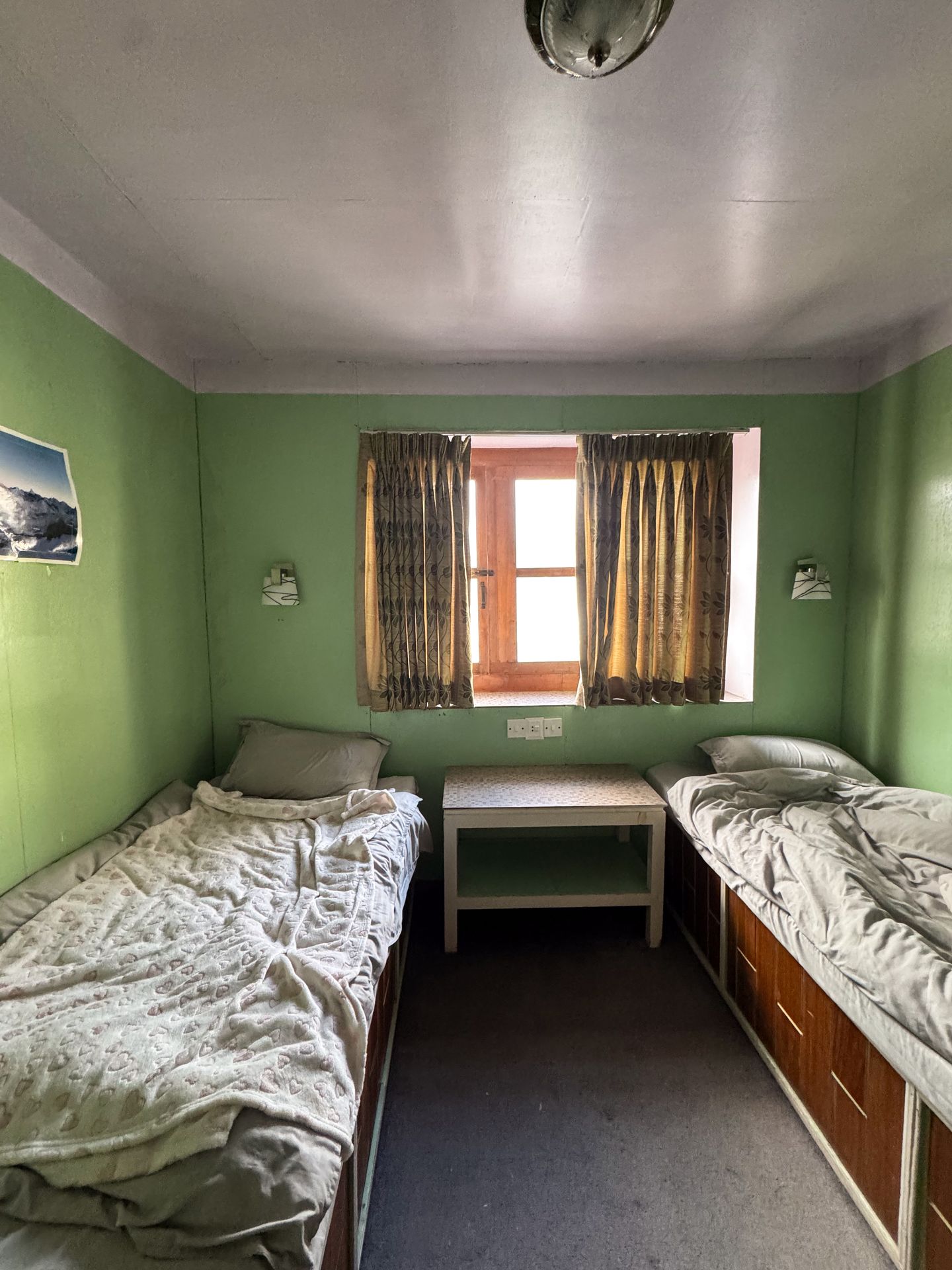
During your trek, you’ll stay at teahouses along the way. Typically, these inns do not have central heat. They will have a warm fireplace to heat the dining room, but your room will not have heat.
While we had warm sleeping bags, getting ready for bed in the evenings and getting ready in the mornings was tough. The higher you climb, the colder it gets. On the higher parts of the trek, we had pipes freeze overnight, which meant no running water in the morning.
During my trek in November, the daytime temperatures were perfect for hiking. However, the freezing nights were a struggle. Make sure to bring baselayers to sleep in!
Tip: You also have the option to pay an additional fee for heated blankets at some teahouses.
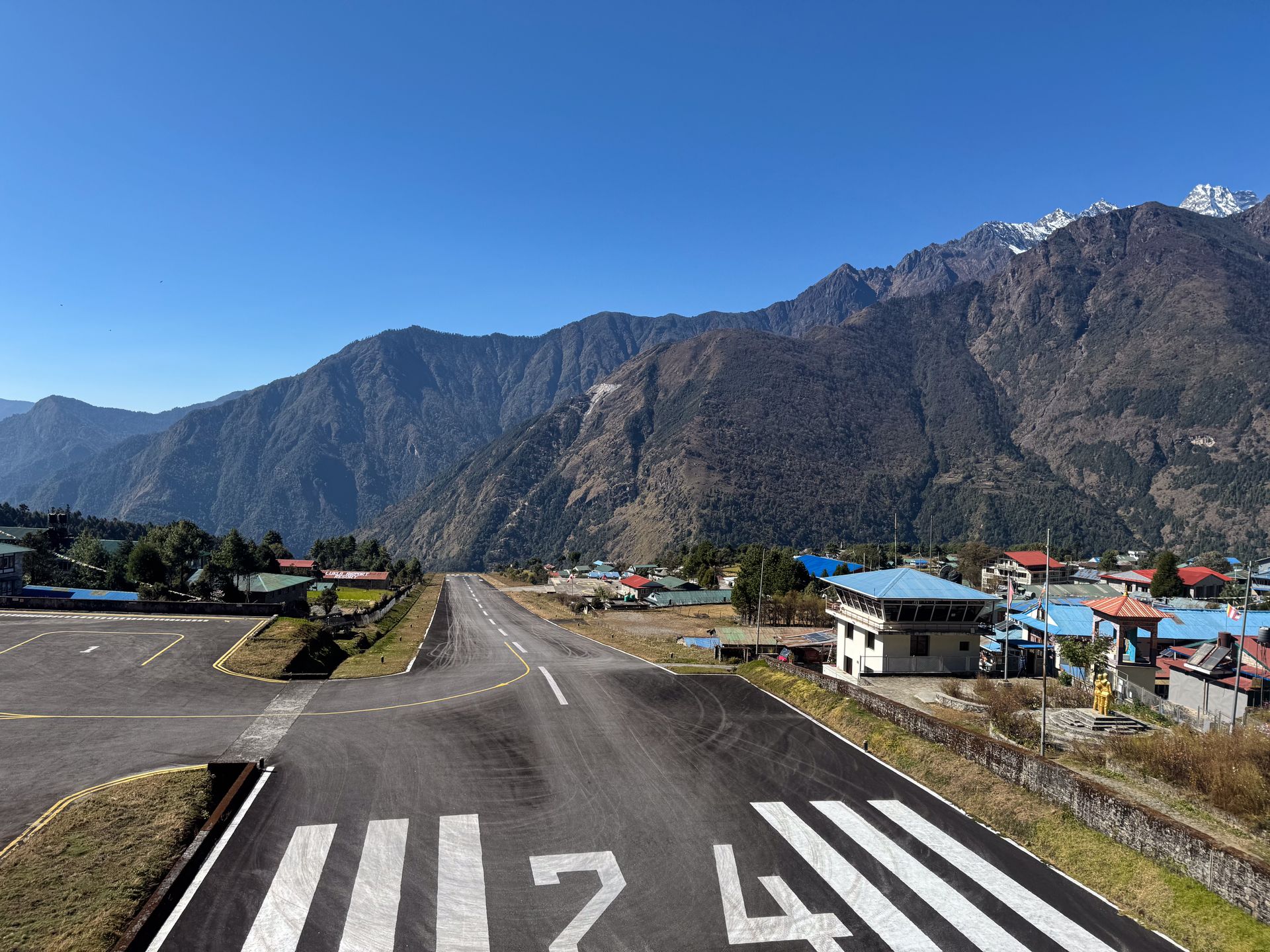
7. What is the flight like to Lukla? Is it dangerous?
To start the Everest Base Camp trek, you’ll need to fly into Lukla. Lukla is infamously known for having one of the most challenging and dangerous airports in the world due to its short and steep runway. The pilots are well trained and skilled, and it’s unlikely that anything will go wrong, but it makes many people anxious.
Trekkers can arrive at Lukla either via small plane or helicopter. We flew via a small plane directly from Kathmandu. During the busy season, you may need to fly from Ramechhap, which is about 4 to 5 hours from Kathmandu.
Helicopters are able to fly in worse weather conditions than planes, so sometimes helicopters can still be used when planes are grounded.
The flight from Kathmandu to Lukla takes about 45 minutes and has some incredible views!
8. Training is a good idea.
The question of whether or not you should train for EBC depends on your hiking experience and physical ability. However, I think that everyone can benefit from at least some amount of training.
Your guide company or a personal trainer can provide more specific recommendations, but I highly recommend training on steps or a stairmaster. There is A LOT of up and down during this trek.
9. Be prepared for all kinds of weather.
You could experience a wide range of weather during the EBC trek, so layers will be your friend. As you can probably imagine, it will be much colder near the top of the trek than at the lower altitudes. Frigid temperatures are what you should prepare for the most, but you should also be ready for rain, wind, mud and sunny days.
I recommend bringing base layers, a windbreaker, an insulated mid layer, gloves and a hat, and bringing hand warmers for the coldest days. We didn’t bring hand warmers and paid A LOT for them near the end of the trek, so you’ll save money by planning ahead.
10. Wearing a buff is more important than you think.
A buff is a must-have item on the Everest Base Camp trek. The air during the trek is very dry and dusty. If you’re breathing heavily (which is likely because of the high altitude), you’ll be breathing in this dust. This causes Khumbu cough, which is a severe, dry, hacking cough. It’s very common for both locals and visitors to the region.
Wearing a buff (starting on day one) can help prevent this cough. I didn’t get serious about wearing the buff until my third or fourth day, and I got a really bad case of this cough. It even lasted a couple more weeks after I returned home. So don’t make my mistake, and wear a buff starting on day one.
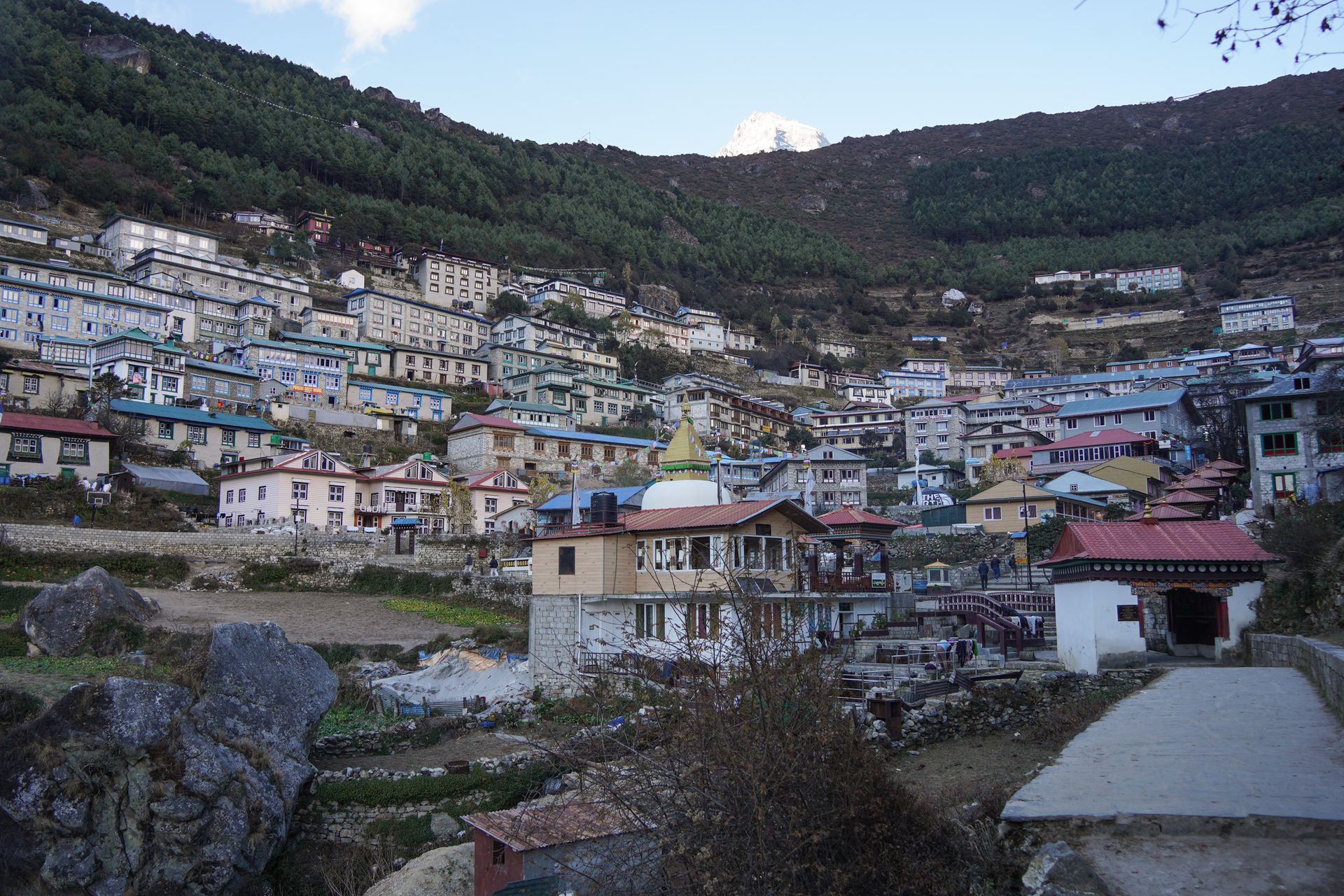
11. You’ll hike through a lot of towns.
The path to Everest Base Camp is very built up with towns, especially in the beginning. This has a lot of benefits. You’ll be able to purchase any additional gear you might need, along with souvenirs, snacks, and more.
While it’s nice to have so much access, if you were expecting to be in quiet nature the entire time, that’s not what you’ll find here.
12. You can’t drink the tap water.
It’s not safe to drink the water that comes from the tap in the teahouses. Your options for drinking water will be to buy bottled water, purchase boiled water from the teahouses or purify your own water.
I highly recommend bringing your own water filter, as it will save you a lot of money and reduce waste. Some water filters to consider include the LifeStraw Peak Squeeze, the Platypus GravityWorks or the Electric Survivor Filter.
13. You may have to pay to charge your phone.
Many of the teahouses, especially at higher elevations, charge fees to use them. I recommend bringing along at least one large, portable battery, so that you only have to charge the battery once or twice.
Wifi is typically available for an additional fee, but I was surprised to have cell reception for most of the trek. It’s not hard to stay connected during EBC, but treks like this are also a great time for disconnecting.
14. There are ups and downs during the entire trek.
This is not a trek where you’ll hike uphill every day until you reach EBC, and then hike downhill the entire way back. Instead, every single day involves going up and back down, and repeating that many times.
This makes the entire trek a little more challenging than you might think. It’s a good idea to train on steps or a stairmaster for this reason. While the ups and downs make each day challenging, my knees were happy that it wasn’t entirely downhill as we hiked back down (I struggled a lot more with the downhill portion on the Mount Kilimanjaro trek).
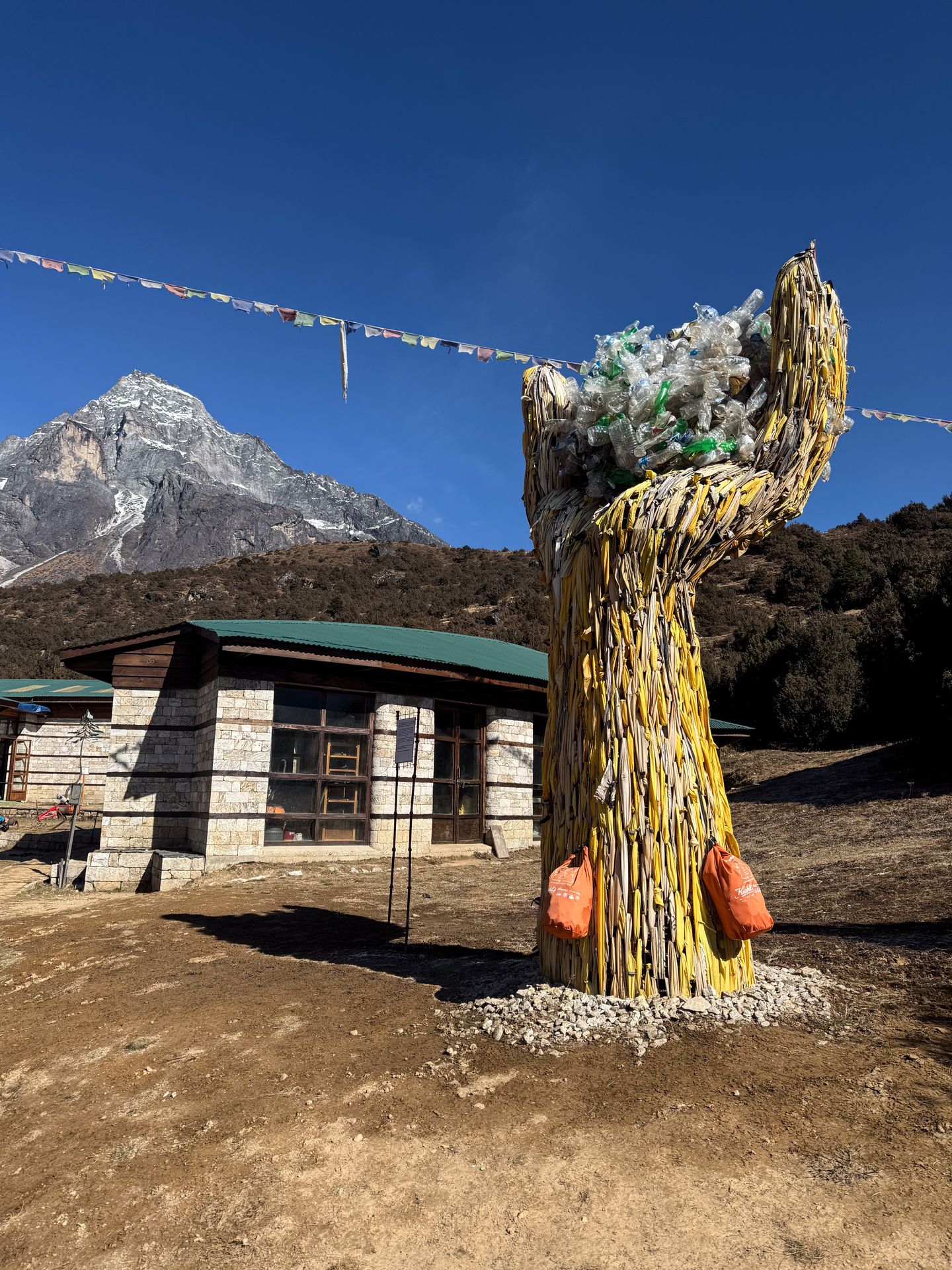
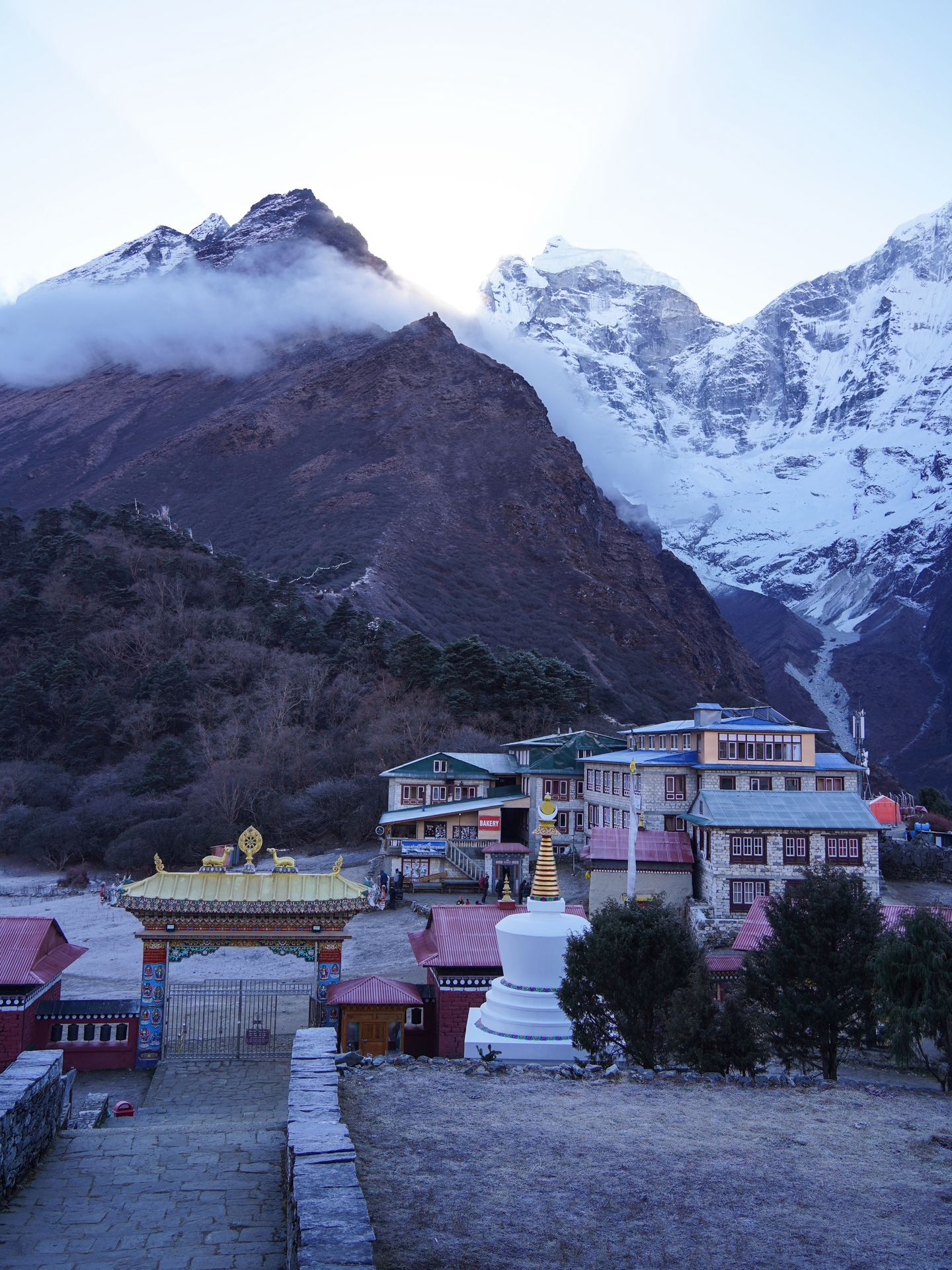
15. There are some amazing side quest opportunities.
One of things that makes the Everest Base Camp trek so special is all of the chances for side quests! You can visit a monastery, visit museums, and check out shops, cafes and more along the way.
Here are some side quest opportunities:
- Everest Viewpoint and Sagarmatha National Park Museum. These are a short walk from Namche Bazaar.
- Sagarmatha Next. This is an amazing center for arts that focuses on sustainability and recycling.
- Tengboche Monastery. We got to witness one of their daily ceremonies.
- Cafe4410. This spot in Dingboche is the perfect place to enjoy a coffee and a treat, and they play climbing movies in the afternoons.
- Everest Memorial at Chukpi Lhara. This is a series of memorials that honors climbers who have died climbing Mount Everest.
16. Everest Base Camp looks way different in the spring vs the fall.
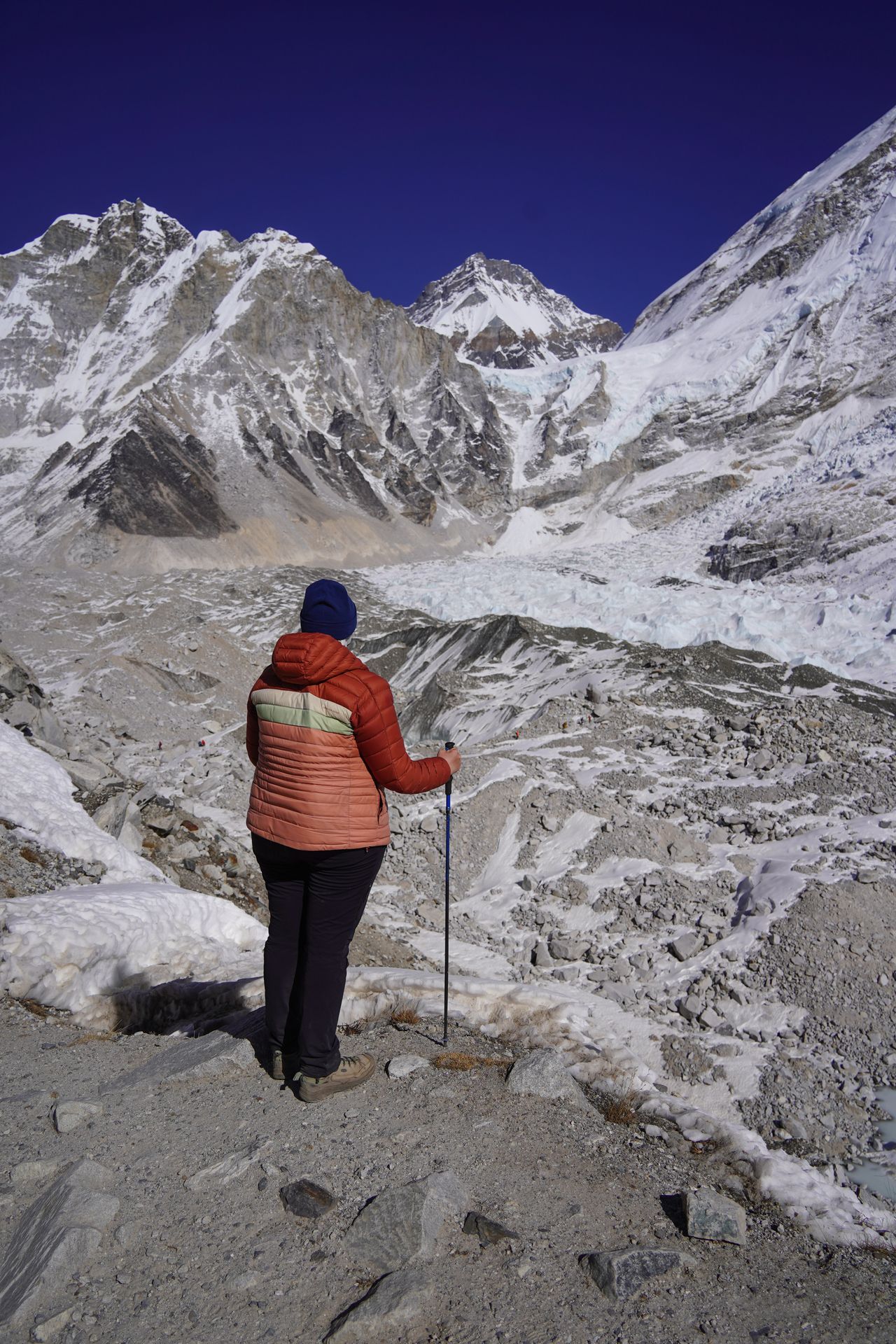
The best times to do the EBC trek are March through May, and late September through November. However, you’ll only see climbers embarking on the climb to the peak of Everest in the spring. In the spring, EBC is full of colorful tents spanning all over the area. In the fall, the camp has no tents.
One isn’t better than the other, but if you were hoping to see the tents, you’ll want to visit in the spring.
17. It’s a good idea to add weather buffer days to your trip.
It’s not uncommon for the small flights into Lukla to be cancelled or delayed, so it’s smart to have a buffer day or two in your schedule. ITREKEVEREST already builds a buffer day into their schedule, so it’s unlikely that you’ll need an additional day, but it’s still smart to have.
We had a couple extra days in our schedule, and there were no weather delays. This allowed us to spend more time exploring the capital city of Kathmandu.
18. You’ll see a lot of yaks, donkeys, and other animals on the path.
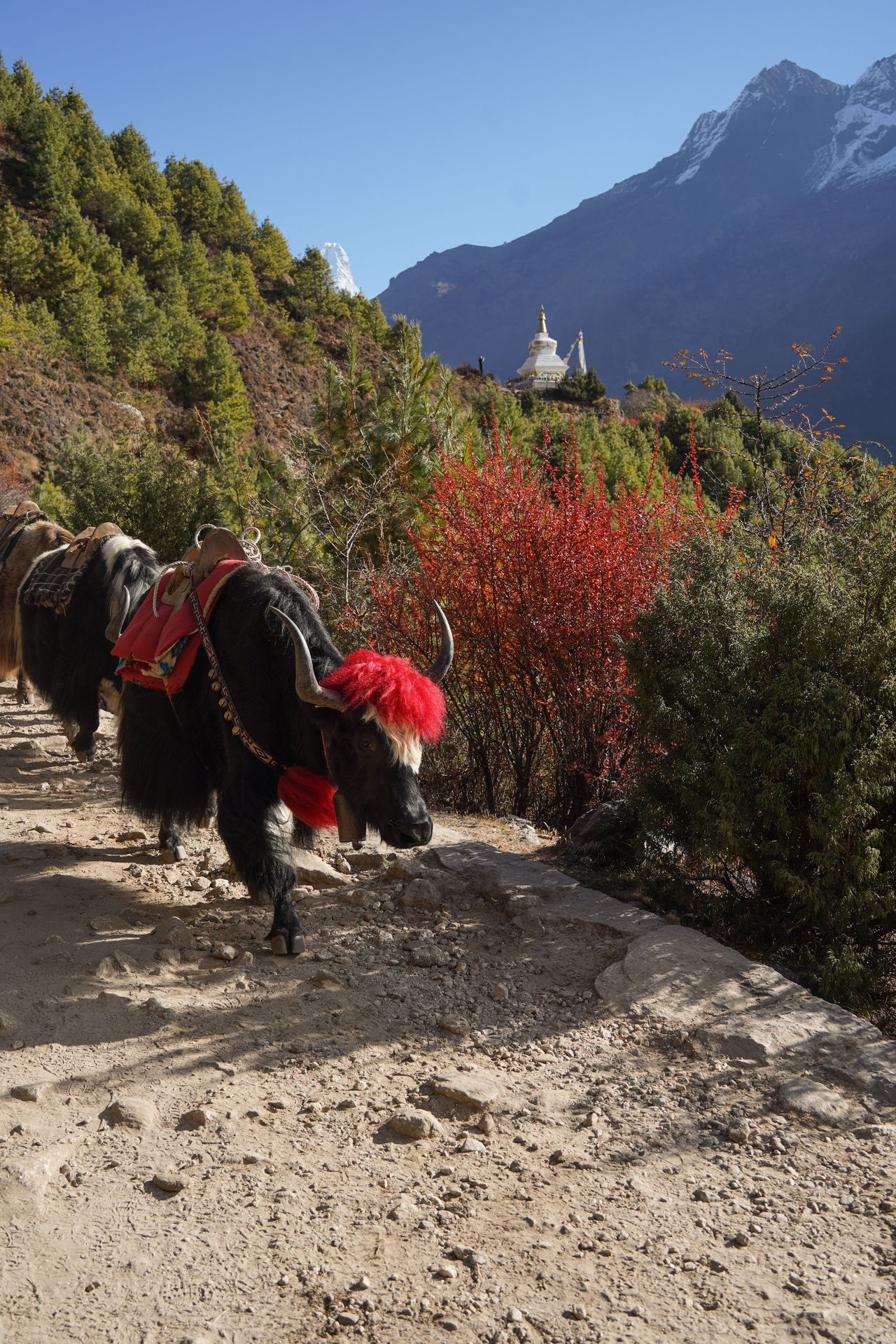
During your trek, you’ll see tons of trains of mules, donkeys, yaks and dzopkyo (yak-cow hybrids) carrying various things. You’ll quickly learn to step to the side when you see them coming. If you’re allergic to any of these animals, make sure to plan accordingly, because they’re impossible to avoid.
19. There are some huge swinging bridges on the trek.
There are several long swinging bridges along the trek. They often span large canyons and are high above the ground. They feel very sturdy, but they might make you nervous if you’re afraid of heights.
The highest bridge is the Hillary Suspension Bridge, which is 469 feet long and hangs 410 feet above the river.
20. Carry more cash than you think you’ll need.
The price that I paid my guiding company included all of my meals during the trek. I also had a water filter, so I only paid for bottled water at the highest elevation.
Even when food is included, there are still many things that you may want extra spending money for on the EBC trek. Some places take credit cards, but not everywhere. You may want cash for showers, charging your phone, a heated blanket, a drink, a souvenir, medicine, or additional gear you find yourself wanting.
Most of the lower elevation towns have ATMs, but you won’t find them at the top. It’s best to arrive for the trek with a good amount of Nepalese Rupees.
Here are some loose price estimates (from 2025) to keep in mind. Costs are higher in the higher elevation areas.
Water costs about 100 rupees at the start of the trek, and 1,000 rupees at the top of the trek. I recommend bringing a filter, but you can’t filter water at the very top due to sediments in the water.
Phone charging tends to range from about 100 rupees to 800 rupees per device. Showers range from about 200 rupees to 900 rupees.
Heated blankets are offered in some teahouses and cost about 2,000 rupees, or $20, per night. This is a really nice luxury if you’re struggling with the cold.
How much cash to bring will depend on your needs and I recommend asking your guide for an estimate. But about 5,000 rupees is a good starting point. This does not include the tipping money for your guide and porter.
21. Showers usually cost extra. And if you have long hair, it might not be worth it.
Hot showers usually cost extra at the EBC teahouses. We had a couple teahouses at the bottom of the trek that included a free shower, but the water wasn’t very hot.
If you do want to shower, keep in mind that wet hair can make you MUCH colder in an already cold environment. Some teahouses offer hairdryers for an additional fee, but I don’t think that is super common.
I recommend bringing body wipes and being prepared to shower much less than usual during this trek. It’s all part of the journey. Luckily, since the weather was never hot, we did not get super sweaty.
22. Make sure to budget for tipping.
Make sure to budget some extra money for tipping your guide and porter. Our company recommended $10 - $12 per day for guides, and $8 - $10 per porter. They recommended this as a total amount divided by our group (we had a group of 4 hikers).
Of course, you can tip higher if you’re able and feel that they’ve gone above and beyond. Tipping is done at the end of the trek, and we tipped in USD.
23. The menus at the teahouses are huge.
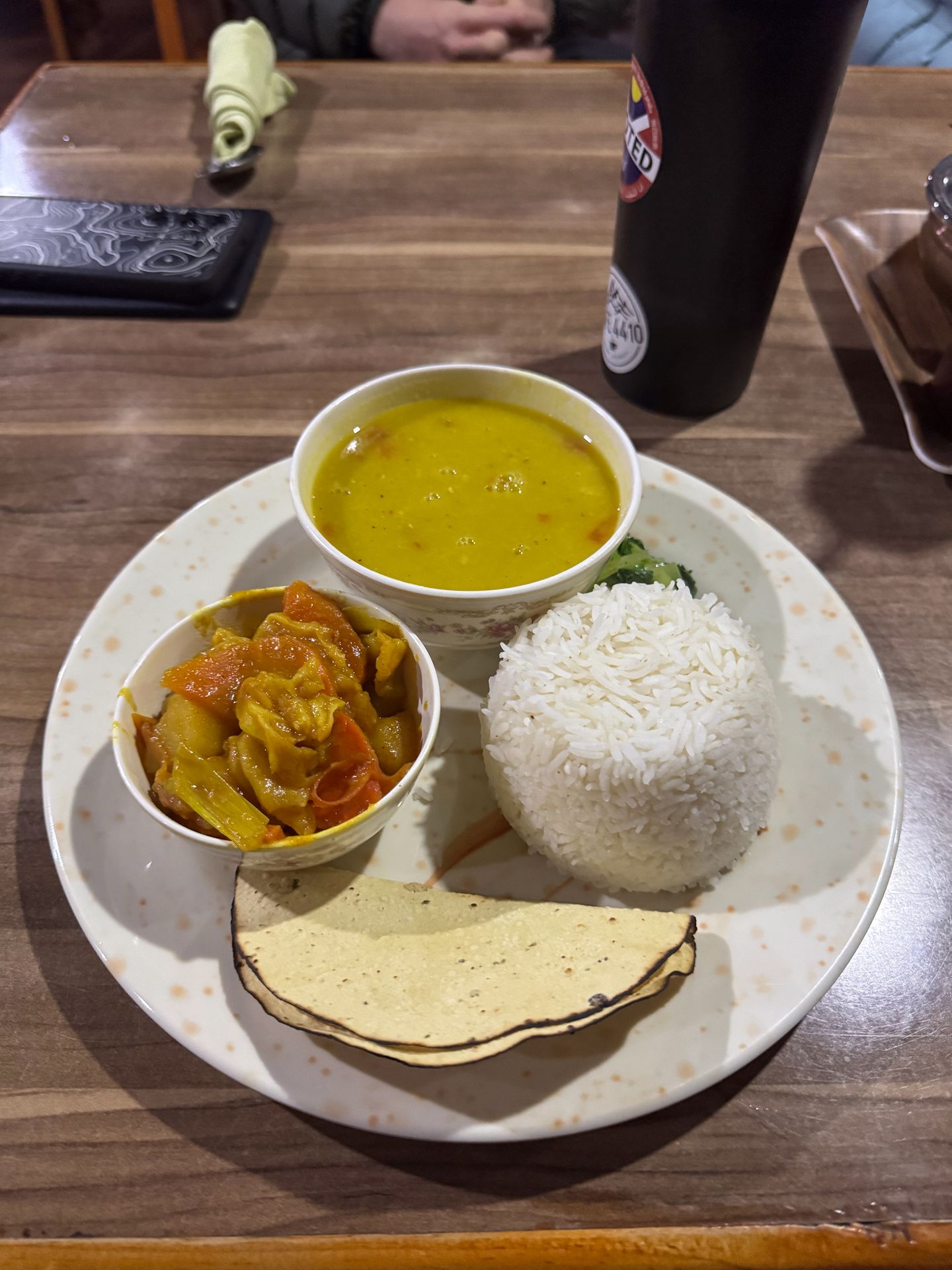
You’ll have no shortage of food options at the teahouses. Most of them have huge menus, with a range of items from pizza to fried rice to more traditional Nepalese dishes. One of the most common meals (that you should definitely try) is dāl bhāt. Teahouses will typically offer seconds of dāl bhāt, so it’s a good meal to order if you’re extra hungry.
As a vegetarian, I always had many options to choose from. Some meals were better than others, but overall, the food throughout the trek was good and filling.
24. Carry something for the local kids.
It’s a nice thing to have a little something to give to local kids on your way back down the trail! We had some kids ask for chocolate, but unfortunately, we didn’t have any.
25. Give back by carrying out trash.
There is a really cool program called ‘Carry Me Back,’ where hikers can hike down with a 1kg (2.2 lbs) of waste. You can pick up the bag from Namche Bazaar and carry it down to Lukla.
Since starting this in 2019, they’ve removed over 20 tonnes of waste from the park for recycling. This is a great way to do your part and help clean up this beautiful region.
Final Thoughts
I hope this guide helps you prepare for an epic trek to Everest Base Camp! This trek is a once in a lifetime experience where you’re sure to push yourself and create some amazing memories. Whether EBC is on your bucket list for the future, or you’re leaving on a trek soon, it’s always helpful to know what to expect. Happy hiking!
For more bucket list treks around the world, check out these guides:
- A Guide to Hiking the W Trek in Patagonia
- 30 Tips for Hiking the W Trek in Patagonia
- 19 Things To Know Before Hiking Kilimanjaro
- A Guide to Hiking the Acatenango Volcano in Guatemala
Thanks for Reading!


Let's stay in touch!
Join the Lost with Lydia email list to get monthly travel guides and tips!