Imagine settling into a view of the Platte River just before sunset. At first, there isn’t much to see besides the water, and maybe some ducks. You chat eagerly with your neighbors as you wait for something to happen.
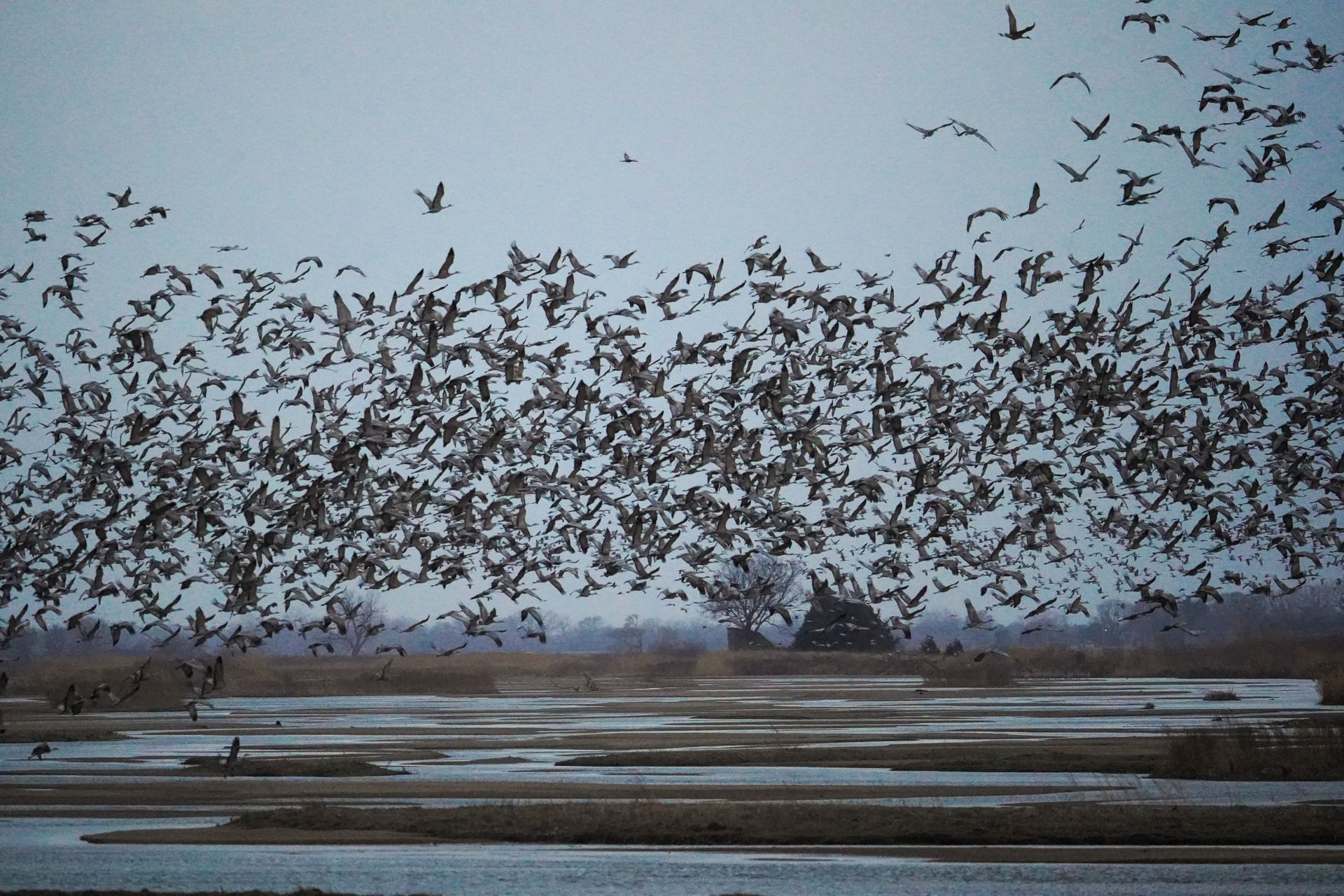
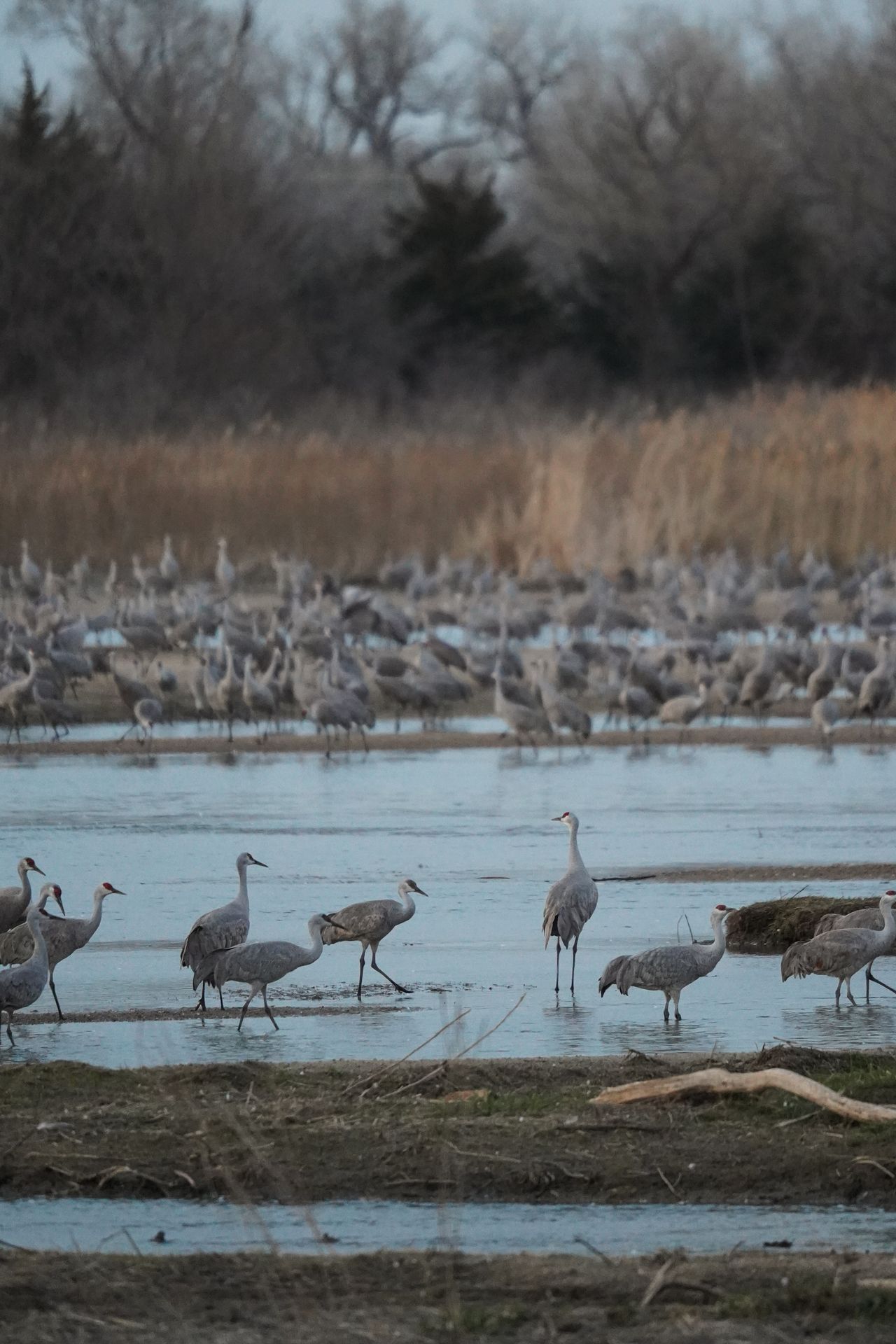
Suddenly, you realize there are hoards of birds right on the water, but they’re a little too far for you to clearly make out. Soon, the birds start landing closer, and your group goes silent. And before long, there are 1000’s of cranes in your field of vision. You watch them dance, jump and march together.
Most of all, you’re immersed by the noise of it all. The birds are LOUD, and if you listen closely, you can start to make out the calls of adult birds vs. the higher pitched squeak of the juveniles. From the cover of a bird blind, you’re bearing witness to one of the coolest wildlife migrations in North America, and perhaps the world.
When it gets fully dark, you walk away with a new appreciation for the sandhill cranes, their massive journey, and even the planet as a whole. And if you’re lucky, you wake up early to do it again for sunrise the next day.
Every year, almost a million sandhill cranes pass through Nebraska in the spring. These beautiful birds are making their way north, some traveling as far as 7,000 miles. As a stopover on their journey, they spend a few weeks resting and refueling along the Platte River through Nebraska.
Visitors have a chance to experience this amazing phenomenon each spring, and in this guide, I’m explaining exactly how to experience it for yourself. Keep reading to discover how to see the sandhill crane migration in Nebraska! This is based on my experience seeing the migration in 2026.
Full disclaimer: This is a sponsored blog post by Visit Kearney. As always, my opinions are unbiased and my own. I want to thank the Kearney tourism board for their generosity!
All About the Sandhill Crane Migration
Personally, I’m new to birding, so I didn’t know a lot of specifics about the sandhill cranes or the migration before this trip. Here is a little bit of information about the birds themselves, and the migration, so that you can gain a better appreciation before witnessing this special event.
Pro Tip: Attend an educational talk at the Rowe Sanctuary to learn more! They typically do talks daily during the peak season, and they only cost $10. I attended a talk on crane behavior and learned A LOT about the birds. It’s an amazing way to gain a better understanding of what you’ll be seeing.
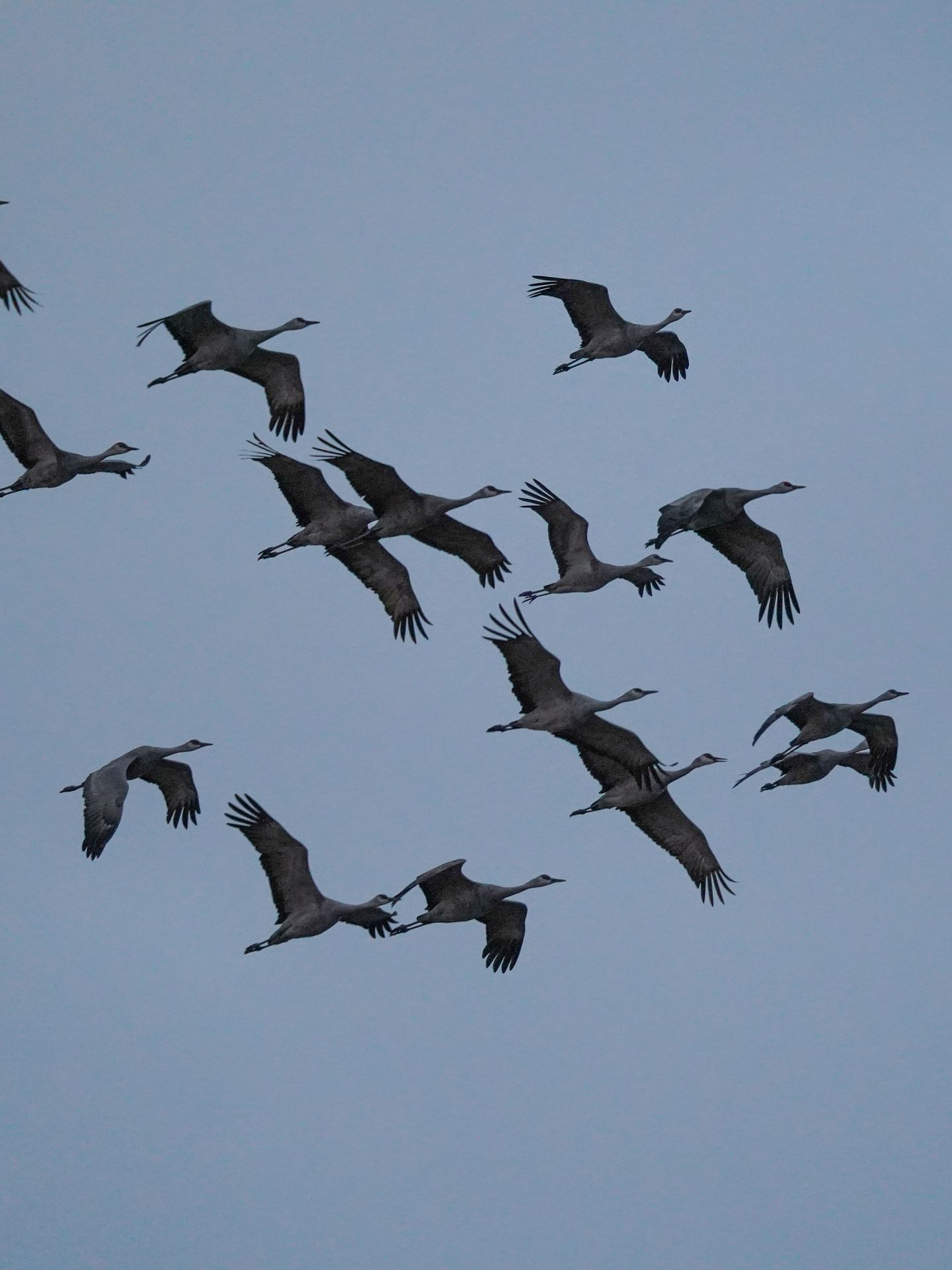
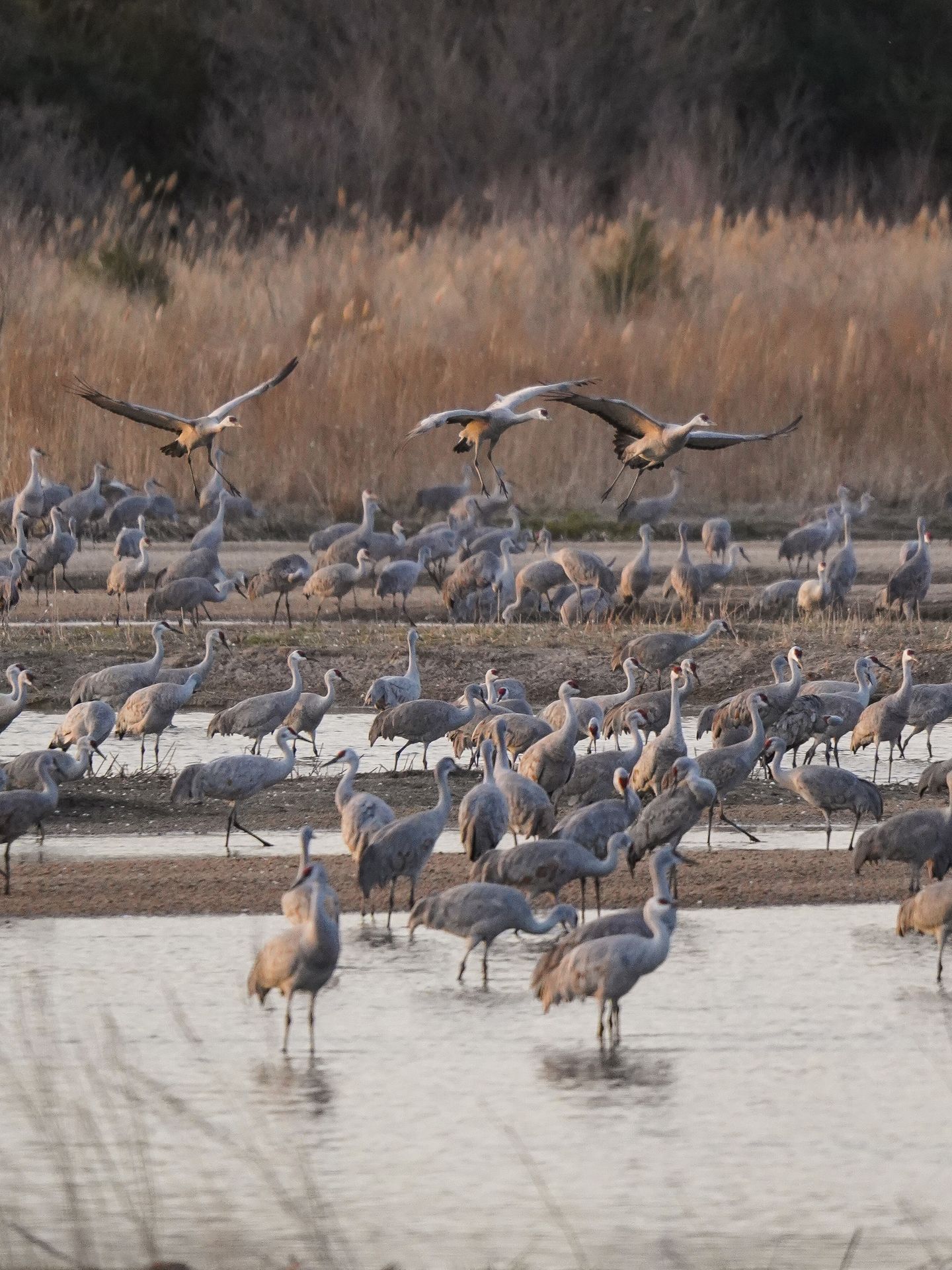
Fun Facts about Sandhill Cranes
- Sandhill cranes mate for life, and are often together for about 20 years.
- Sandhill cranes are doing well and generally, their populations are increasing. They are the world’s most abundant species of crane.
- Sandhill cranes are one of the oldest living bird species. Fossils have dated them back 2.5 million years.
- Baby sandhill cranes can be ready to start swimming or leave the nest less than a day after hatching.
- Sandhill cranes apply mud to their feathers during breeding season. This “painting” serves as camouflage and allows them to blend into vegetation.
Pro Tip: You also have a chance to see a whopping crane during this migration. Whooping cranes are endangered and some of them follow a similar migration to the sandhill cranes. They are larger and more of a white color, as opposed to the gray color of the sandhill cranes. I didn’t see one, but I heard about them being spotted nearby.
An Overview of the Sandhill Crane Migration
The sandhill cranes spend their winters in Mexico and the Southern US, while their Northern breeding grounds are in Canada, Alaska, and even Siberia. They tend to spread out a lot during summer and winter, but the vast majority of them congregate to stopover in Nebraska, which is what makes watching the migration here so special.
You can generally see the cranes in Nebraska from mid to late February, to early to mid April. In my experience, the end of March is the best time to see them, but it can vary each year.
Tips and Things To Know About the Sandhill Crane Migration
A lot of these tips are covered elsewhere in this article, but here are some of my top tips for seeing the crane migration.
- Be prepared for any type of weather, but especially cold weather! Gloves and warm layers are a must on cold nights and mornings. You’ll need to plan a couple months ahead to snag a reservation at Rowe Sanctuary. Tickets are typically released in January and sell out quickly!
- The Crane Trust (located further down the Platte River near Grand Island) flies a small plane along the river each week to physically count the number of birds present along the river. Look up this information to get an idea of how many birds are there each week.
- Check out the Rowe crane cam to watch what the birds are up to from home!
- This can vary every year, but in my experience in 2026, I think that the third week of March tends to be the best time to see the most birds.
- Watching the birds at sunrise and sunset both offer different experiences. I preferred sunset, but recommend doing both if you have time.
- If you’re new to learning about sandhill cranes, try to attend an educational talk at Rowe Sanctuary. You’ll gain such a greater appreciation for the birds by learning more about them!
How to See the Sandhill Crane Migration near Kearney, Nebraska
If you’d like to see the sandhill crane migration in Nebraska, there are a few different places you can go. I watched the migration from the Rowe Sanctuary near Kearney and highly recommend going here!
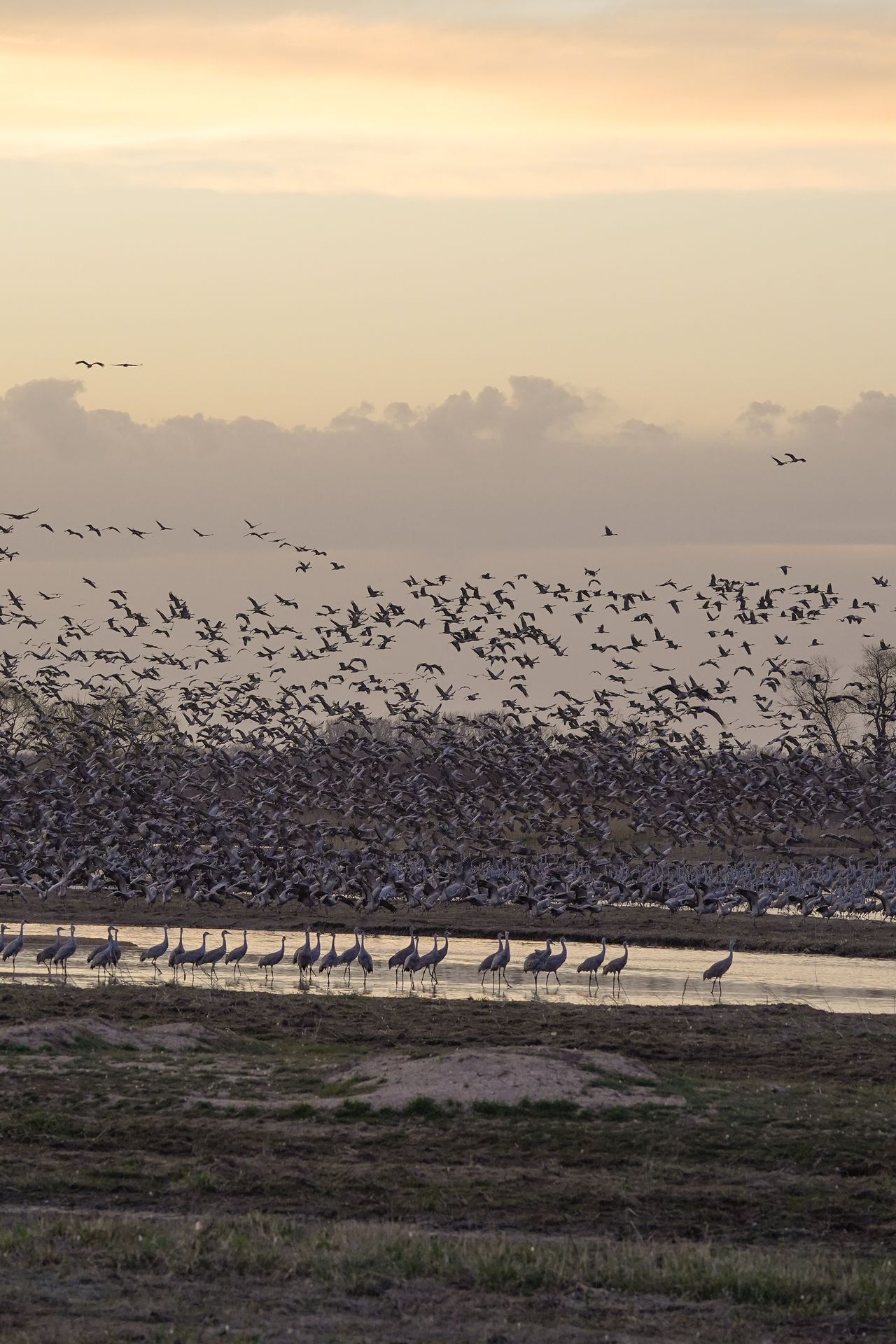
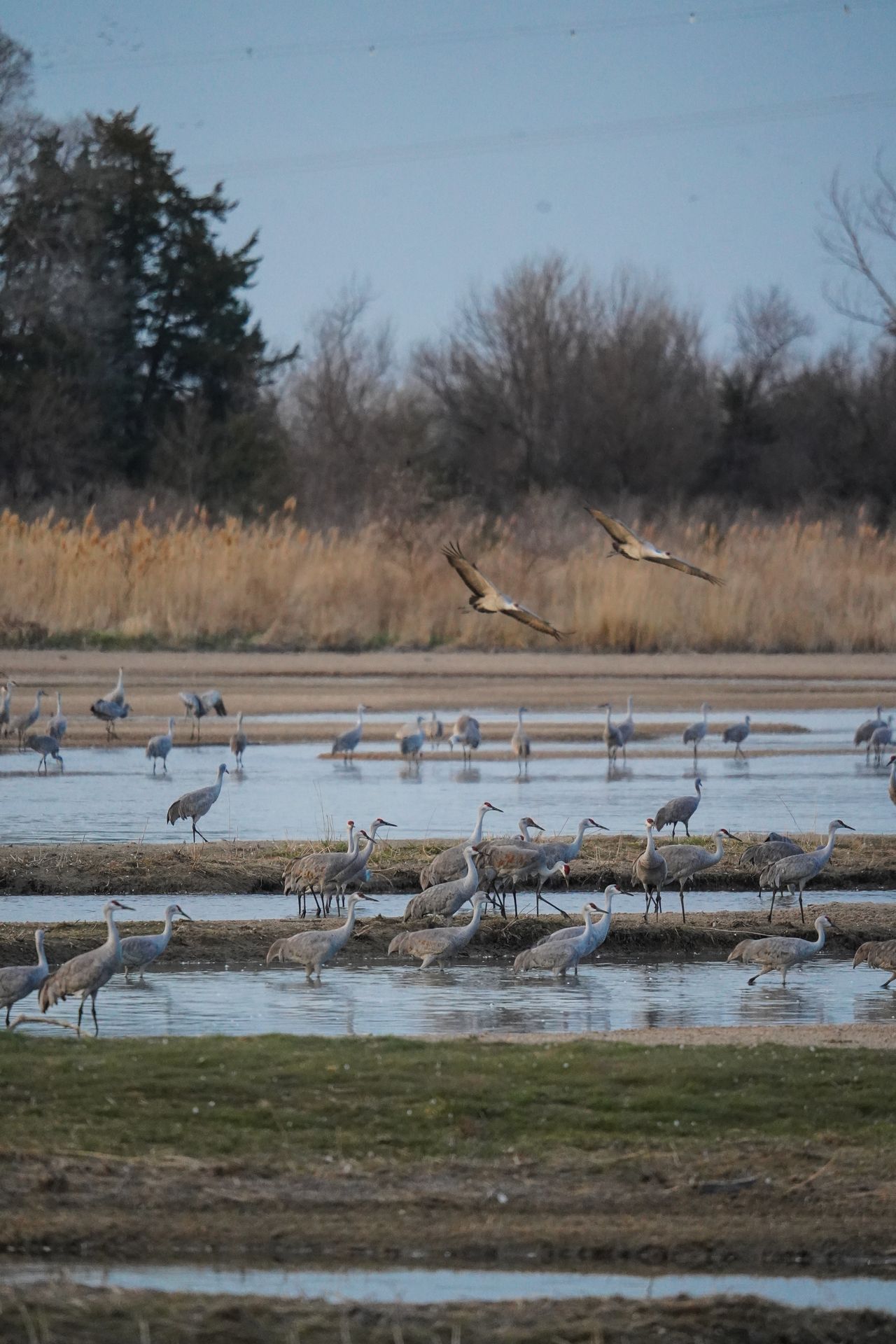
Rowe Sanctuary is owned and managed by the National Audubon Society, and they are dedicated to the conservation of the Platte River ecosystem and the birds that rely on it. They do a tremendous amount of work in clearing the vegetation away from the Platte River. This allows the birds to be more safe and comfortable. After all, a main reason why they congregate on Platte River at night is so that they’re better protected from predators, and too much vegetation can hide predators and put them in danger.
The best time of day to see the cranes is at sunrise or sunset. Hundreds of thousands of cranes land at the river at sunset, and fly away for the day at sunrise, so this is the main thing you’ll want to see. During the day, you’ll probably see a lot of cranes scattered over corn fields or at coastal wetlands.
Pro Tip: There are a couple roadside bird blinds near Rowe Sanctuary that are great for seeing the cranes during the day. Check out the Rowe Sanctuary Roadside Wetland Meadow Viewing Site on Elm Island Road.
Now for the logistics! Rowe Sanctuary offers guided bird blind experiences at both sunrise and sunset, but they sell out quickly. In 2026, tickets were released on January 8th. So mark your calendar and follow along with Rowe Sanctuary and Visit Kearney to see when you’ll be able to make reservations.
There are two different types of tours: a photography tour and a regular tour. The photography tour allows for tripods and continuous shooting, and is more expensive. The regular tour does not allow for those things, but you can still bring a camera.
The photography tour has its own dedicated bird blind, while the regular tours are divided between 3 different blinds, so you won’t know which one you’re going to get. As far as which blind is best for seeing the cranes, I think it’s just luck of where the birds end up each day. They all offer great views.
Along with the sunrise and sunset viewings, Rowe has a couple of overnight bird blinds. Here you’ll have your own private little cabin where you can watch the birds. However, you won’t be able to leave the cabin after dark and the cabins are very basic. (Think peeing in a bucket and bringing your own blankets). But if you’re used to camping, this would be a really neat experience!
You can also visit Rowe Sanctuary during the day for educational talks, exhibits, a nature walk, and their gift shop. It’s a fantastic place to visit!
What to Bring for Watching the Crane Migration
Here is a quick packing list for watching the migration. The best thing to keep in mind is that it might be VERY cold and you’ll want to be prepared with warm layers.
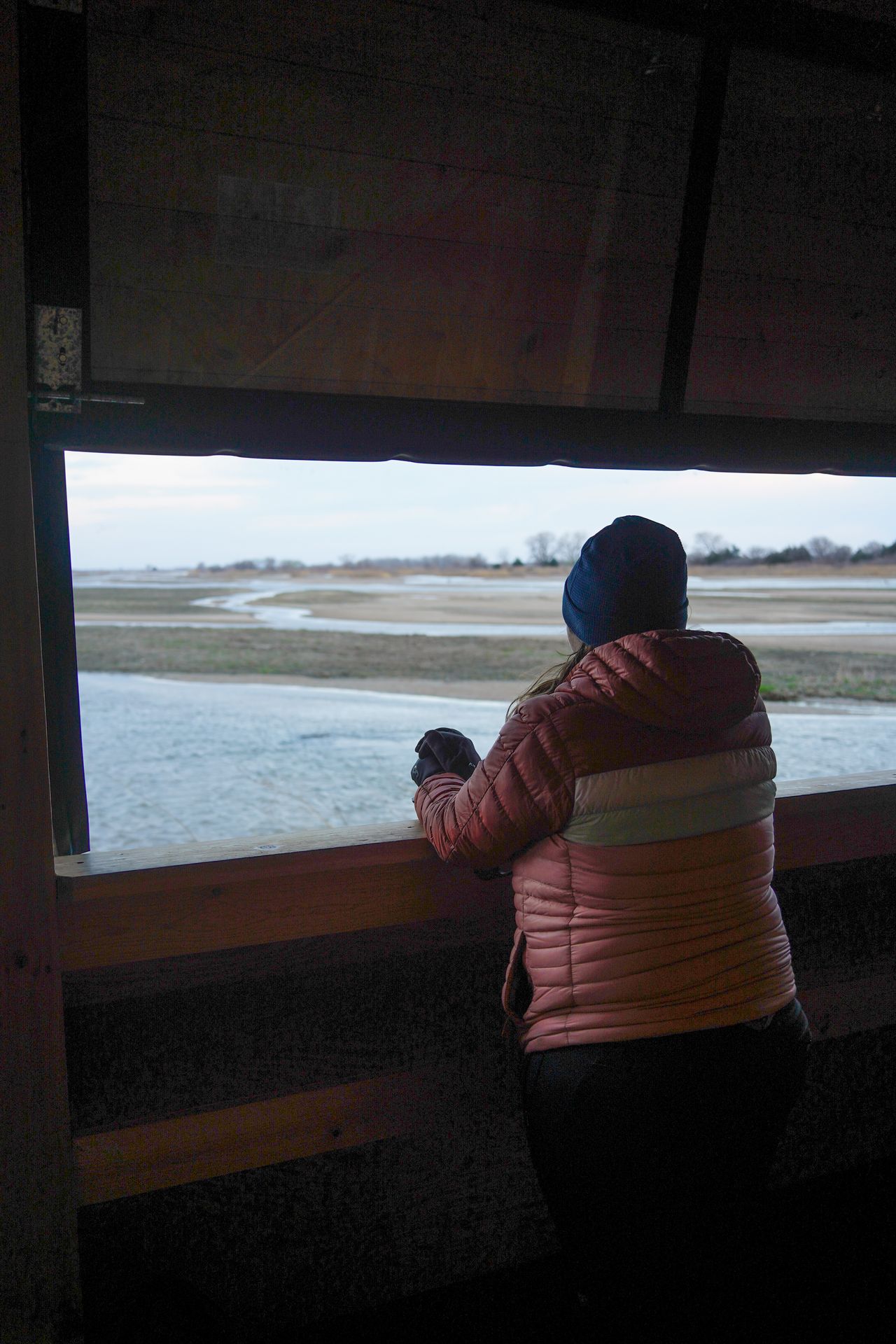
- Gloves and a hat.
- Warm layers. Depending on the weather and when you’re going, you may want to wear baselayers and bring a heavy coat.
- Binoculars.
- A camera if you have one.
- Snacks and water.
- If you’re doing the photography tour, a tripod. (I don’t think there is any reason to sign up for the photography tour if you don’t have a tripod)
A red light flashlight is provided during the tours for moving around in the dark, but you should bring one if you’ll also be viewing the birds on your own.
My Personal Experience Witnessing the Crane Migration in Nebraska
I went on both a sunrise and sunset tour at Rowe Sanctuary on the final days of March 2026. The evening tour was a photography tour, while the morning tour was one of the regular tours.
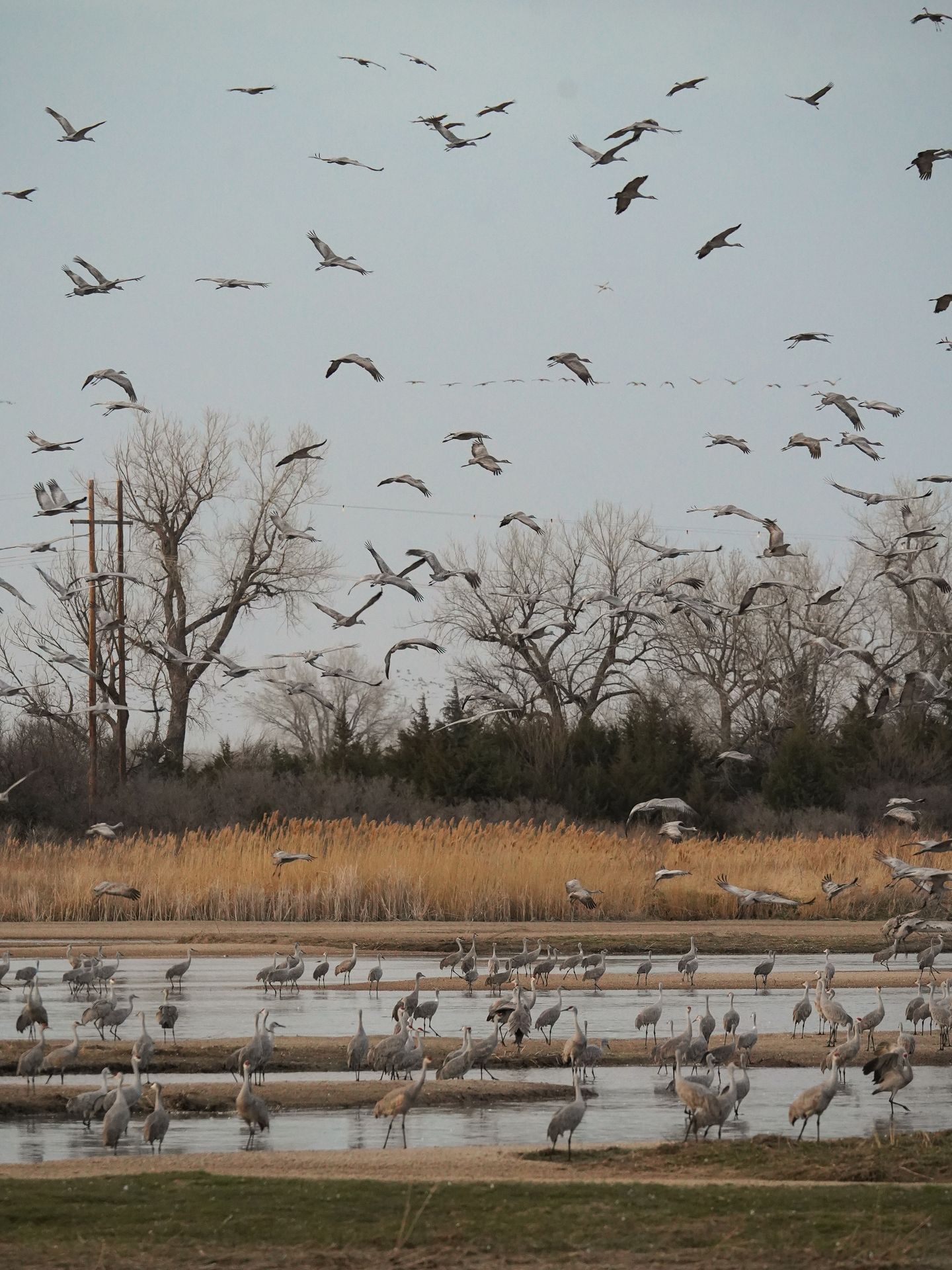
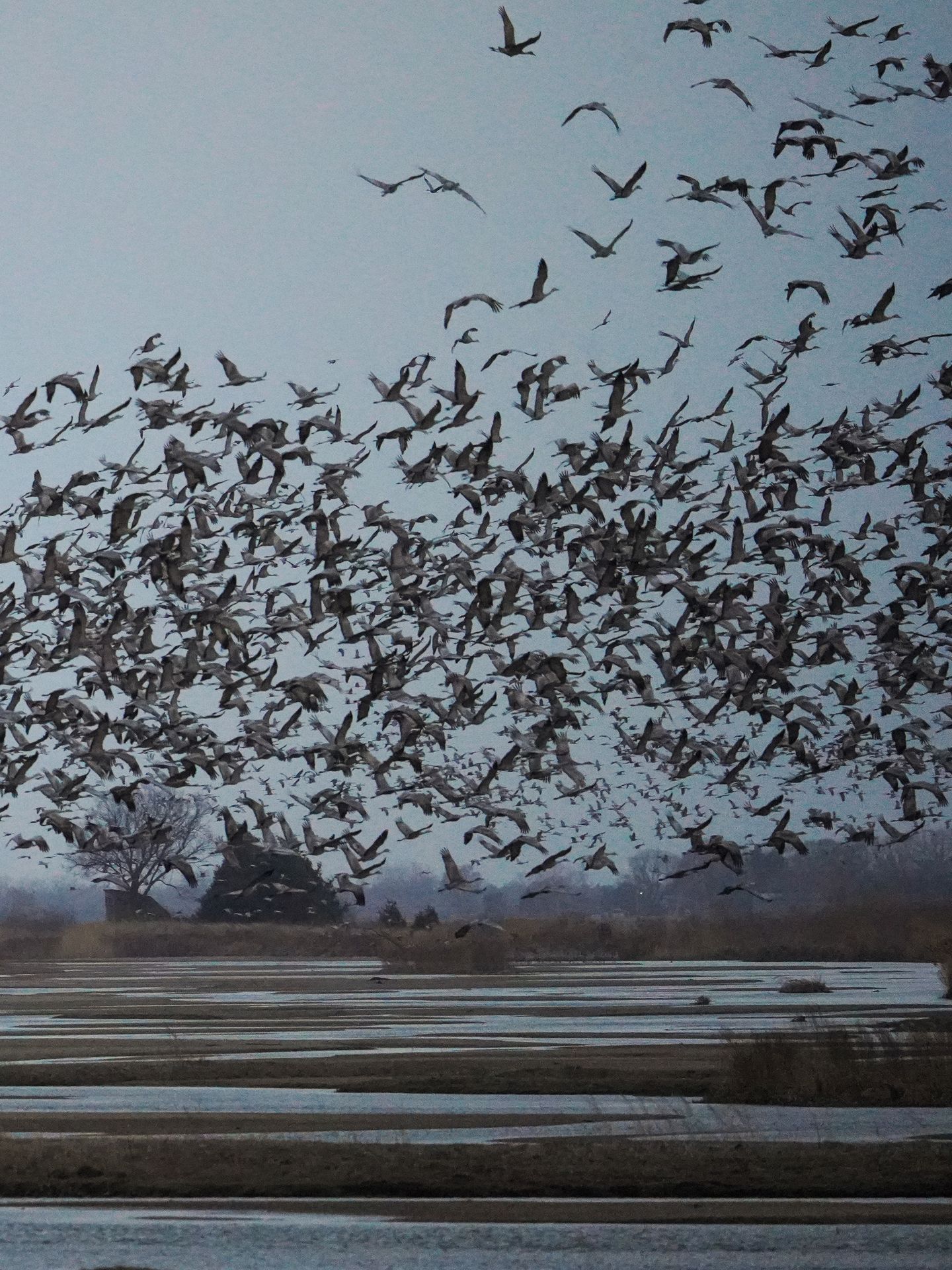
Both tours were amazing. I especially loved hearing the experience of the volunteers, who are all super passionate about the birds.
Personally, I liked the sunset tour better, so if you’re only going to do one, that’s what I recommend. I liked it better because I felt like I got to spend a lot more time admiring the cranes and their behavior as they landed. At sunrise, it felt like they all flew away all at once and it was right before the sun rose. However, it’s going to be such a different experience every day, and both are worth doing.
As for weather, my evening tour had lovely, mild weather. We thought the sunset would be cloudy, but it ended up being really nice. However, the next morning, my sunrise tour was extremely windy and cold. We could see how difficult it was for the birds to fly due to the strong winds. That just goes to show that the weather can change quickly and you should be prepared.
Early 2026 was a pretty mild and dry winter in the western US, so it seemed like the cranes left a bit earlier than usual. I saw that a lot of them seemed to be flying north on the days that I was there. So if future years are similar, it’s best to come around the third week of March to see the birds at their peak. But keep in mind that every year could be different!
Overall, this is a once and a lifetime experience that anyone who loves birds or wildlife should consider. I’ve never seen so many birds in one place, and it’s incredible to be so close to them in the blinds. The best part was probably the sounds. They were incredibly loud. I also loved watching them dance and hop around.
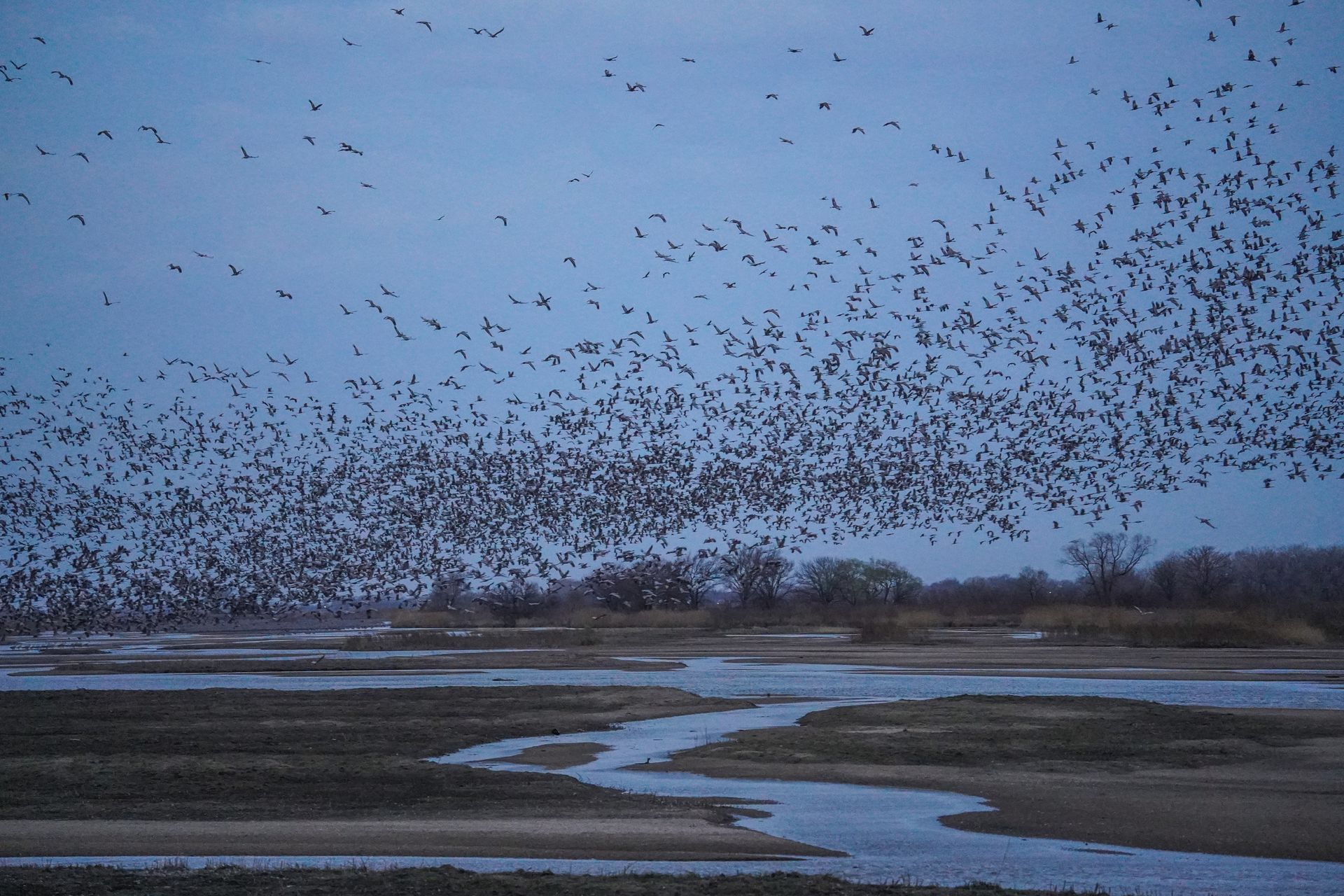
This experience gave me such a greater appreciation for sandhill cranes and birds in general. It also reminded me that I don’t have to go on an African safari (or other more expensive places around the world) to witness an amazing migration. Plus, I think it’s extra special to see something like this in a place that is considered to be a “flyover” state by so many.
Where to go near Kearney to see the Cranes Without a Guide
There are a few different places near Rowe and Kearney where you can go see the cranes on your own! While I highly recommend a guided experience at Rowe, it would be great to do both if you have time. Arrive well before sunset at these spots, as they get crowded.
Fort Kearny State Park
Check out their hike and bike bridge for a great view overlooking the river. Fort Kearny State Park also has reconstructed buildings of the former fort. You’ll need to pay a fee to enter.
Plautz Viewing Platform
This area is not far from I-80 at Exit 285 and provides a viewing platform over the river.
Windmill State Park
This park provides a bird blind that overlooks a field instead of the river, so it’s best enjoyed during the day when the cranes are in the fields. You’ll need to pay a fee to enter.
More Things To Do in Kearney (in the spring)
Make a whole trip out of your adventure to watch the sandhill crane migration! Kearney is a really neat town with a fantastic arts scene, a beautiful downtown, and more. Here are my top recommendations of things to do while you’re there.
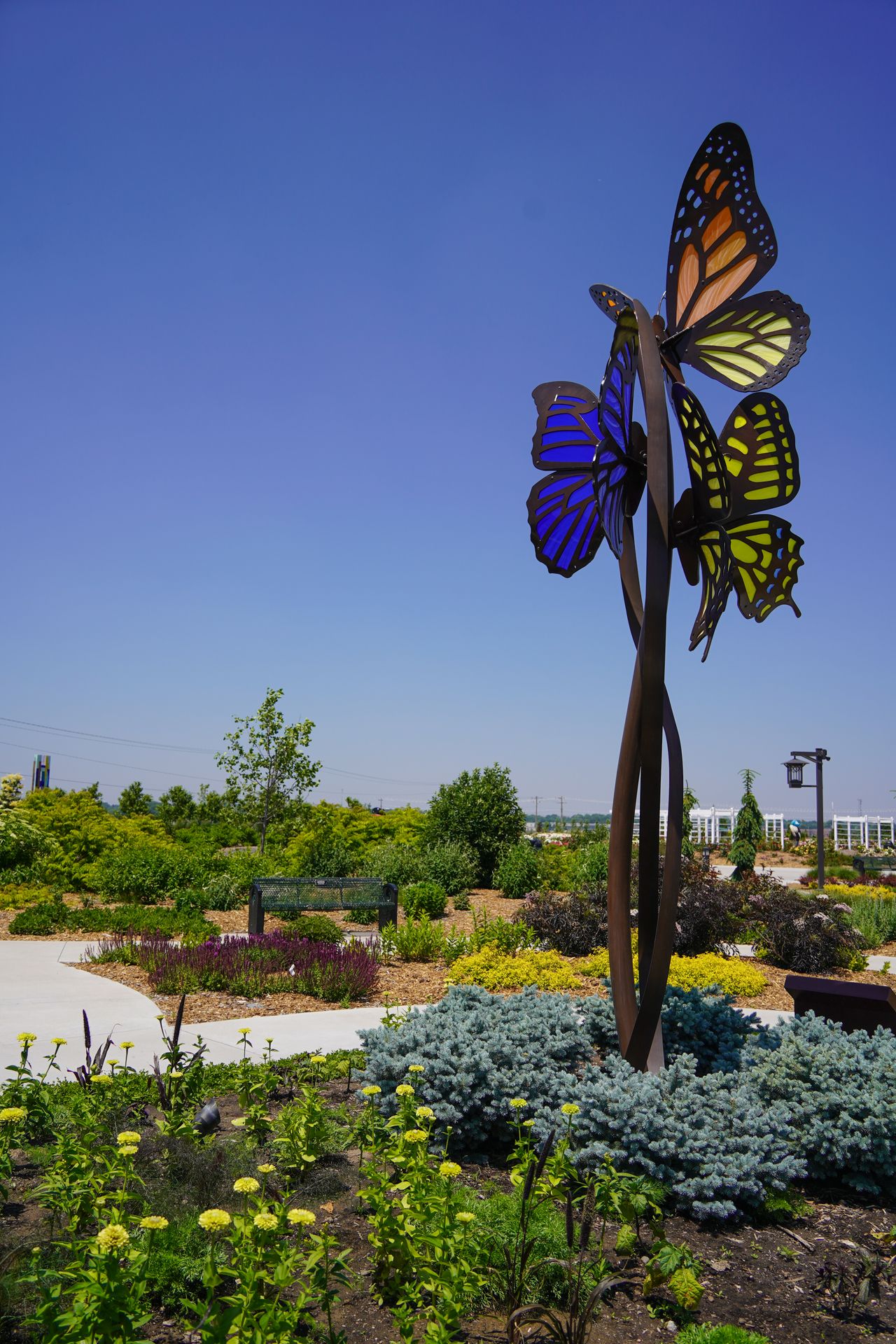

- Sandhill cranes aren’t the only birds that you can see in the area! You can also go on a tour to see prairie chickens mating. These birds live here year round, but their mating season lines up well with the sandhill crane season, and they put on an incredible dance and display as they mate. Book a tour to experience this from a comfortable bird blind.
- Visit MONA, the Museum of Nebraska Art. It’s free to visit and they showcase a wide variety of Nebraska art.
- Explore the Bricks District, which is officially recognized as a Nebraska Creative District. The downtown area is walkable with murals, shops, restaurants, and more. A few places I’ve enjoyed include Penny Coffee Roasters, Olde Towne Alchemy, Central Mercantile, and Kitt’s Kitchen and Coffee.
- Relax in nature at Cottonmill Park or Yanney Heritage Park.
Read my guide of more things to do in Kearney
Where to Stay in Kearney
Kearney has several different options for hotels! I stayed at the Candlewood Suites and it was a great spot if you’re looking for a kitchen and lots of space.
Other hotels to look at include the Crowne Plaza (it has a waterpark) or the Best Western Plus for nice amenities.
If you’d like to camp, Fort Kearny or the Kearney RV Park & Campground are great places to look.
Other Places to See the Sandhill Crane Migration in Nebraska
Kearney isn’t the only place to see the sandhill cranes along the Platte River!
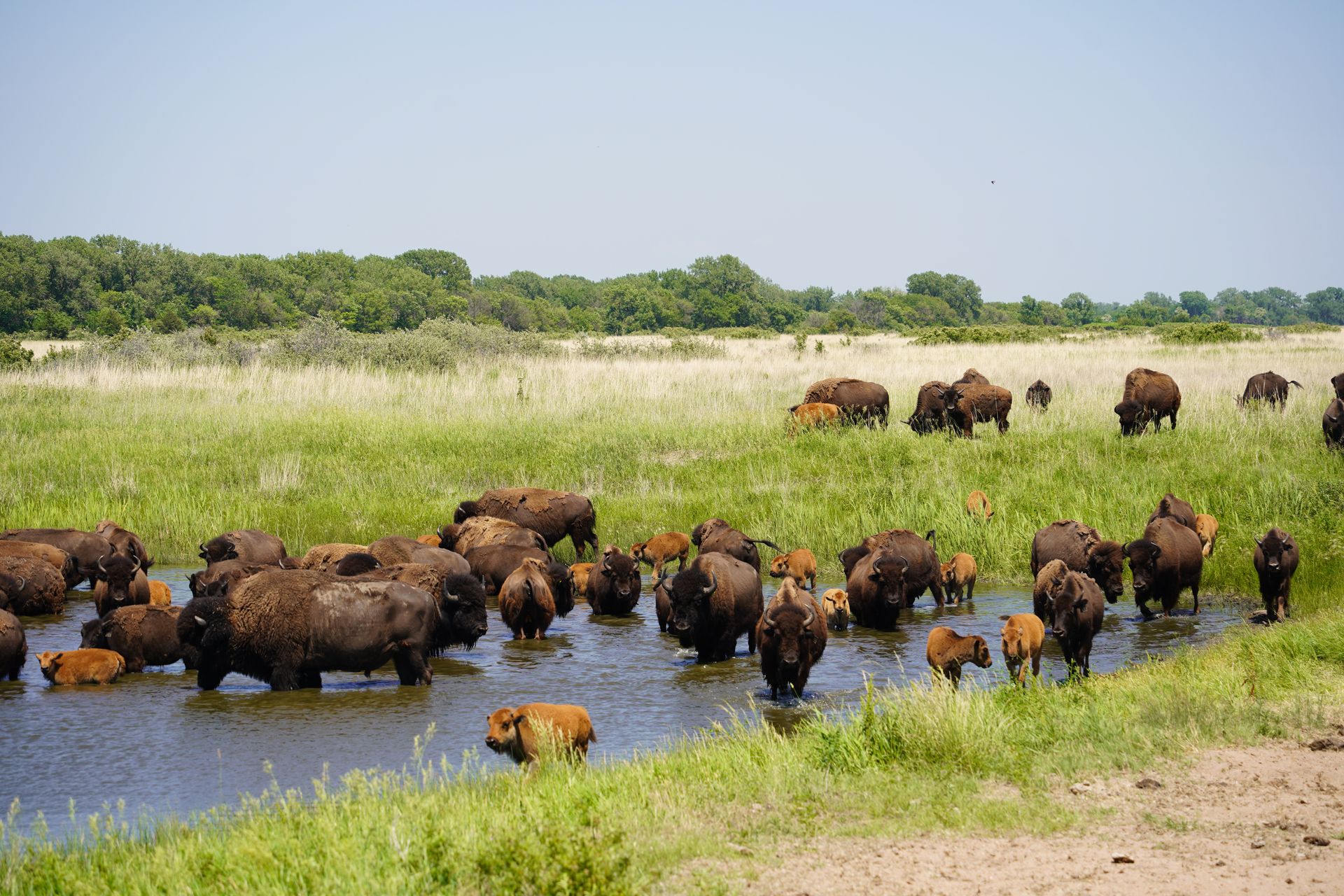
Another organization (that is similar to Rowe Sanctuary) is Crane Trust near Grand Island, Nebraska. They also offer guided bird blind viewing experiences at sunrise and sunset, along with daytime driving tours, and more. One of the biggest differences between here and Rowe is that Crane Trust offers a much more luxurious overnight experience. As you can imagine, the luxury overnight experience is much more expensive.
While I haven’t seen the cranes at Crane Trust, I was there at a different time of year and took a tour to see their bison herd. Both Crane Trust and Rowe Sanctuary do amazing work in protecting and preserving the habitats of sandhill cranes, endangered whooping cranes, and other species.
Another area where you can see the cranes is in North Platte, which is west of Kearney. Here, Dusty Trails offers bird blind tours, bus tours, and more.
Final Thoughts
I hope this guide helps you plan a trip to see the sandhill cranes in Nebraska! This is a once and a lifetime experience that anyone who loves birds or wildlife should make a trip for. You’ll never forget the sights and sounds as these beautiful birds make their way north.
For more Nebraska Travel Guides, check out these blogs:
- The Best Things To Do in Kearney, Nebraska
- The Best Things To Do in Norfolk, Nebraska
- The Best Things To Do in Northwest Nebraska
Thanks for Reading!


Let's stay in touch!
Join the Lost with Lydia email list to get monthly travel guides and tips!