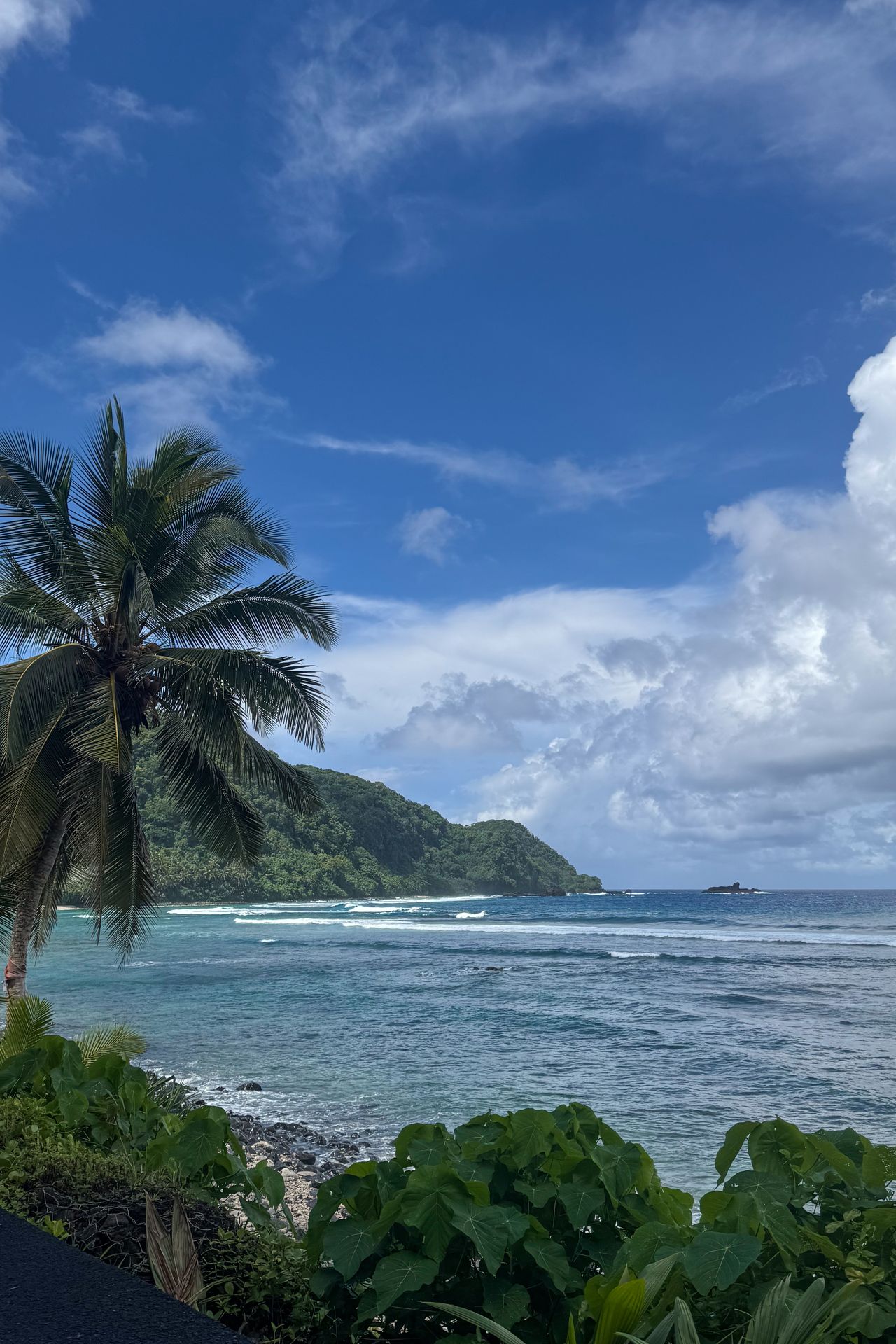
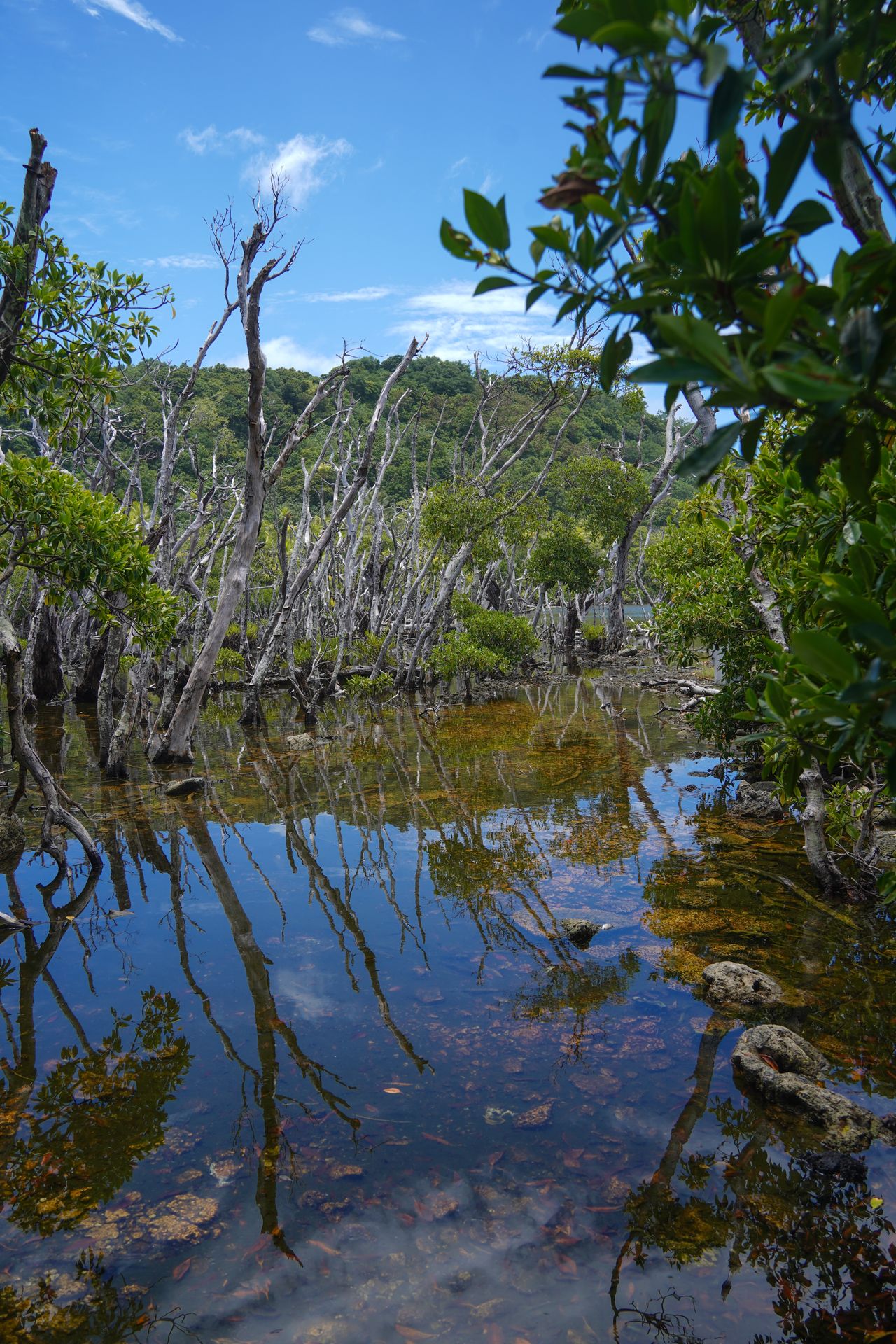
If you’re interested in visiting one of the most remote US national parks, you’re in the right place! American Samoa is a very special destination with amazing snorkeling, jagged mountain peaks covered in greenery and extra friendly people. Inside the National Park of American Samoa, you’ll find gorgeous views and hiking trails.
Anyone who is trying to visit all 63 national parks has probably thought about how they might visit American Samoa. It’s often the final park for national park enthusiasts, and they even have a special certificate if that’s you! However, it can be a difficult place to get to, and therefore hard to plan. Plus, all of the travel makes this national park trip expensive (although it might not be as expensive as you think).
I was a little bit nervous about visiting this park because I felt that there wasn’t a ton of information available online. And some information that was available was out-of-date. However, I ended up having the most incredible experience! The people were very kind and helpful, and it’s an all around beautiful island no matter how you spend your time.
I’ll be sharing everything you need to know in this guide, including a cost breakdown of the whole trip. I hope this helps you plan an epic trip to the National Park of American Samoa, as it’s a place you won’t soon forget. This is based on my experience visiting American Samoa in January 2026.
A Brief History of the Samoan Islands
The Samoan Islands have been inhabited by Polynesian people for thousands of years. Europeans first made contact with the islands in the 1700’s, and more regular contact came in the early 19th century. Christian missionaries arrived from London in the 1830s, and Christianity rapidly spread. It remains an important part of Samoan culture to this day.
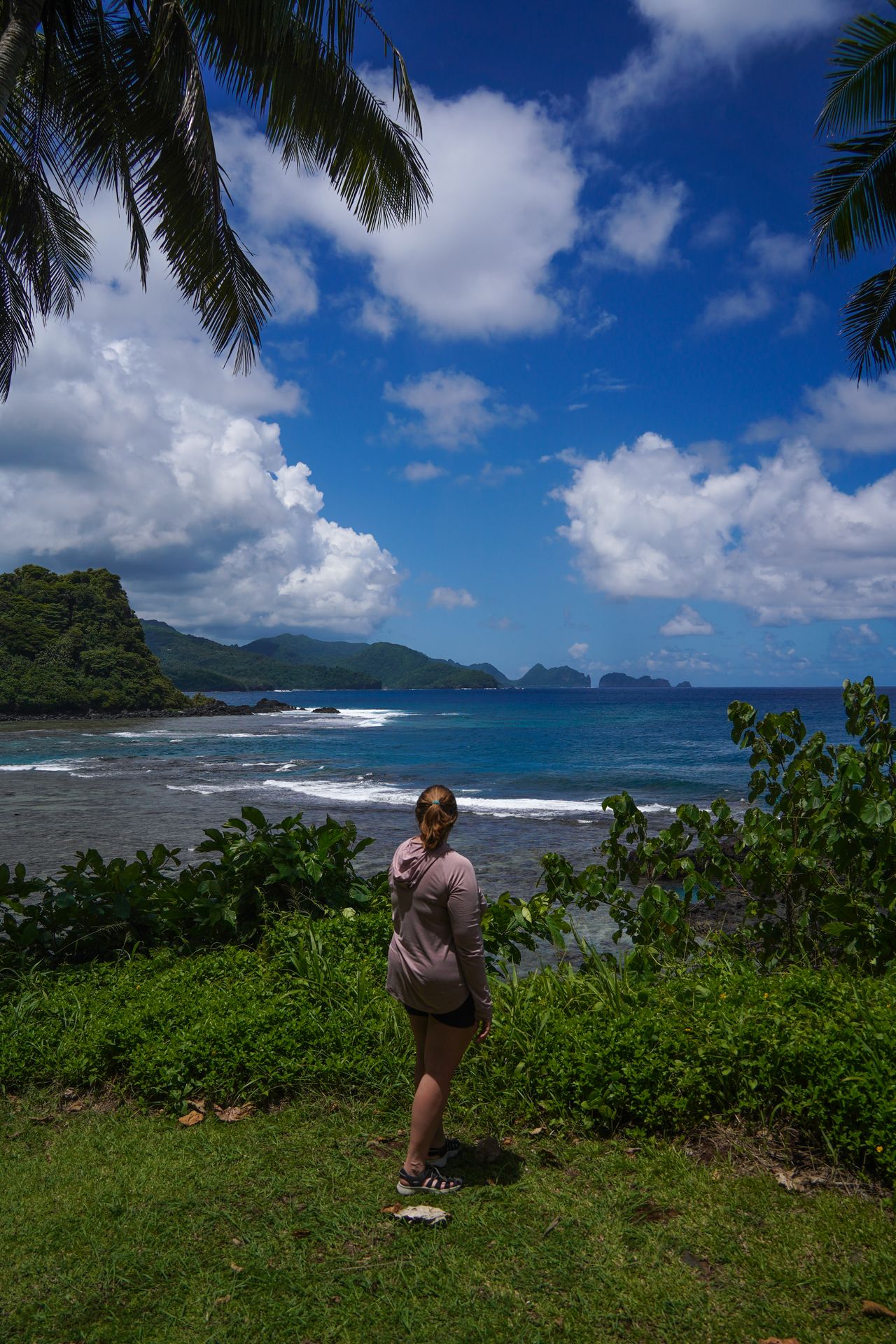
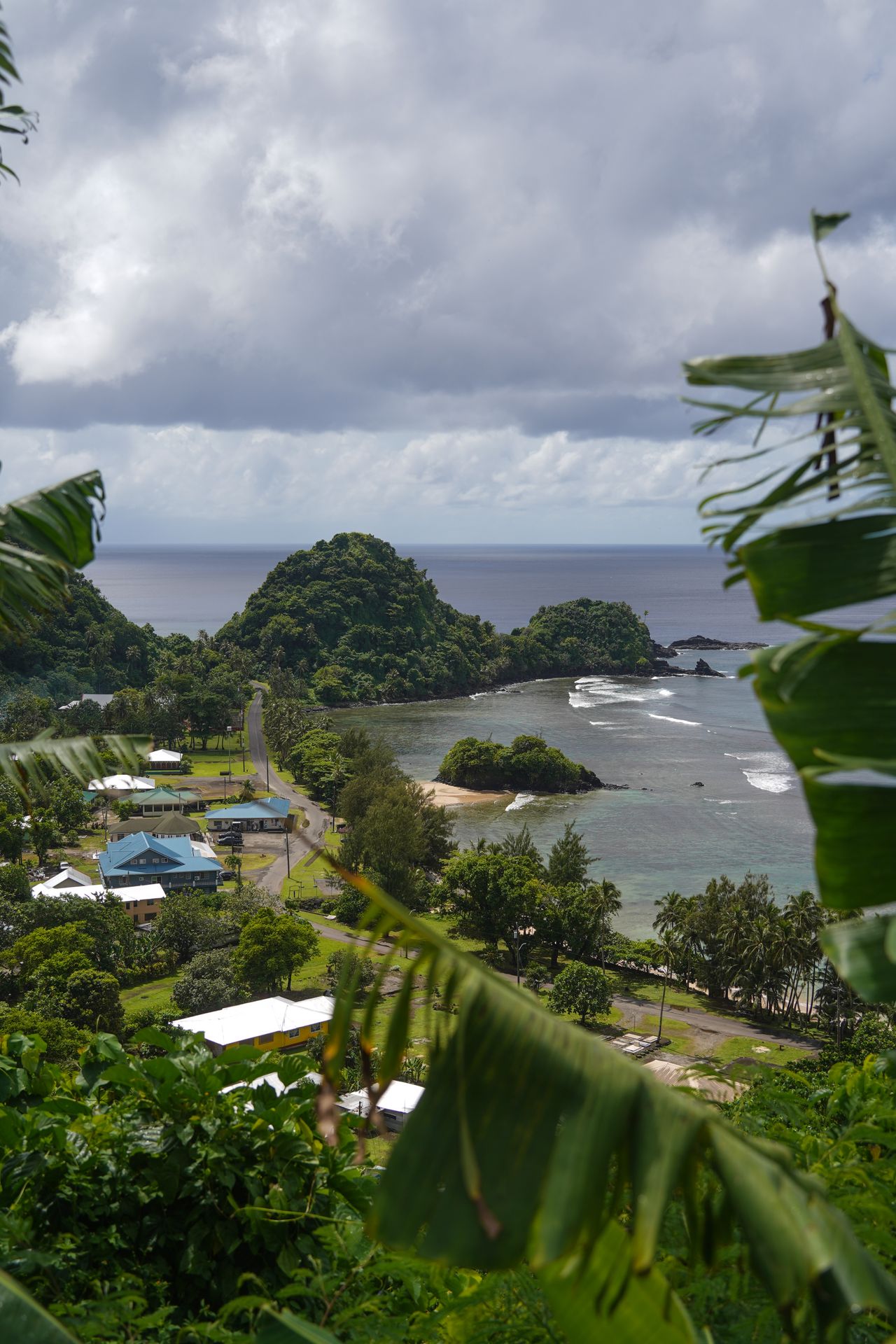
Fun Fact: Today, the Mormon religion is also very popular in American Samoa. In fact, they have one of the highest numbers of LDS Church members per capita in the world.
In the late 19th century, international interest grew over these islands due to their strategic location. The Treaty of Berlin divided the islands into two entities: American Samoa and Samoa (formerly called Western Samoa).
American Samoa officially became a US territory in 1900. Today, the Samoan people living on American Samoa maintain much of their traditional way of life, while also adopting American customs.
American Samoa is unlike anywhere else in the United States, and it’s a truly special experience to visit and learn about their way of life.
How to Get to American Samoa
Why does the National Park of American Samoa receive so few visitors? Well, it’s located way out in the South Pacific Ocean, making it hard to reach. In fact, it’s closer to New Zealand than it is to Hawaii.
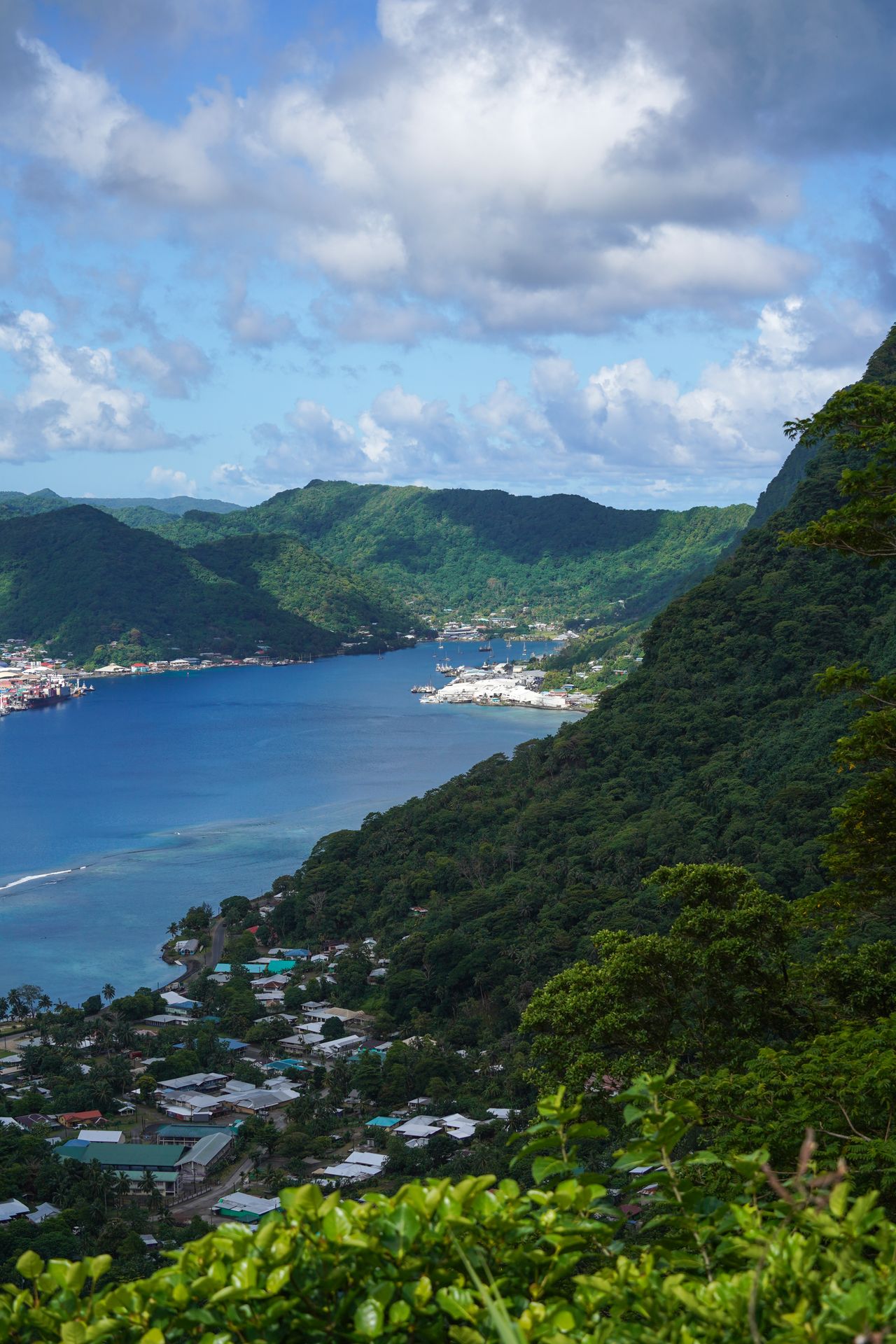
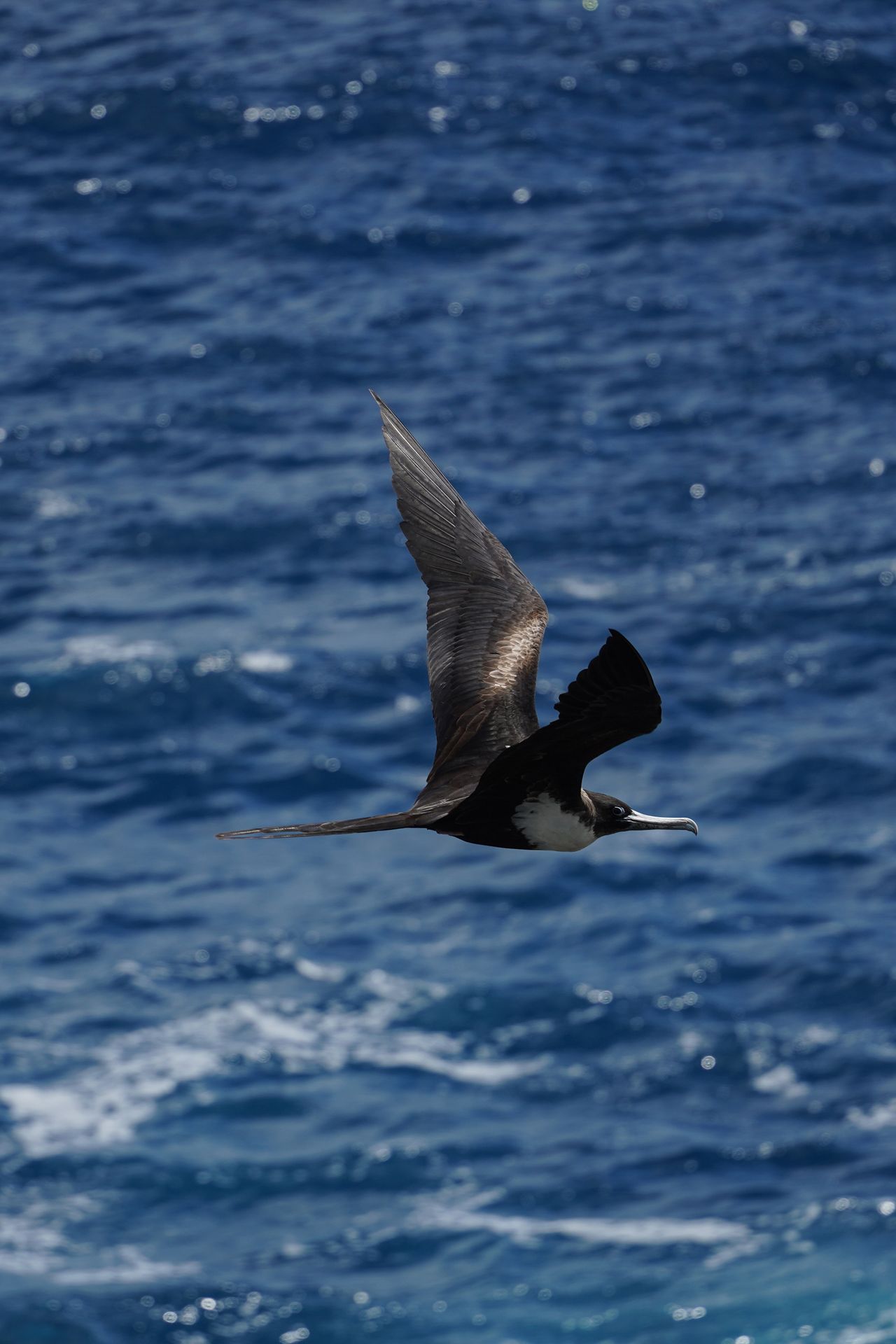
Fun Fact: American Samoa is the only US national park in the Southern hemisphere. And the only national park that US citizens need a passport to visit!
Most Americans will connect through Honolulu to visit American Samoa. Hawaiian Airlines (or Alaska Airlines - they operate as the same company) flies the route between Honolulu and American Samoa about 3 times per week. This means that you won’t have much of a choice on when you visit and how long you stay, you’re reliant on the schedule of the airlines.
The flight between Honolulu and American Samoa (to the city of Pago Pago) is about 5.5 hours. And typically, the return flight is an overnight red-eye flight. They served us a meal on the flight, but they only had one option and it was not vegetarian, so don’t rely on their food if you have any dietary restrictions.
If you’re flying from the mainland US, I recommend flying into Honolulu and spending the night there before flying to American Samoa the next day. This gives you some buffer time in case of any flight delays.
If you are flying from other Pacific destinations such as Australia, New Zealand or Fiji, you can reach American Samoa via the country of Samoa. Talofa Airways operates between the two islands daily. It’s a short flight (40 minutes) on a small plane.
If you would like to visit the more remote islands that are part of the national park, the Manu’a Islands, I recommend staying for at least a week. To reach these islands, you’ll need to fly to Ofu or Ta’u, or you can take a less reliable cargo ship. Typically, flights to Ofu Island occur every Tuesday and Thursday on Samoa Airways.
When to Visit American Samoa
American Samoa has a tropical climate and is nice to visit year round. However, there is a rainy season and a dry season.
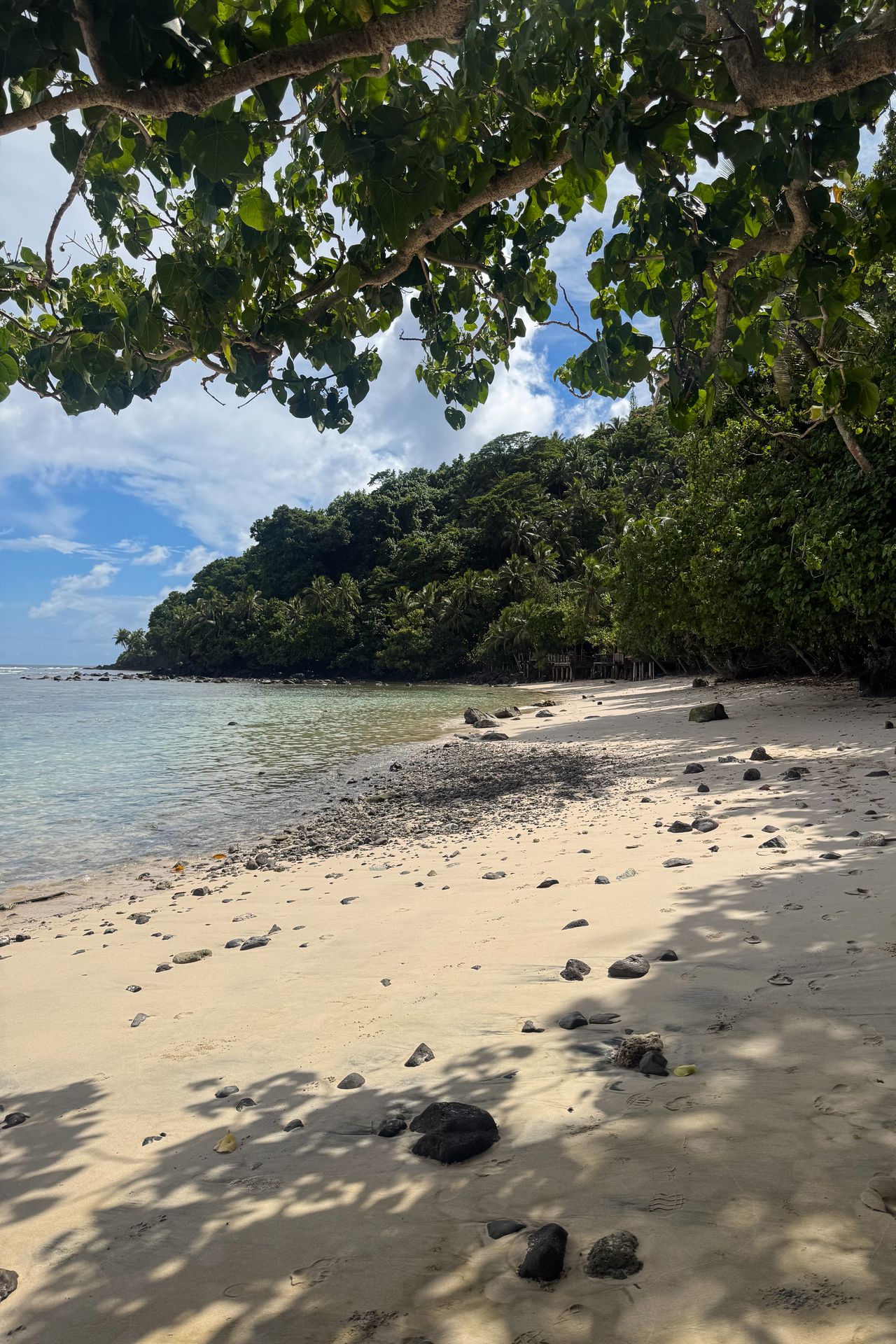
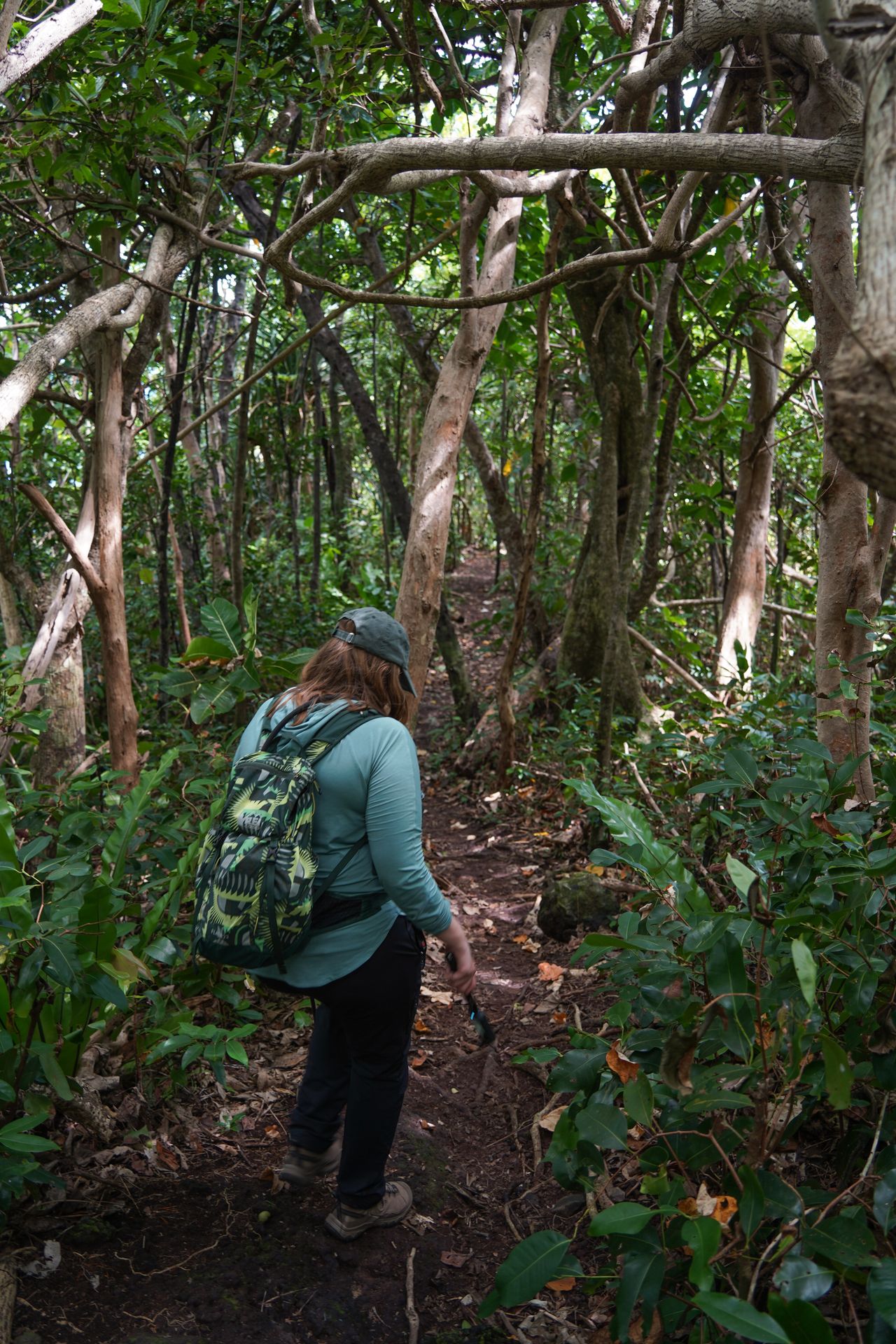
The rainy season, or their summer season, is between October and May. The dry season is between June and September and this tends to be the best time to visit. During these months, you can enjoy cooler temperatures, less humidity and less rain.
However, I visited in January, during the rainy season, and still had great weather. It rained a little bit each day, but it was short lived, and we had sunny weather the rest of the day. But it was extremely humid, which made hiking tough. However, I’ve read that even though it’s less humid between June and September, it can still be quite humid year round.
Another thing to consider is that tropical storms are possible, and are more common during the rainy season between November and May.
All this to say, the best time to visit is between June and September, but don’t worry about visiting at another time if that’s better for your schedule!
Where to Stay in American Samoa
There are essentially two hotel options in American Samoa - The Tradewinds and Sadie’s. Sadie’s has two main locations - Sadie’s by the Sea and Sadie Thompson Inn.
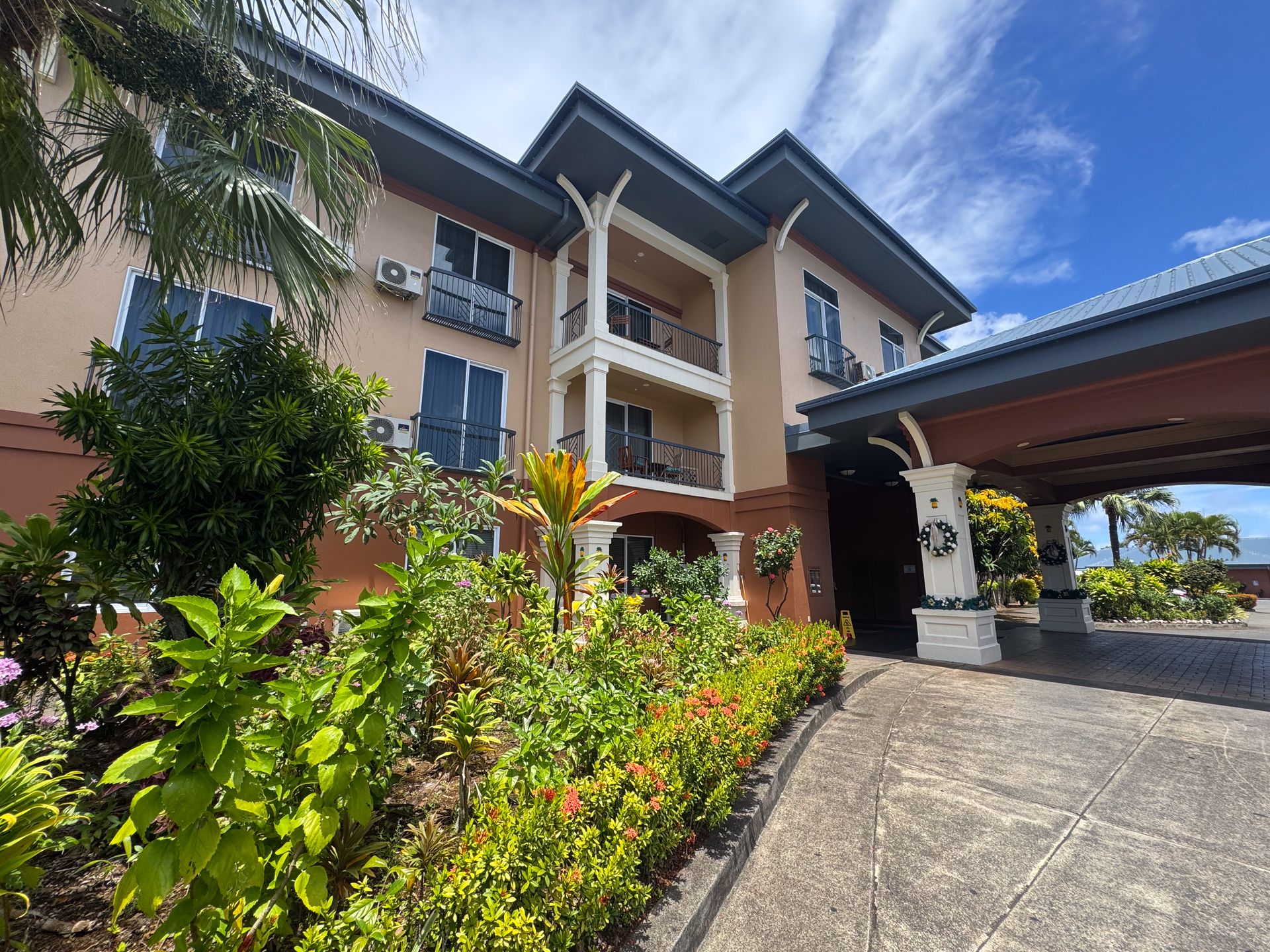
The Tradewinds is located closer to the airport, while Sadie’s is more centrally located on the island.
I stayed at the Tradewinds Hotel and it was perfectly nice overall, but nothing impressive. Here are some of my thoughts and observations about Tradewinds Hotel:
- The beds were not very comfortable.
- The room had everything we needed, including a coffee maker, microwave, fridge and air conditioning.
- Breakfast was included, but the included options were only a small selection of bread, fruit and yogurt. You’ll have to pay extra for a breakfast meal that includes meat or eggs.
- We rented our car from them and had a great experience (more on car rental in the ‘getting around’ section below).
- They have a day rate option for those who have evening flights, which was super nice!
- They also offer a shuttle to and from the airport.
- They have a restaurant, pool, self-service laundry on-site and a gift shop.
Next time, I might stay at Sadie’s by the Sea due to its location. It’s right on the ocean, and is closer to the national park hikes that I traveled to American Samoa for. Overall, I don’t think you can go wrong either way.
There are also Airbnbs and home stays available throughout the island! This could be a great way to meet locals and stay somewhere more unique.
Getting Around American Samoa
You can travel around American Samoa via bus, taxi or rental car. I highly recommend renting a car, as it gives you the freedom to explore the island at your own pace. Plus, it would be difficult to coordinate a taxi or bus to take you to the national park trails.
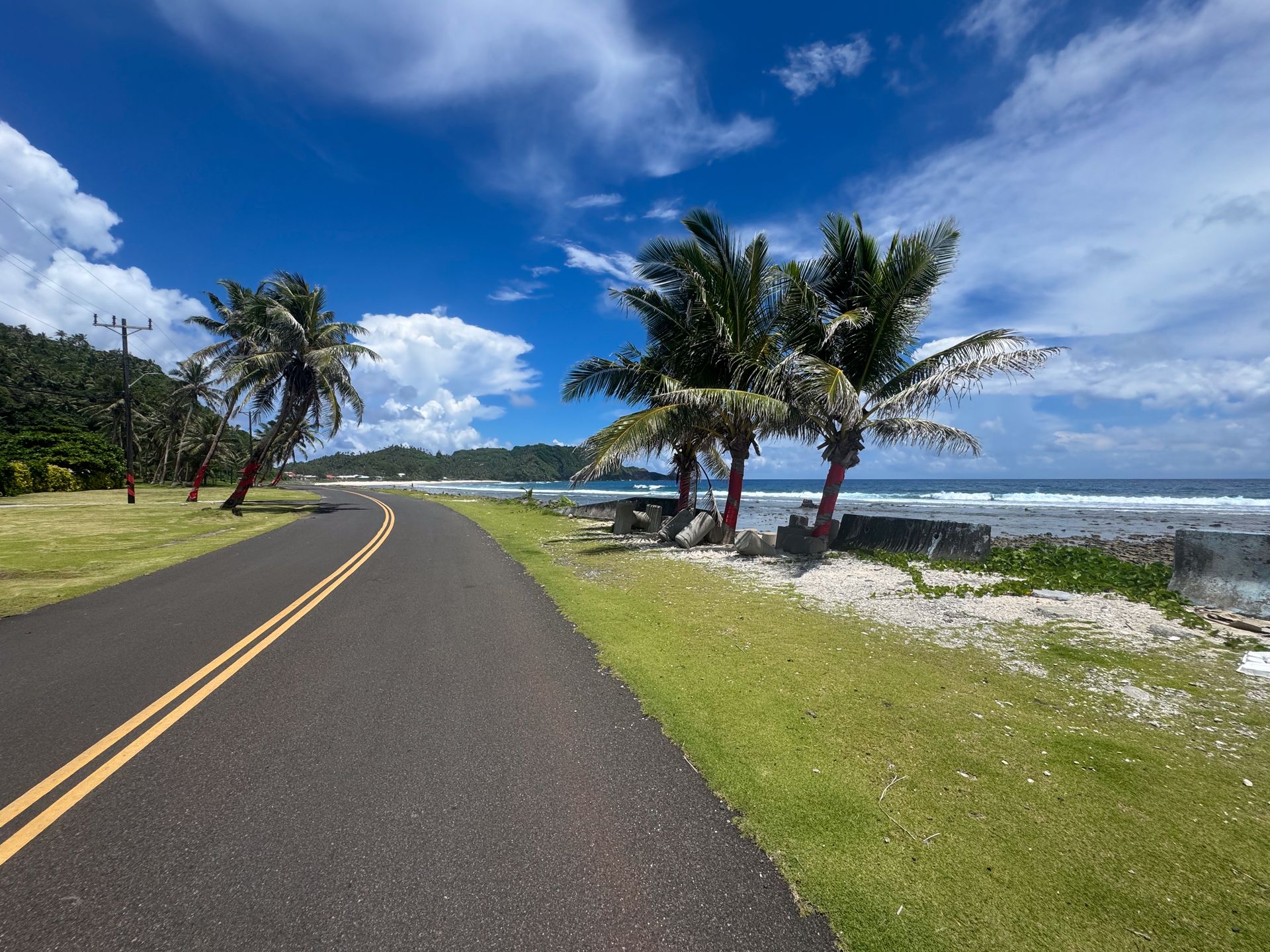
There are several car rental options on the island. I rented from the Tradewinds Hotel and it was a smooth and easy process. It was a bit more expensive than some of the other options, but it was very convenient to pick up and drop off the car from the hotel. Other options to consider include Tuanaitau’s Car Rental and Tautai Car Rental.
If you’d like to utilize public transportation, you can take an aiga (family) bus. They are colorful buses with affordable fares, but don’t have a set schedule.
How long should you stay in American Samoa?
While the flight schedules are limited, you may be wondering how many days you should stay in American Samoa.
If you would like to visit the more remote islands that are part of the national park (the Manu’a Islands) I recommend staying for at least a week. If that’s not in your plans, I think 3-4 days on Tutuila Island gives you the perfect amount of time to snorkel, hike, relax and explore.
If you’re okay with only seeing the national park and skipping the other things to do on Tutuila Island, you can see most things in a couple days. However, I recommend spending at least 3 or 4 days so that you can get to know the island a little bit more.
Other Things To Know About Visiting American Samoa
- The culture of American Samoa is quite religious, and most things are closed on Sundays. This includes swimming at the beaches. You should also dress modestly while exploring.
- Even though American Samoa is in the United States, American citizens need a passport to visit. I believe a birth certificate is accepted as well, but be sure to check the requirements carefully.
- Be sure to triple check your cell phone data plan before visiting American Samoa! Many major phone plans, such as Verizon and T Mobile, charge HUGE fees for data coverage here. After visiting 30+ countries and other US territories, we’ve only seen this happen in American Samoa. Bluesky is your only option for a sim or esim during your trip, and it’s best to go in person when you arrive, because it’s unreliable to purchase their eSIM online. Personally, we went without using data and only used wifi at our hotel and other places it was offered, and didn’t have any issues. Just be sure to download offline maps on Google Maps to get around!
- American Samoa is part of the US, so they take the US dollar. Cash is necessary in some situations, but we found that most places took credit cards.
- Tipping is not part of the local culture, so it’s not customary or expected here. However, it’s always appreciated to give a small cash tip, especially to guides, housekeepers or drivers that go above and beyond.
- It is generally not safe to drink the tap water in American Samoa. Bring a filter or be prepared to buy bottled water.
- In American Samoa, you might find multiple different types of outlets - types A, B, F and I. The Tradewinds Hotel had the same plugs as most of the US, type B.
- Check the tide chart before heading out swimming or snorkeling on the beaches. In some areas, it’s very hard to snorkel at low tide.
- Dogs can be a little bit aggressive on American Samoa. We noticed aggressive dogs in a couple areas - on the Southwest side of the island and on Aunu’u Island.
- The speed limits across the island are low, generally 25 or 30 mph. Not only do most people follow the speed limits, but people are very polite in their driving. We noticed that it was very common for people to stop traffic to let other cars pull out into the road. Drive slow and be a courteous driver when you visit.
- Filling up our car with gas was easy, but they pumped the gas for us instead of us doing it ourselves.
- When it comes to food on American Samoa, you can find a lot of American and Asian influence. We found the portion sizes to be huge at every place we ate, so it would be easy to share. I’m vegetarian and unfortunately, I did not find the island to be very vegetarian friendly. Many of the restaurants had no vegetarian options at all, but some were happy to make something for me off the menu.
What to Bring To the National Park of American Samoa
Here are a few things you should make sure to bring on your trip to American Samoa!
- Reef-safe sunscreen for snorkeling.
- Your own snorkel. As far as I know, snorkel rentals are available in only one place on the island - South Pacific Watersports. However, they were unexpectedly closed during our visit. If you want to be able to snorkel without worrying about the unreliable rentals, it’s best to bring your own snorkel.
- A hat, sunglasses and other sun protection. This island gets very hot and humid, so make sure you’re prepared.
- A bathing suit and packable towel. If you want to swim during your trip, be sure to bring a bathing suit, packable towel and anything else you might need.
How Much Does it Cost to Visit American Samoa?
It’s a bit expensive to visit American Samoa due to its remote location. However, after the flights to get there, it may be more affordable than you think. Compared to the other remote US national parks in Alaska, American Samoa tends to be cheaper overall.
These are 2026 prices and are subject to change.
First, you’ll need to fly there, and this is the biggest cost. As of this writing, prices from Honolulu to American Samoa are $900 - $1000 round trip. That doesn’t include your flight to reach Honolulu, which will vary a lot depending on where you live.
Next, the lodging. The Tradewinds Hotel isn’t cheap, but isn’t expensive either. Rates typically start around $150 a night.
Then you’ll need to rent a car. This is typically $80 - $110 a day.
Finally, food and activities. Most of the activities on American Samoa are free, so that shouldn’t be a high cost. Food costs will vary depending on how much you eat. I found the restaurant prices to be a little bit high, but not nearly as high as nearby Hawaii. And the food portions were HUGE, so it’s easy to share a meal or bring back leftovers.
Approximate total for 2 adults to spend 4 nights on American Samoa (includes flights from Honolulu, hotel, car and food): $3,400
The Best Things To Do in American Samoa National Park
Stop by the Visitor Center
In my experience, most national park visitors love to stop at the visitor center to pick up a souvenir, get a stamp in their NPS passport and learn about the park. I would argue that it’s extra important here, because there just isn’t a lot of information available online about the park.
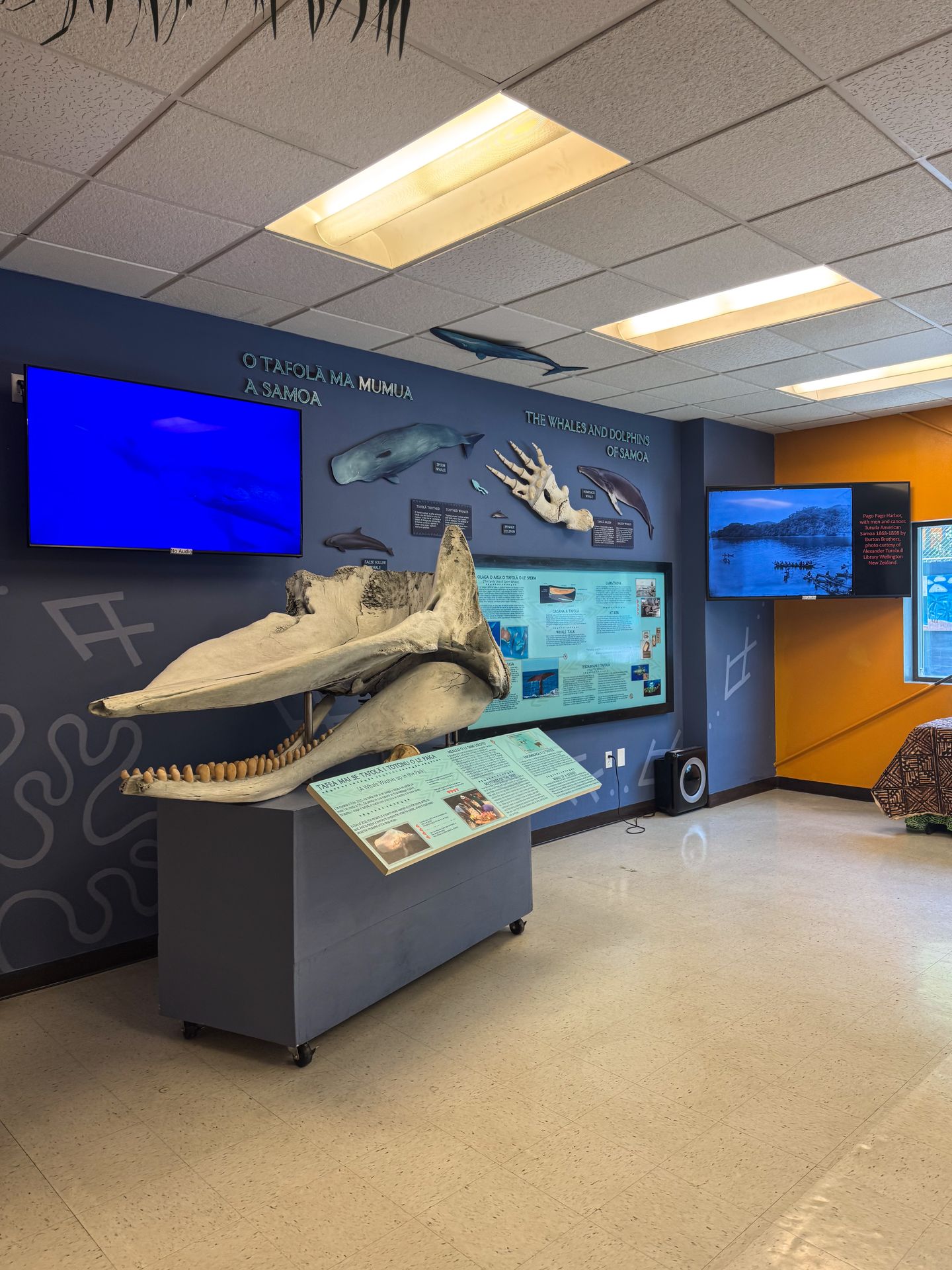
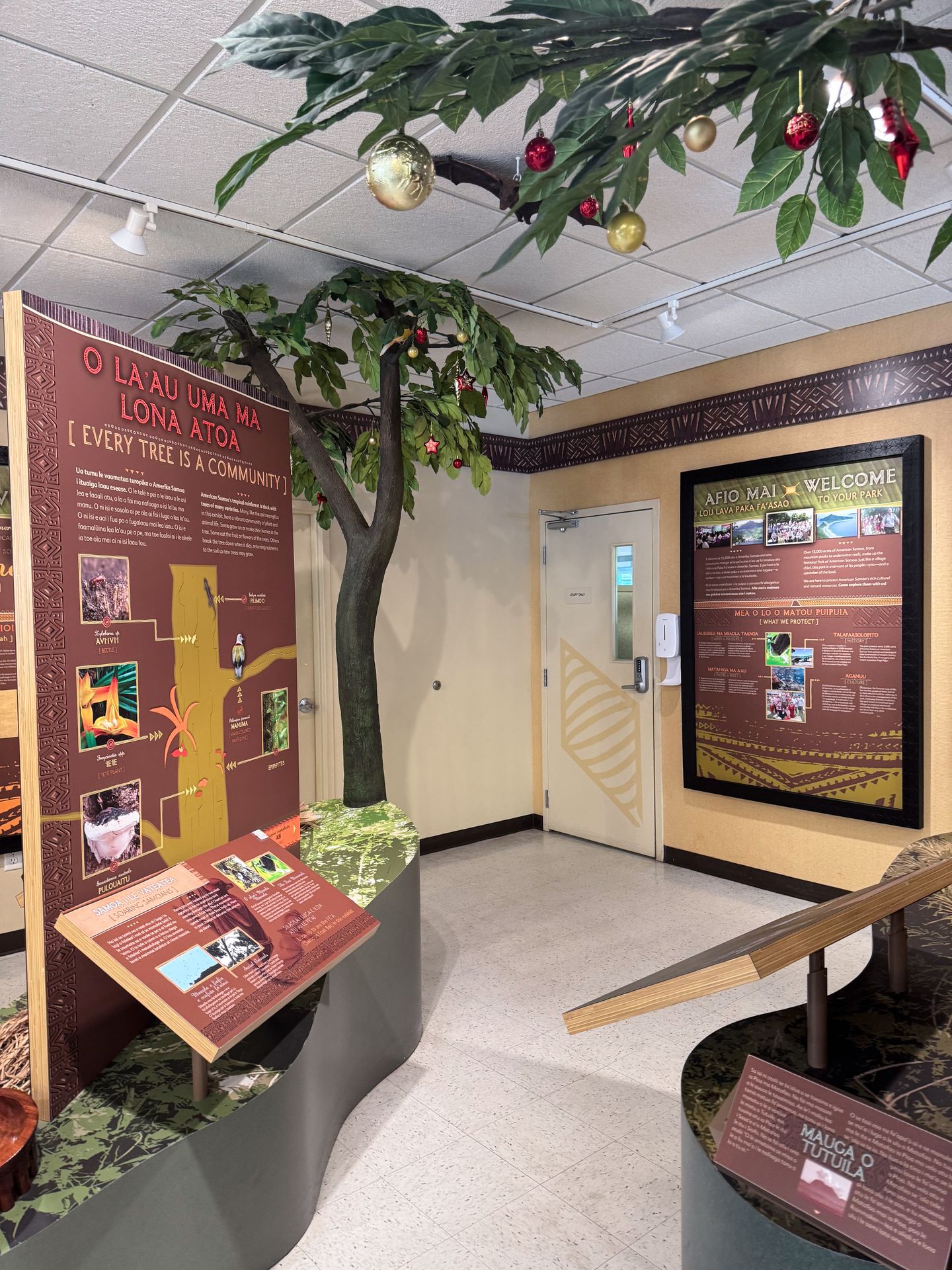
We found out from the ranger there that the Mt Alava Trail was closed, and the closure was not listed on the national park website. The ranger also gave us a very helpful map that we couldn’t find online.
Keep in mind that the visitor center is closed on weekends, so be sure to plan accordingly.
Fun Fact: If American Samoa is your 63rd US national park, you can get a special certificate here!
Hike to the Top of Mt Alava
The peak of Mt Alava offers incredible views of Pago Pago Harbor and Tutuila Island from above. There are two main ways to reach the peak - you can hike along the ridge on the Mt Alava Trail (7.4 miles round trip), or take the Mount Alava Adventure Trail, which involves a series of ladders and stairs.
Unfortunately, this trail was closed during my visit, as they were working on renovating and improving the path. We only learned this by talking to the ranger at the visitor center. I hope to return and hike this in the future!
Hike the Lower Sauma Ridge Trail
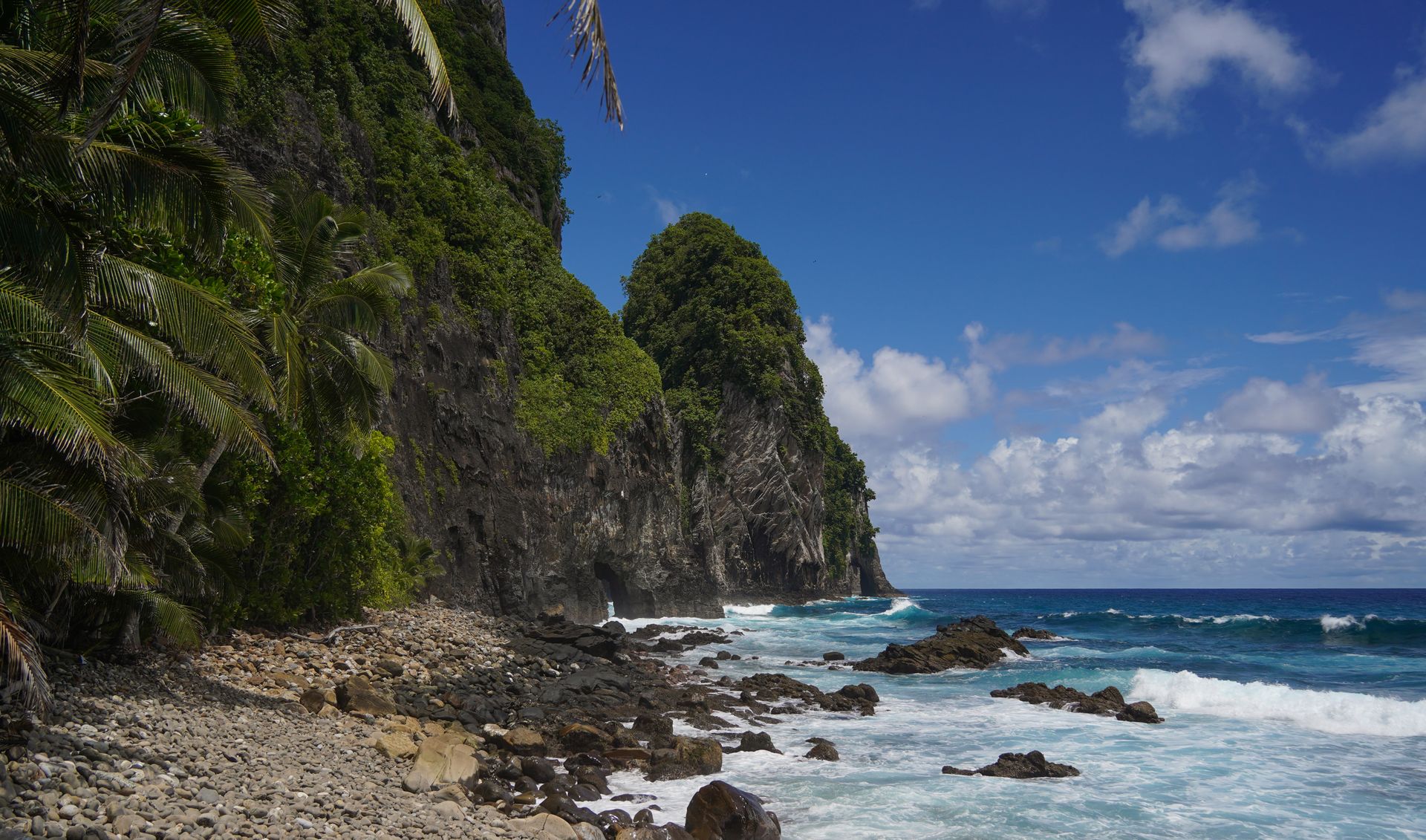
The Lower Sauma Ridge Trail is a short trek with an EPIC payoff. The trail is just under a half mile, and you’ll be hiking downhill through a rainforest to reach the viewpoint. You’ll emerge out of the rainforest to find yourself on a rocky coast, complete with jagged volcanic rocks and blue tidepools below.
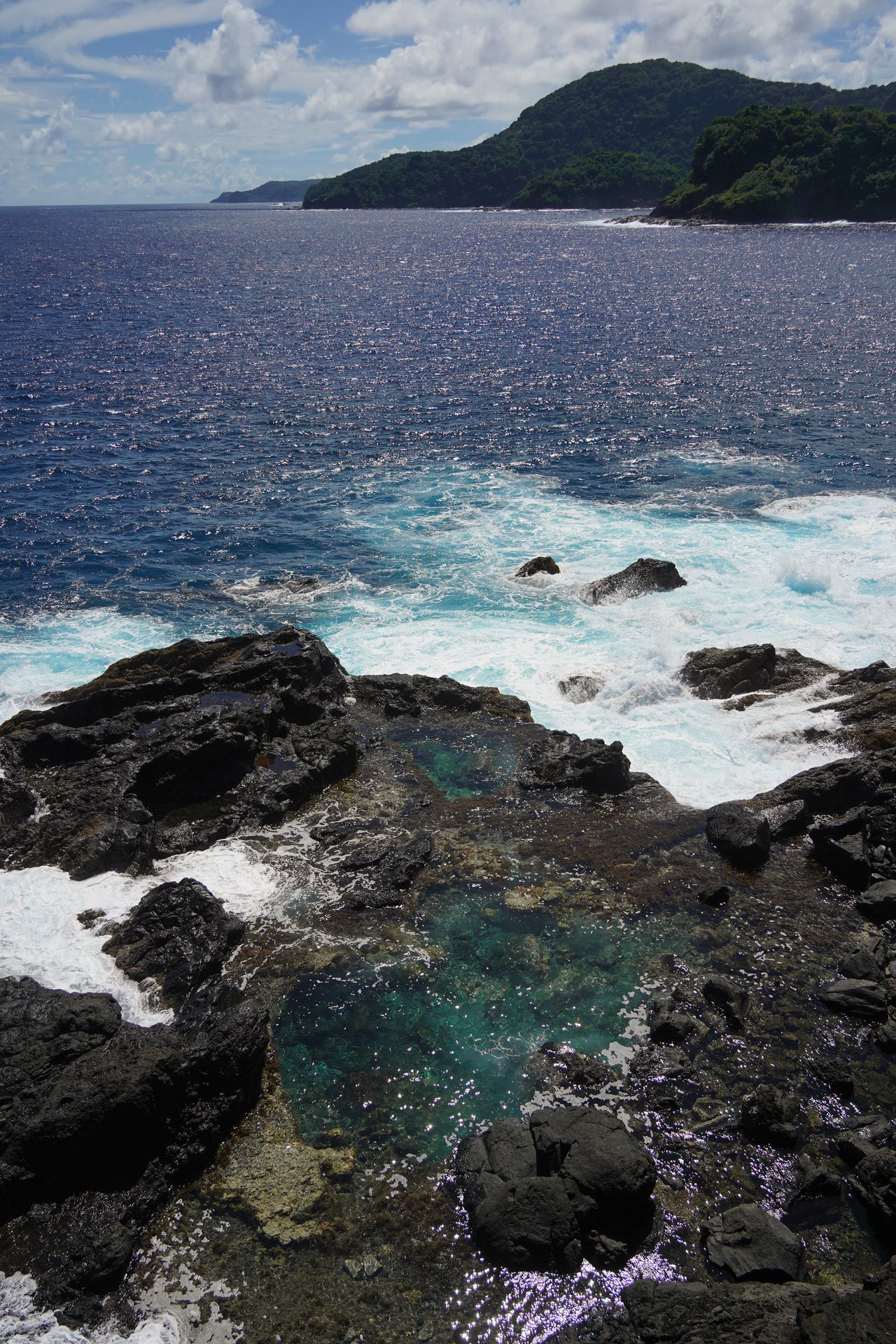
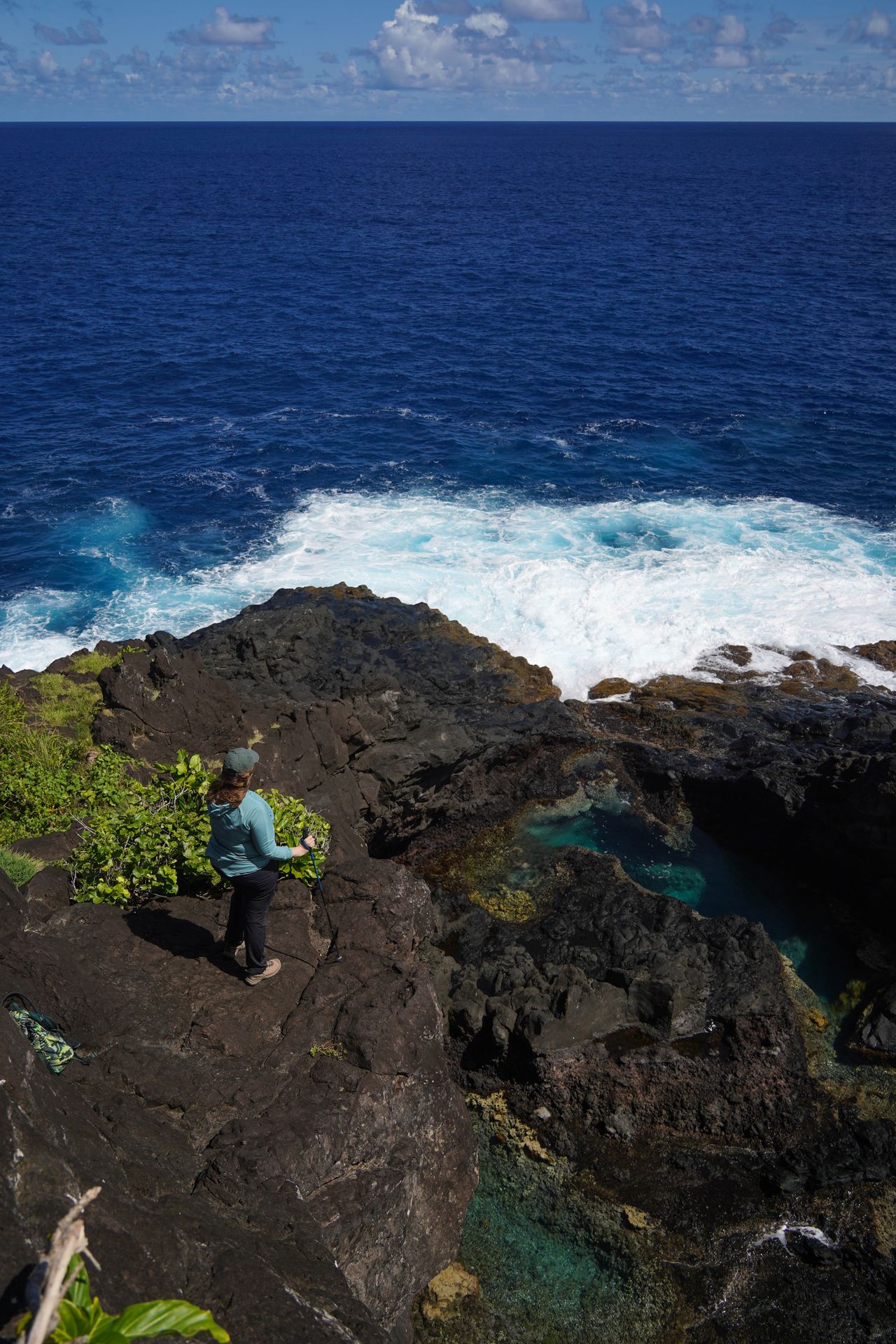
From the ridge, you’ll also have fantastic views of Pola Island to the west, and other parts of the island to the east. As we admired the views, we also marveled at the brown boobies soaring very close to us.
You’ll be hiking uphill to return to your car and the weather can be very hot and humid, so be sure to bring water and sun protection on this hike, even though it’s short.
There is space for a few cars in the pull off for this trail. There is also a viewpoint of Pola island from right next to the car, which is a great option for anyone unable to do the hike.
Admire the Pola Island Viewpoint
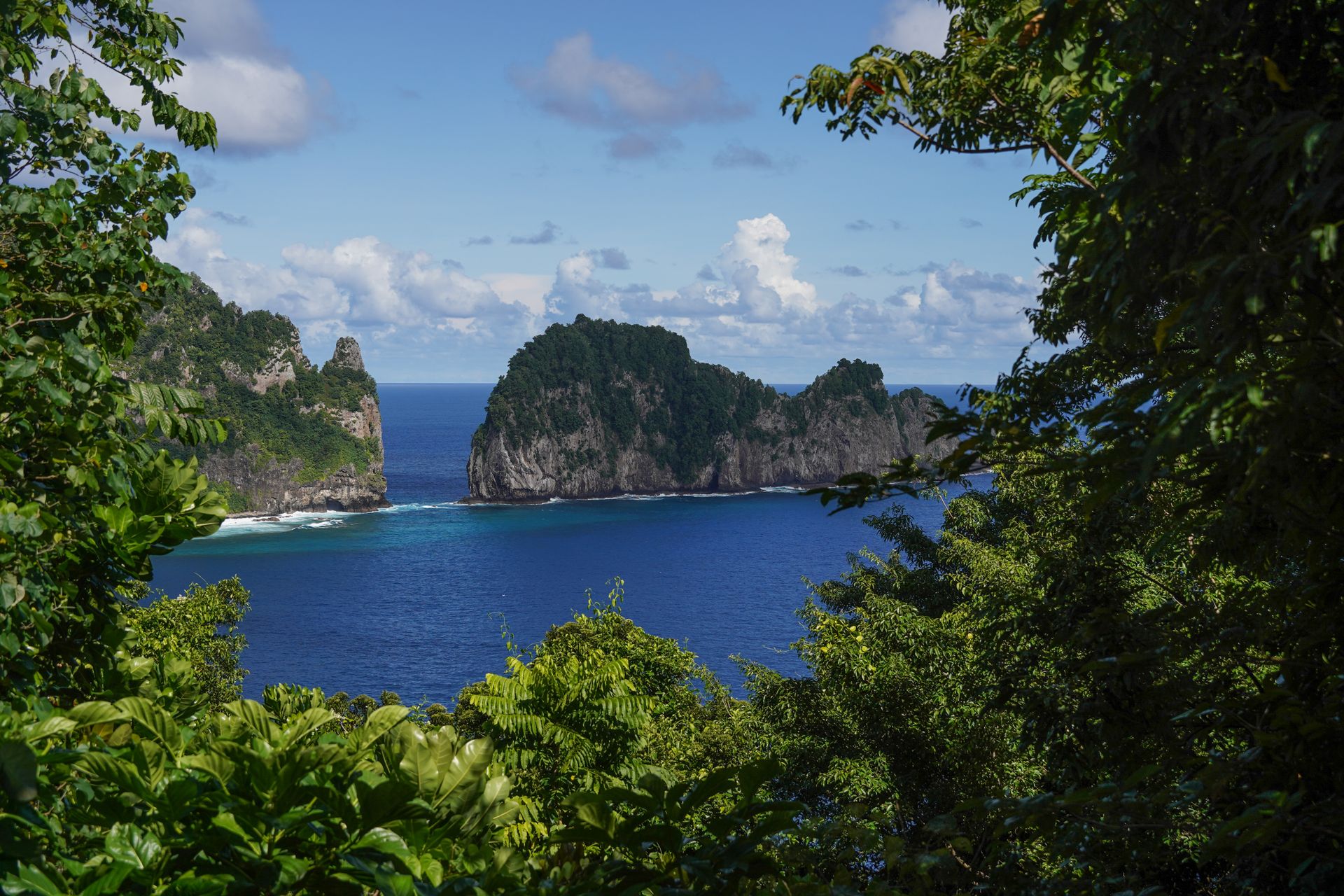
The Pola Island Viewpoint is definitely a must-stop in American Samoa National Park. In my opinion, it’s the most beautiful view on the island.
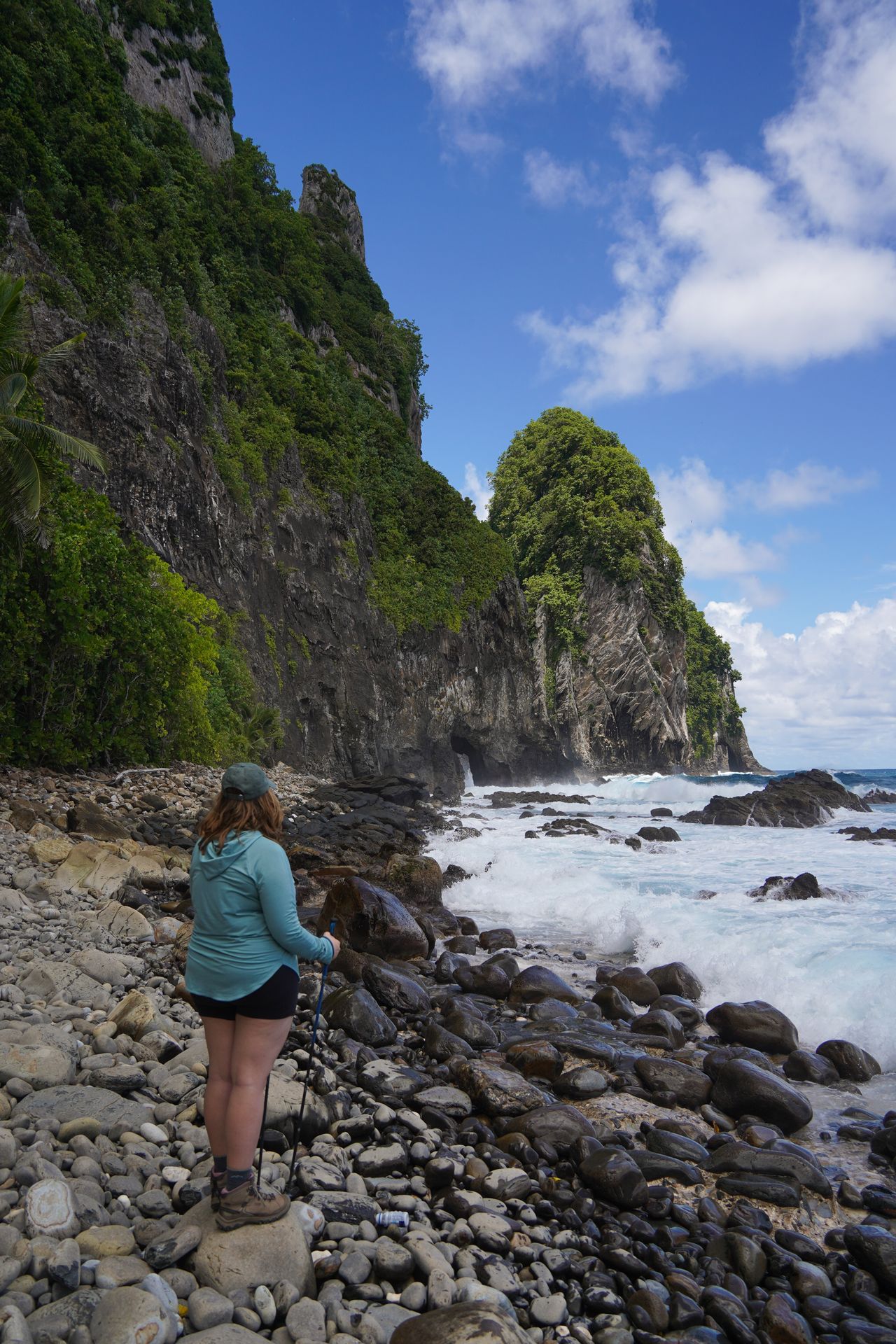
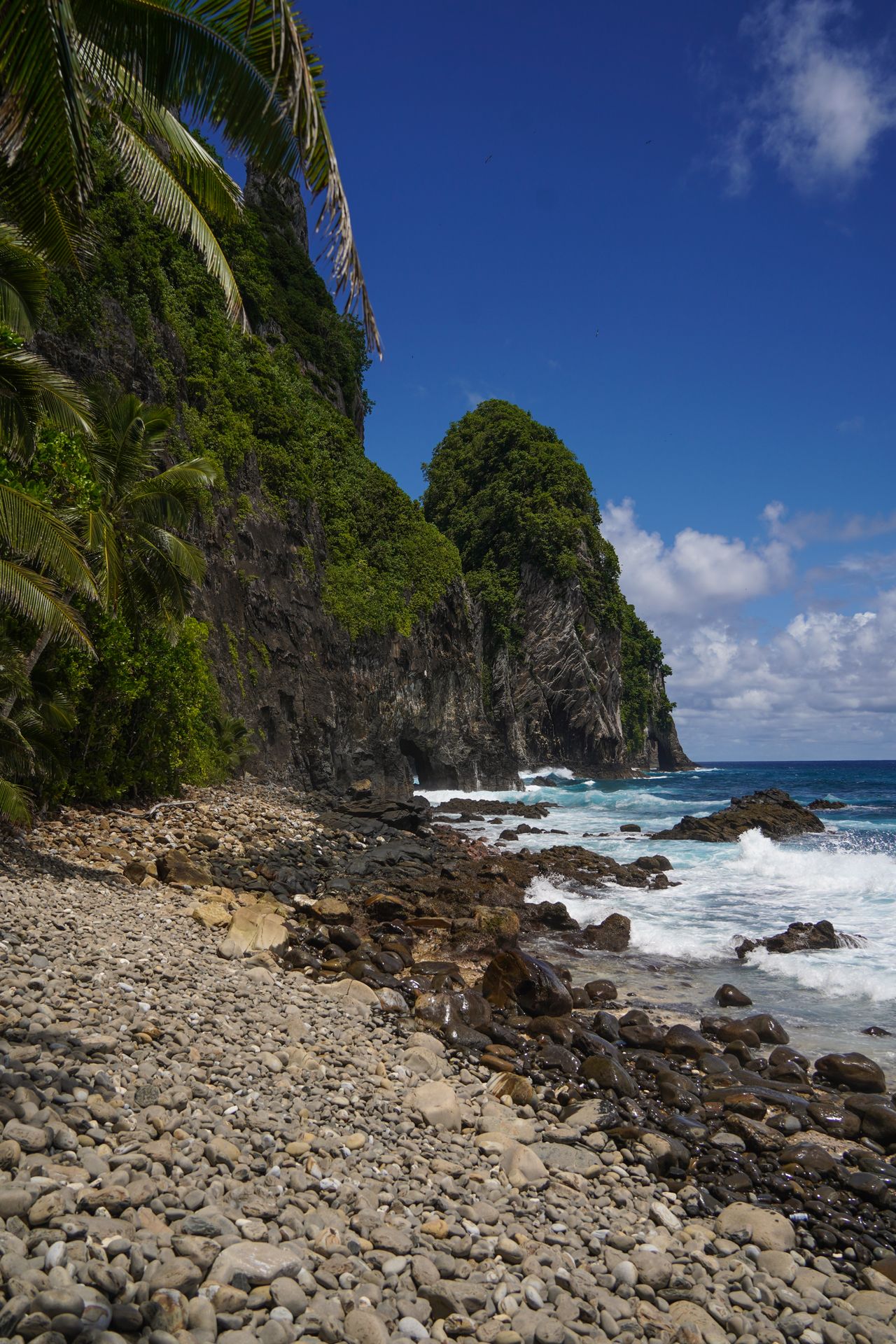
The road to reach the viewpoint is a little rough. You can drive all the way if you feel comfortable, or park your car on the side of the road. We took our car part of the way, and found a spot where we could park and be out of the way. If you decide to walk on the road, it’s a quick and flat journey to reach the view.
You’ll walk out onto a rocky beach to enjoy this view. It can be hard to walk on, and the rocks may be slippery, so take your time. But the views are very much worth it. You’ll be enjoying an up close look at the gorgeous Pola Island, which is a sanctuary for nesting seabirds.
Hike the Tuafanua Trail
The Tuafanua Trail was the most adventurous hike we did in American Samoa! The first half of the trail involves typical switchbacks through the rainforest, but the second half involves steep ladder-like steps with ropes to give you an extra place to hold on.
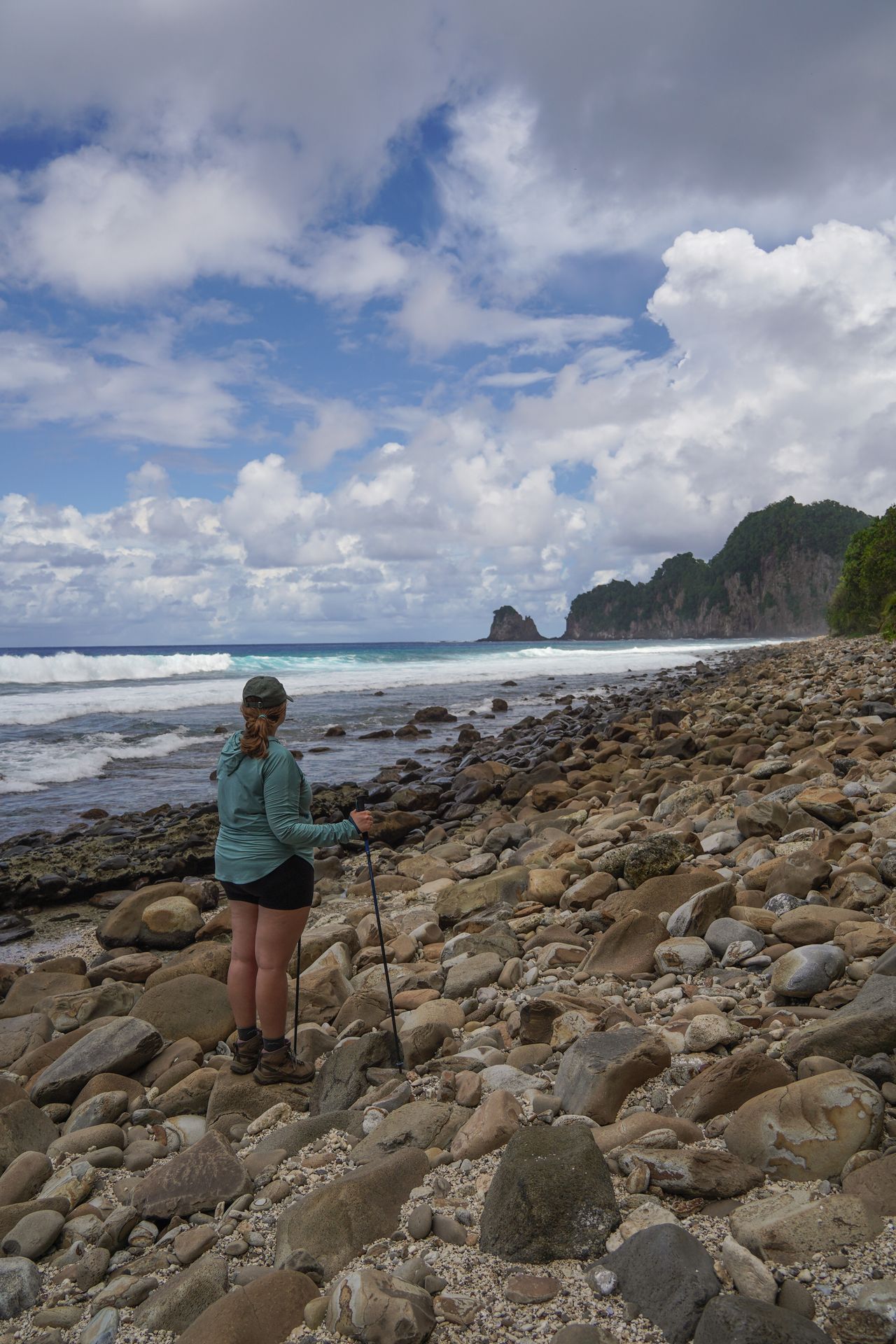
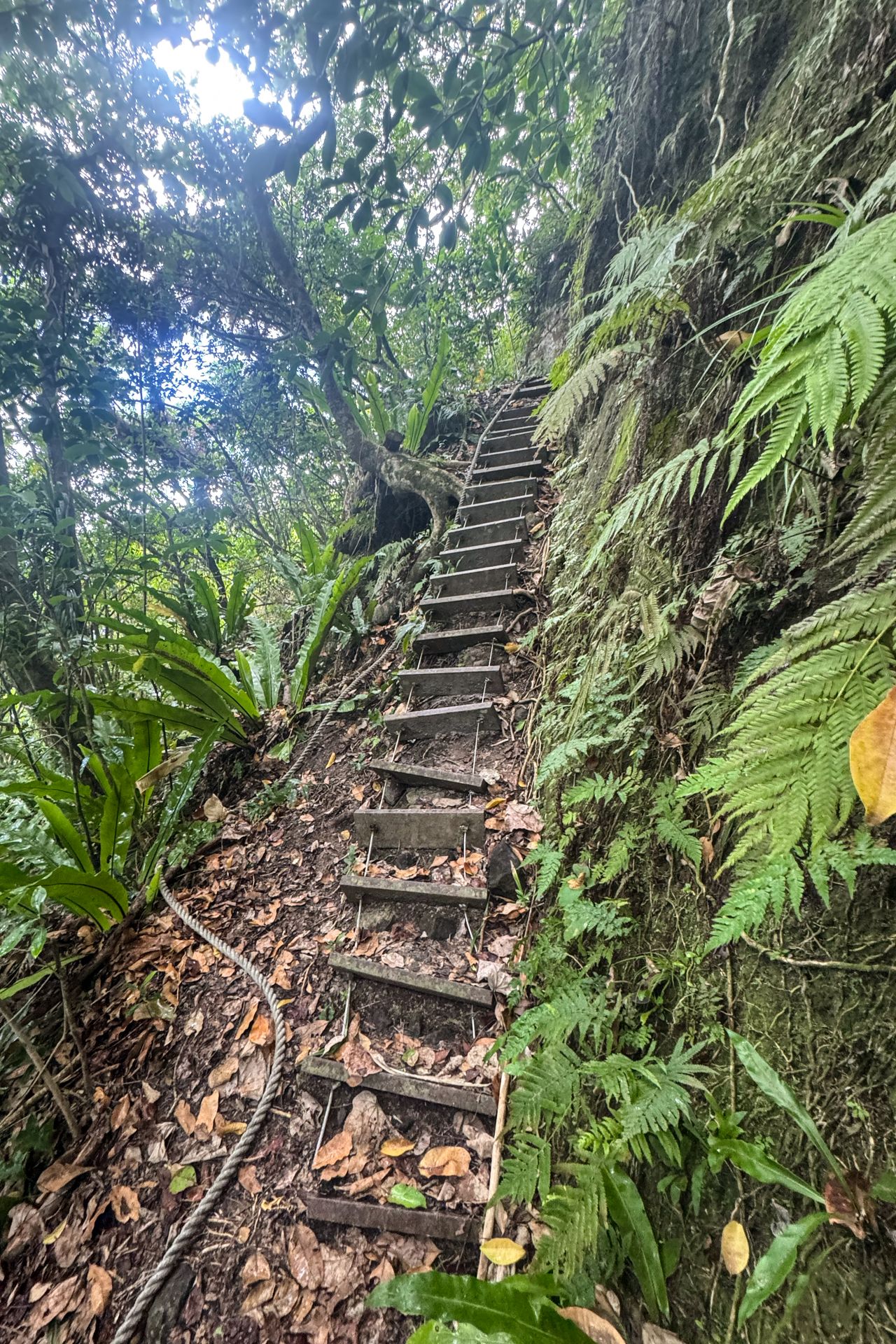
This unique trail is just 1.3-miles round trip, but is sure to get your blood pumping. It leads to a rocky beach that offers another viewpoint of Pola Island, but from the opposite side of the ridge.
This trail is fun if you’re up for an adventure, but the views were not as good as the Pola Island Viewpoint, which is much easier to reach. The trail can be difficult on a hot and humid day, and might be slippery in rainy weather.
To begin this trail, you’ll park in the grass in front of a building. There is a small sign marking the parking area. There were locals playing pool outside of the building when we visited, and one man shook our hands and told us to be careful on the hike. The people on the island are very friendly, so don’t be afraid to say hello!
Afono Pass Overlook
While you’re on your way to the hikes and views in the national park, be sure to make a quick stop on Afono Pass for the views over Pago Pago Harbor. There is space on Rte 006 for a couple of cars to pull over and enjoy the view. It’s located right around these coordinates - -14.266, -170.656 - and it’s easy to spot.
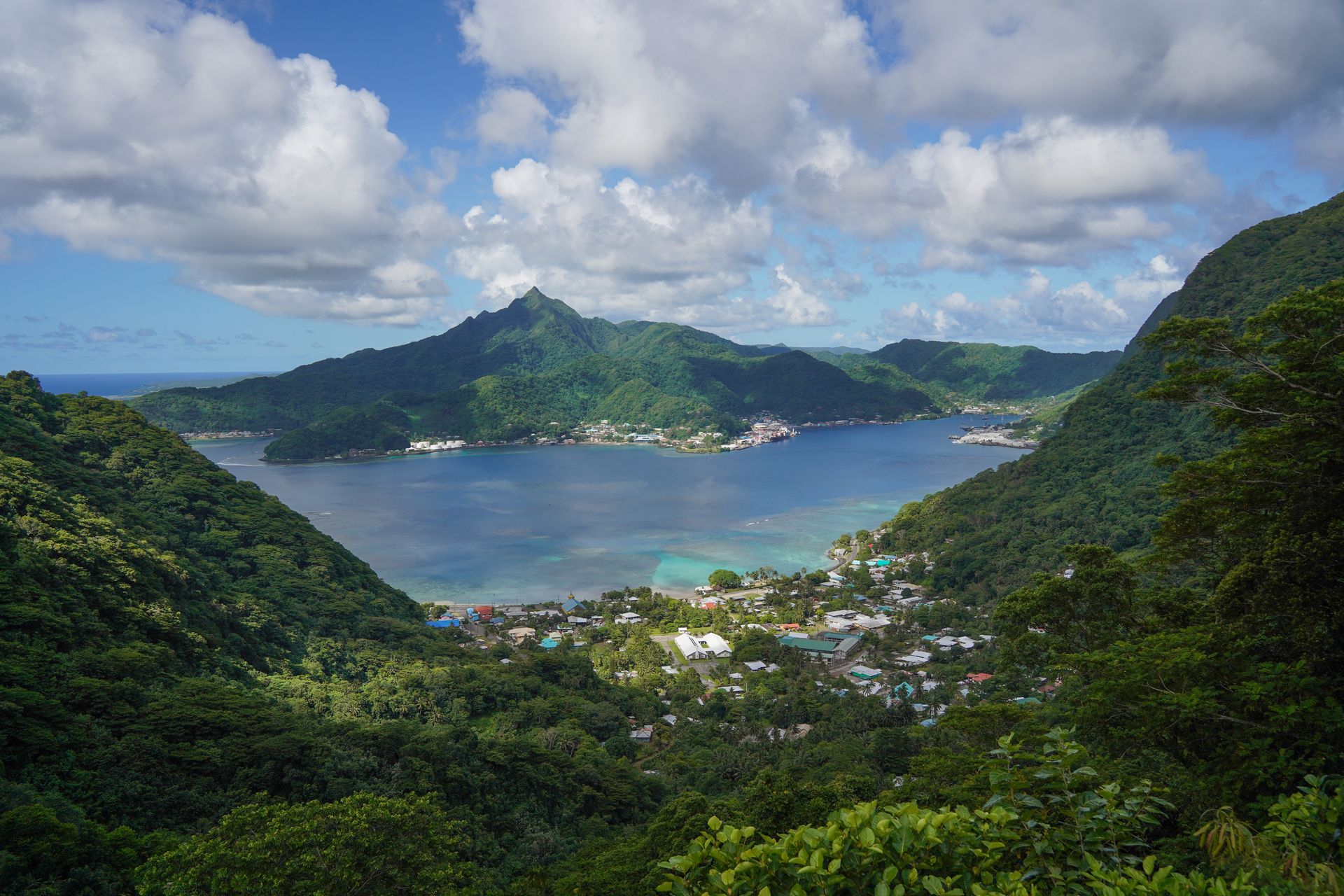
This is a stunning view, but I was sad to see a lot of trash left behind (we also noticed this at other viewpoints around the island). Please make sure to pack out all of your trash.
Visit Ofu Island
As I mentioned in the ‘how to get to American Samoa’ section, the national park is actually spread across 3 islands. Two of the islands are part of the Manu’a Islands, which means you’ll need to take a small place or long boat ride to reach them. I was not able to coordinate this during my trip, but it’s on my bucket list for the future!
Tip: Check Samoa Airways for your flight options to the Manu’a Islands.
With pristine a white sand beaches and a turquoise ocean framed by lush mountains, Ofu Island is said to have one of the most beautiful beaches in the United States. If you visit, you can stay at the Va'oto Lodge and enjoy one of the most untouched beaches in the country.
You can also hike to Tumu Mountain on Ofu, which offers epic views high up above the beach.
Visit Ta’u Island
Ta’u Island is located right next to Ofu Island. It’s the largest of the Manuʻa Islands and is actually the top of a shield volcano.
You can also reach this island via a small plane from Tutuila Island, or there is supposedly a ferry between this island and Ofu Island, but it’s unreliable and hard to plan for.
One thing to do here is to hike the Si’u Point Trail, which has lovely views following the coast.
Things to do in American Samoa (outside of the national park)
Visit Tisa’s Barefoot Bar
Tisa’s Barefoot Bar sits right on the beach and is an incredible spot to enjoy a pina colada, take in the views and even do some snorkeling. The bar is owned and operated by Tisa and her husband, Candyman, who are from New Zealand, but have been living on the island for 30+ years.
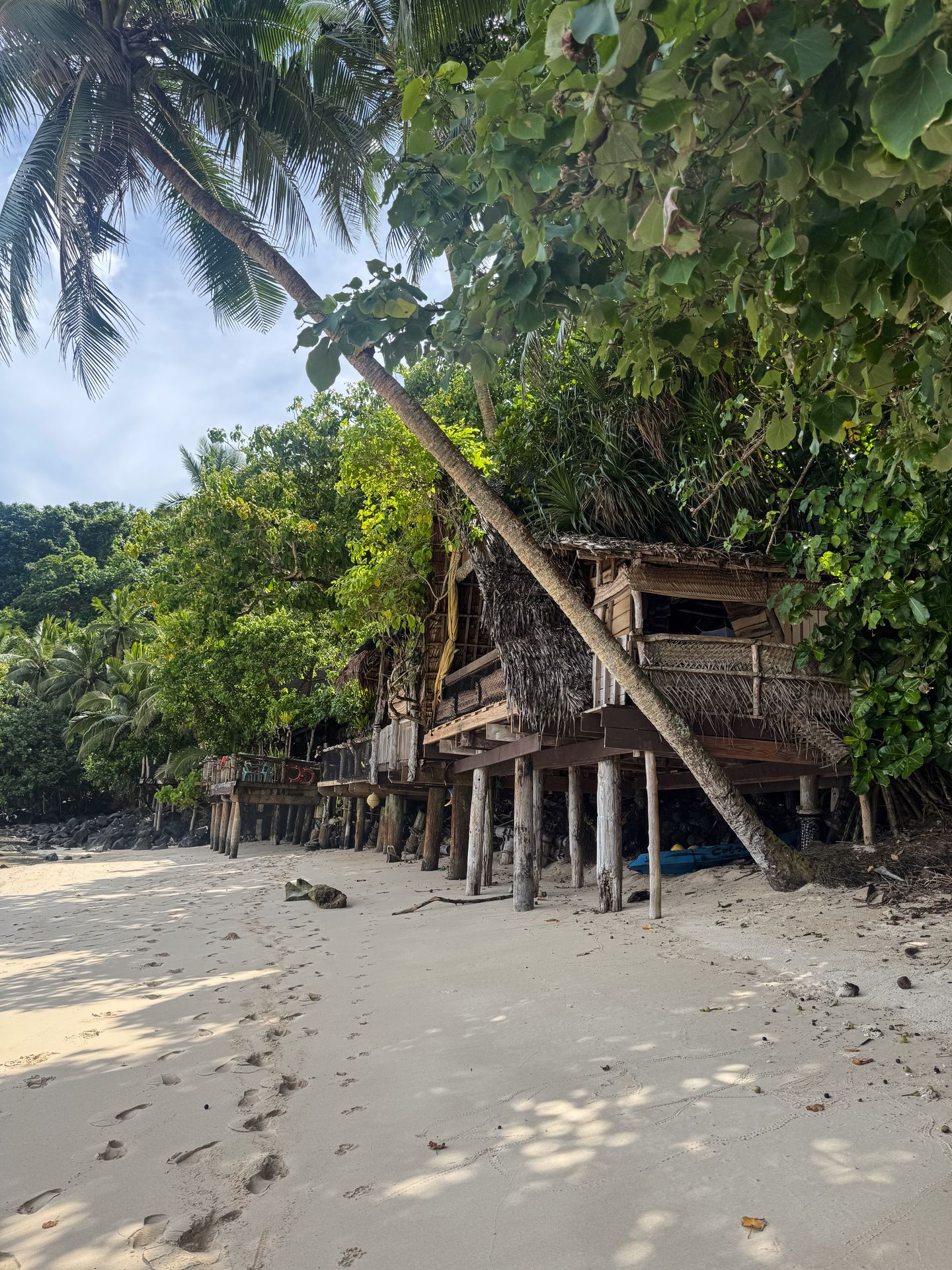
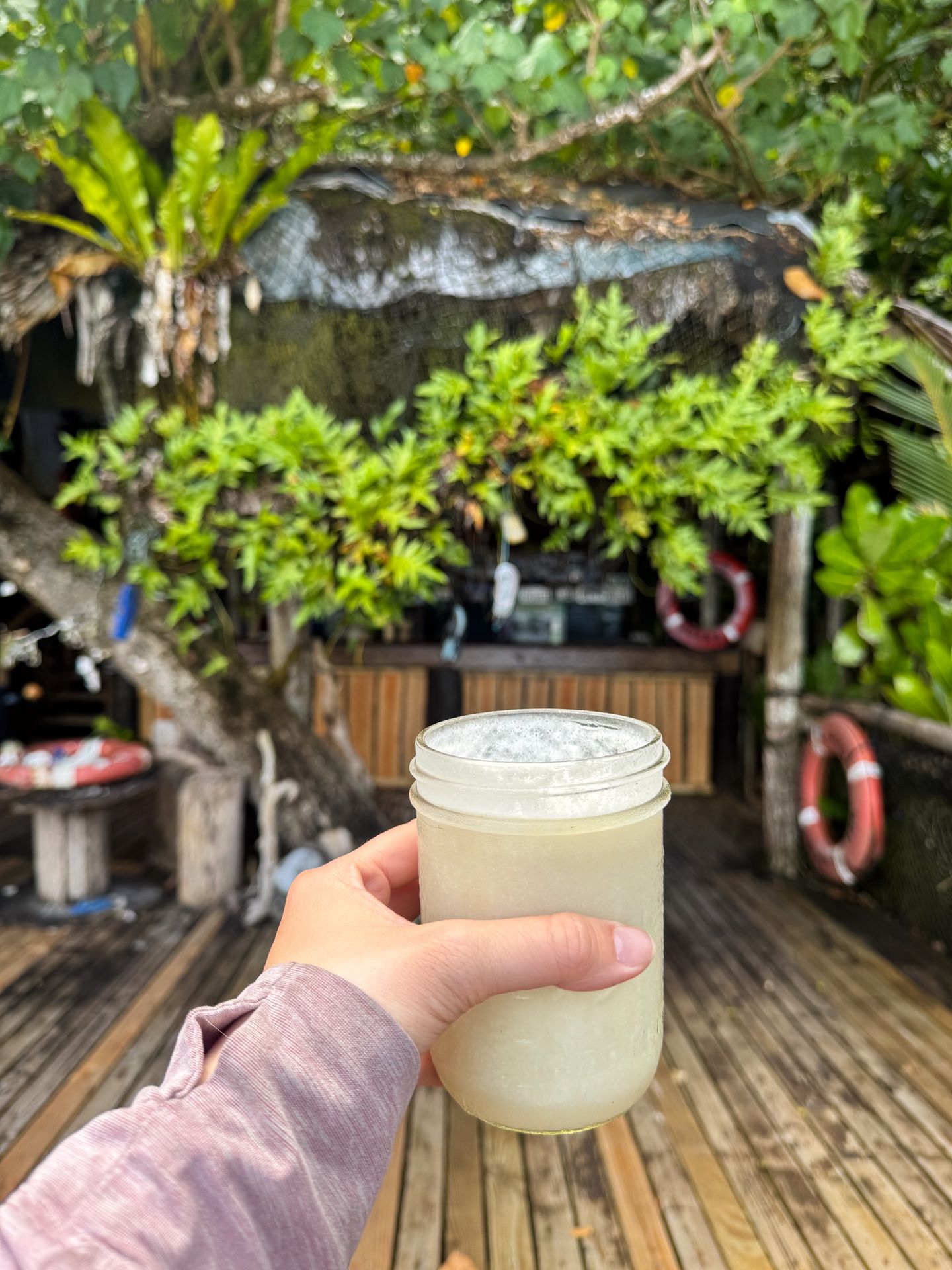
They are famous for their pina coladas and they can be made with or without rum. They sometimes serve a couple items for lunch, such as garlic coconut prawns, but I’m not sure if this is consistent.
They told us about the snorkeling right off of their beach, and let us borrow snorkels. We were very grateful, because the snorkeling was incredible. We saw a huge variety of fish and coral life. However, it was even more special to hear about the fish from Candyman. He is very passionate about this little slice of paradise, and knew of specific fish that came to the same spot every single day.
Tisa’s also offers a traditional Samoan feast one night a week, typically on Wednesdays. They build an umu, a traditional Samoan earth oven, and cook food such as taro leaves, pumpkin, pork ribs, and more. It sounds like an incredible experience, but I wasn’t there on the right day. Make sure to call ahead to make a reservation for the dinner if you're interested.
Whether you just stop by for a drink or spend a day here, it definitely needs to be included in your American Samoa itinerary.
Visit Turtle and Shark
Turtle and Shark is a gorgeous viewpoint located on the Southern part of the island, not far from the airport. It’s named after a Samoan legend in which two women were transformed into a turtle and a shark.
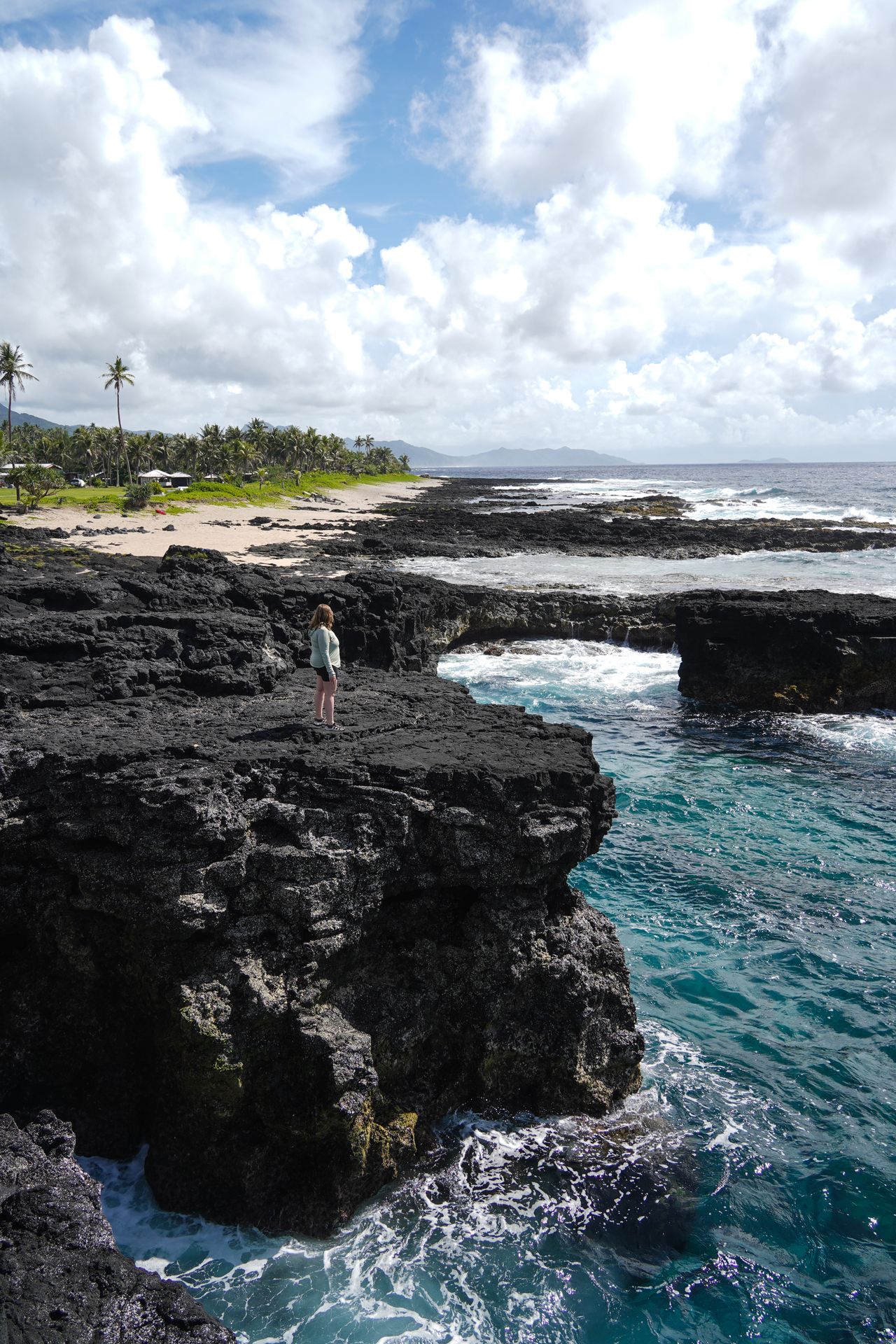
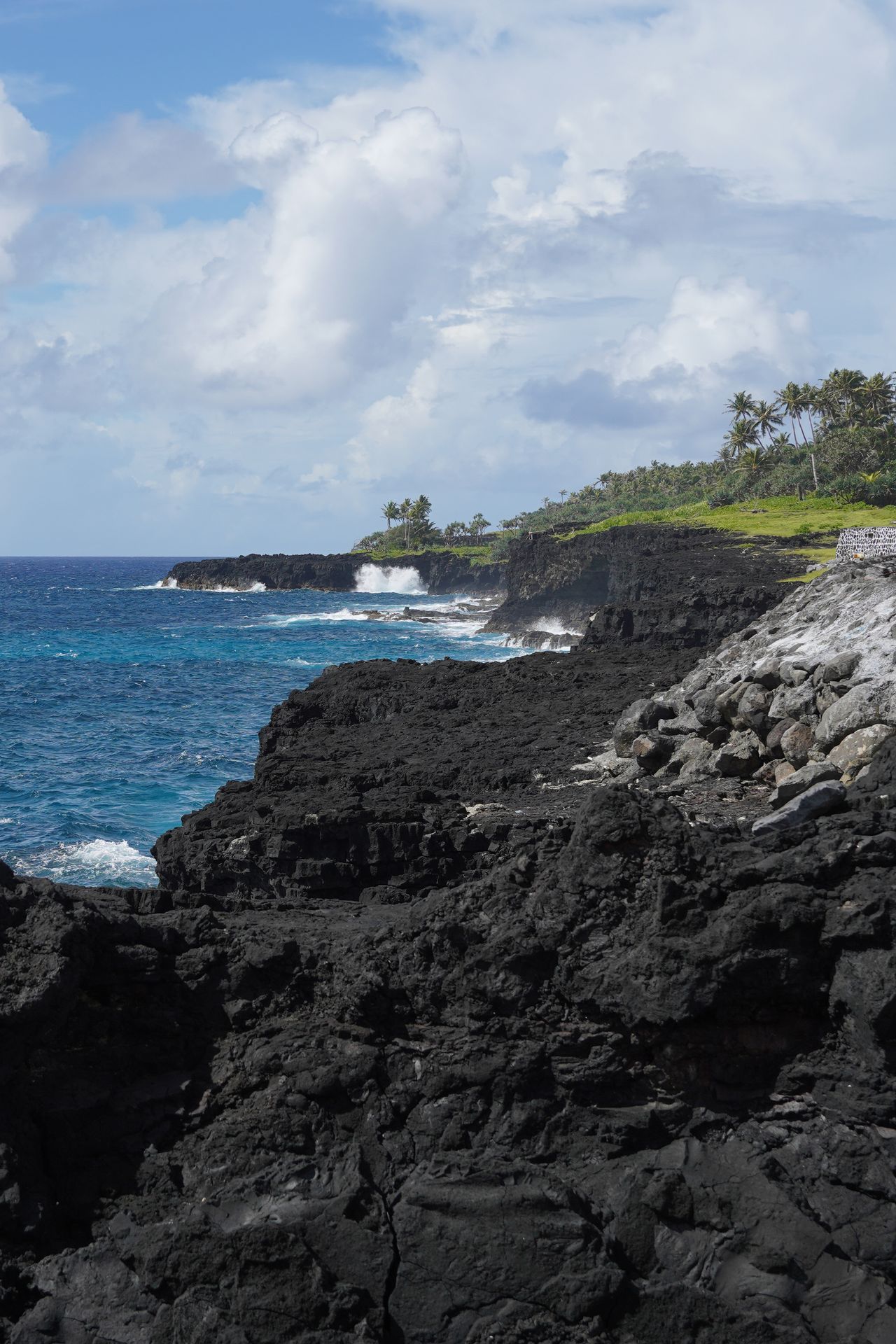
The viewpoint has black, volcanic rocks that extend out into the ocean. It’s a beautiful place to watch the waves crashing up against the rocks. When you visit, there is a short boardwalk where you can enjoy the views. Or, you can walk out onto the rocks, but be very careful to not get too close to the edges. Large, relentless waves can pop up out of nowhere.
We also saw a small blowhole here! This is a quick and easy stop that offers some stunning views.
Visit Two Dollar Beach
Two Dollar Beach is a beach area that is perfect for a picnic, snorkeling and swimming. While it’s called Two Dollar Beach, it actually costs $5 per person to enter.
We tried to visit this beach, but the person at the gate kindly recommended that we wait and come back when the tide wasn’t so low. Unfortunately, we didn’t make it back. But this is just an example of how the people of American Samoa lead with kindness, and would rather help you out than make a few dollars.
Visit Aunu’u Island
Aunu’u Island is a smaller island located just off of Tutuila Island. It takes about 10 minutes via boat to reach it. There are small boats that ferry people back and forth between Tutuila and Aunu’u Island, but they have no set schedule. To visit, wait for a boat at Auasi Harbor. It typically costs $5 - $10 per person in cash.
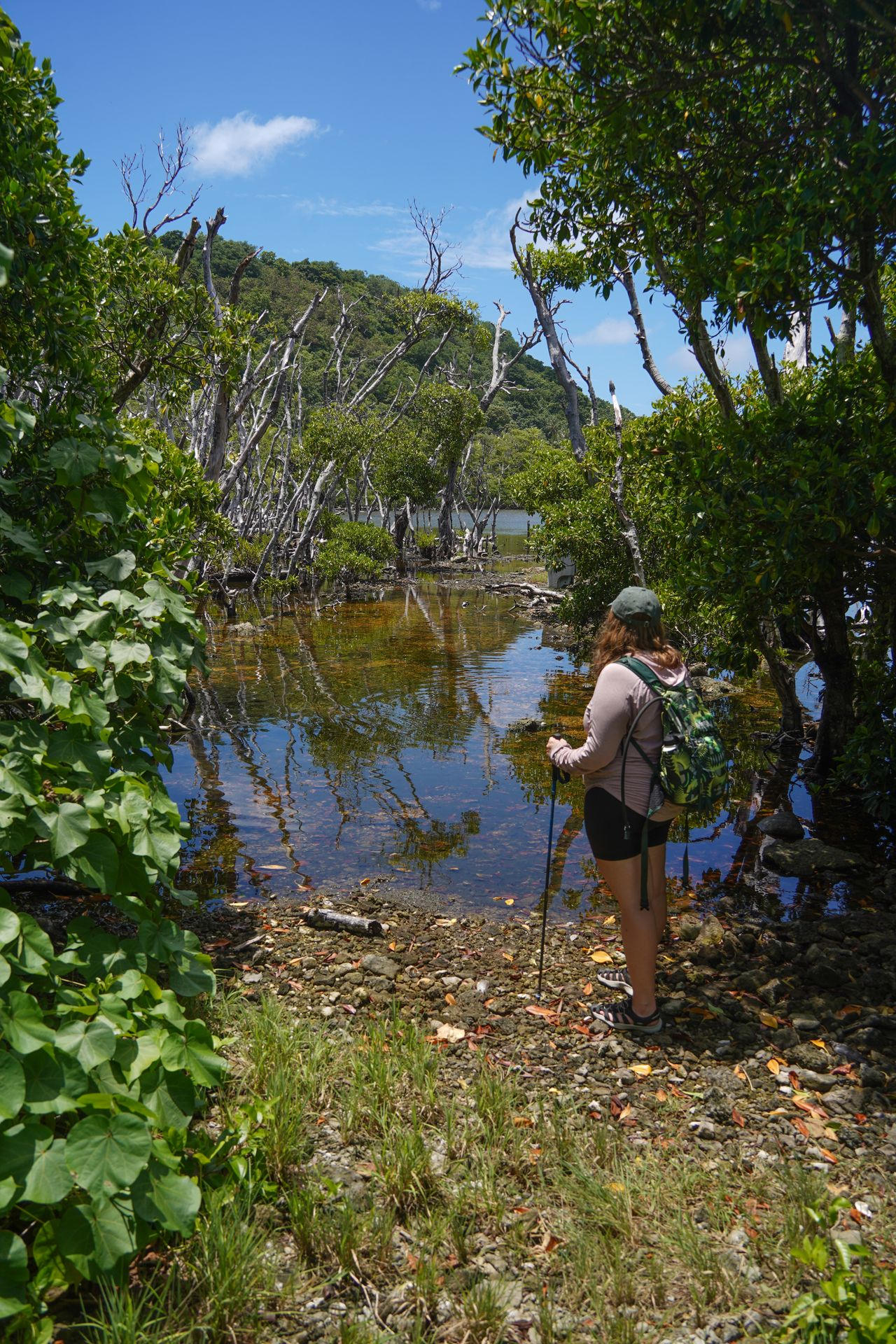
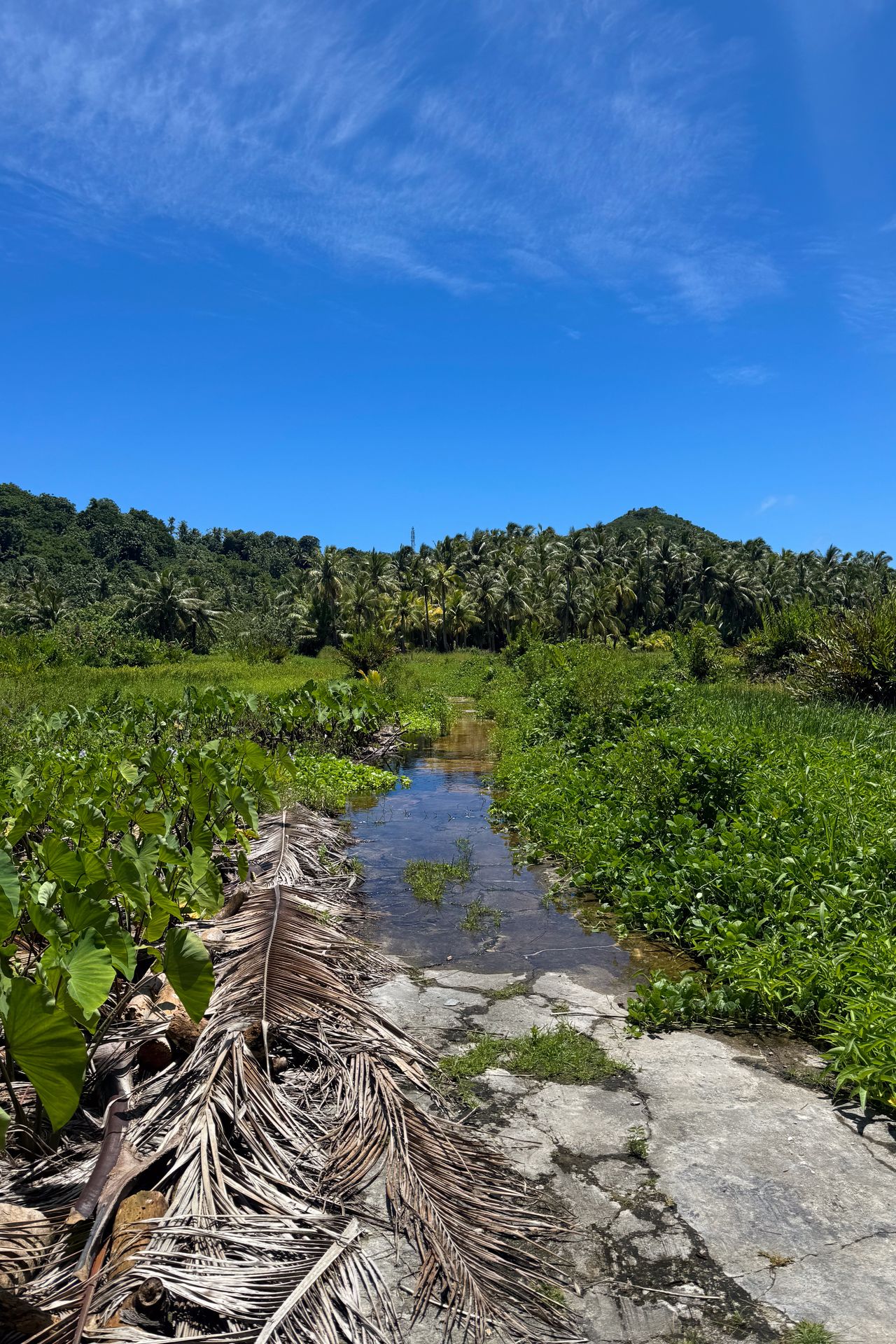
When you arrive on the island, you can hike around and explore. It’s a nice and easy coastal walk to reach Pala Lake, which can be good for bird watching. We also visited a Taro Root Plantation.
I actually visited Aunu’u Island on a tour with Best Tours. We had a great time with our guide, Gertrude, and loved learning all about life on American Samoa. However, the tour was very expensive, so I can’t say it was a good value. But if you’re interested in exploring American Samoa with a local, check out their offerings and send an inquiry. Prices vary depending on time of year, number of people and other factors.
Go Snorkeling in American Samoa
There are many opportunities for snorkeling off the shores of American Samoa! One of the places I saw come up many times is Fagatele Bay, which is in the National Marine Sanctuary of American Samoa. It’s a beautiful place to see coral reefs and fish.
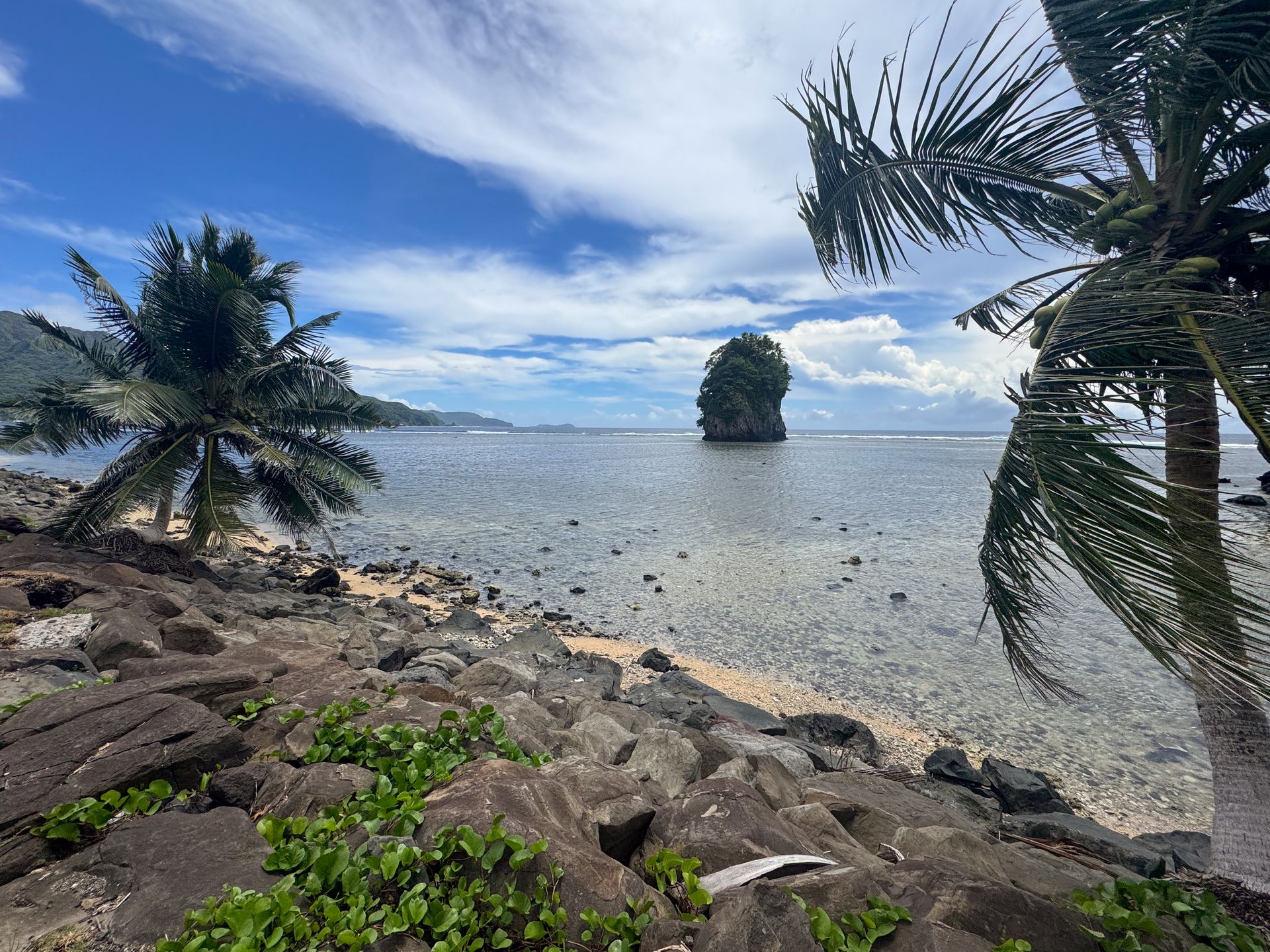
To visit, you’ll need to ask permission from the local who lives there and pay a fee, which is typically $10 per person. You’ll also need to take a short hike to reach the beach. We ran out of time to visit this spot.
The national park ranger recommended snorkeling at Faga'alu Park, a calm area near Pago Pago and the visitor center. There is a little island in the water, and lots of marine life.
Personally, I snorkeled at Tisa’s Barefoot Bar and it was incredible. There is a specific spot where you can walk out from the beach and an area opens up to views of colorful coral and a large variety of fish.
Hike up to Blunts Point
At Blunts Point Battery, you can see a naval gun that was placed by the US military around 1940. World War II tensions prompted the US government to fortify American Samoa, but there was never an attack here.
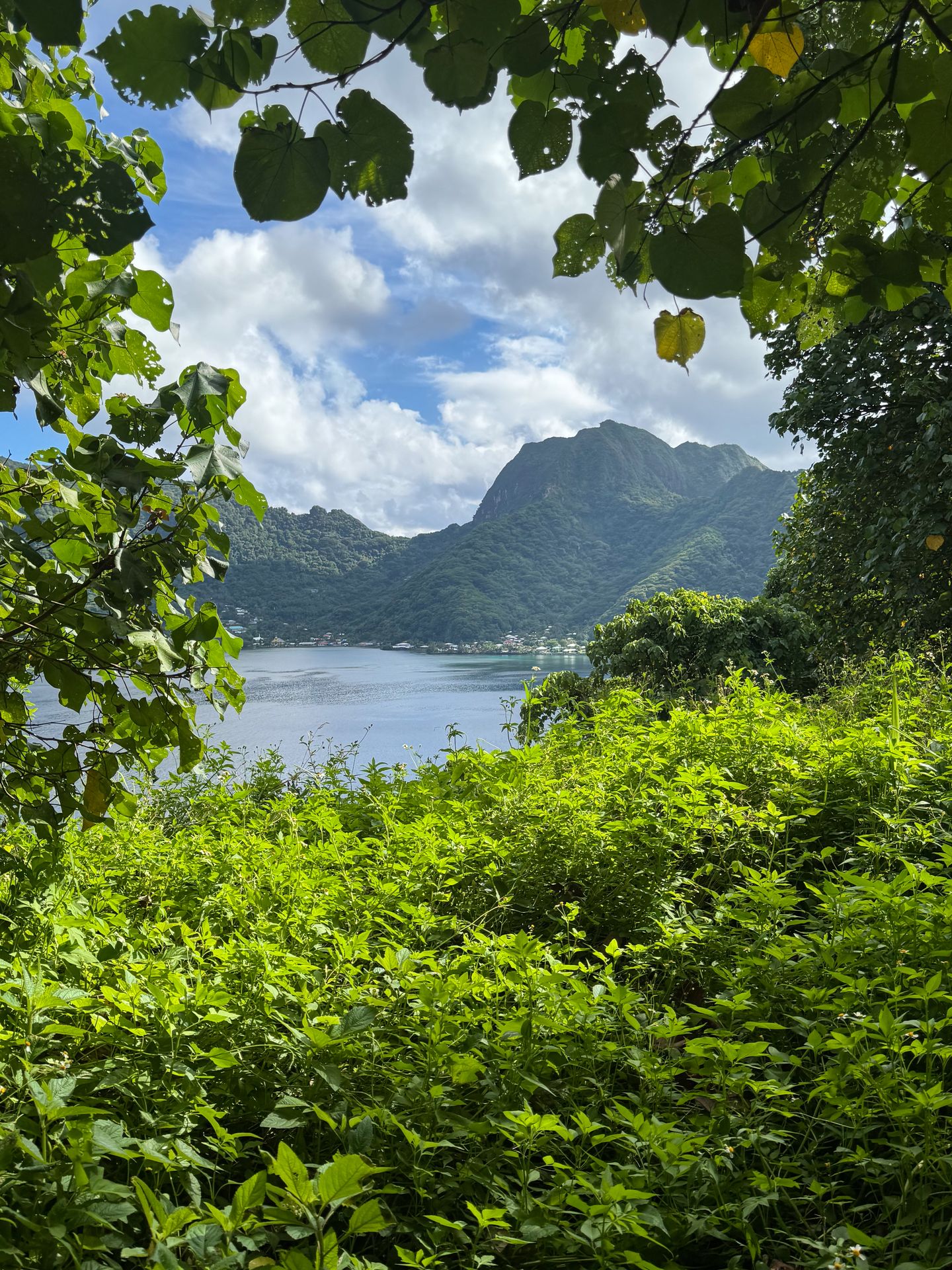
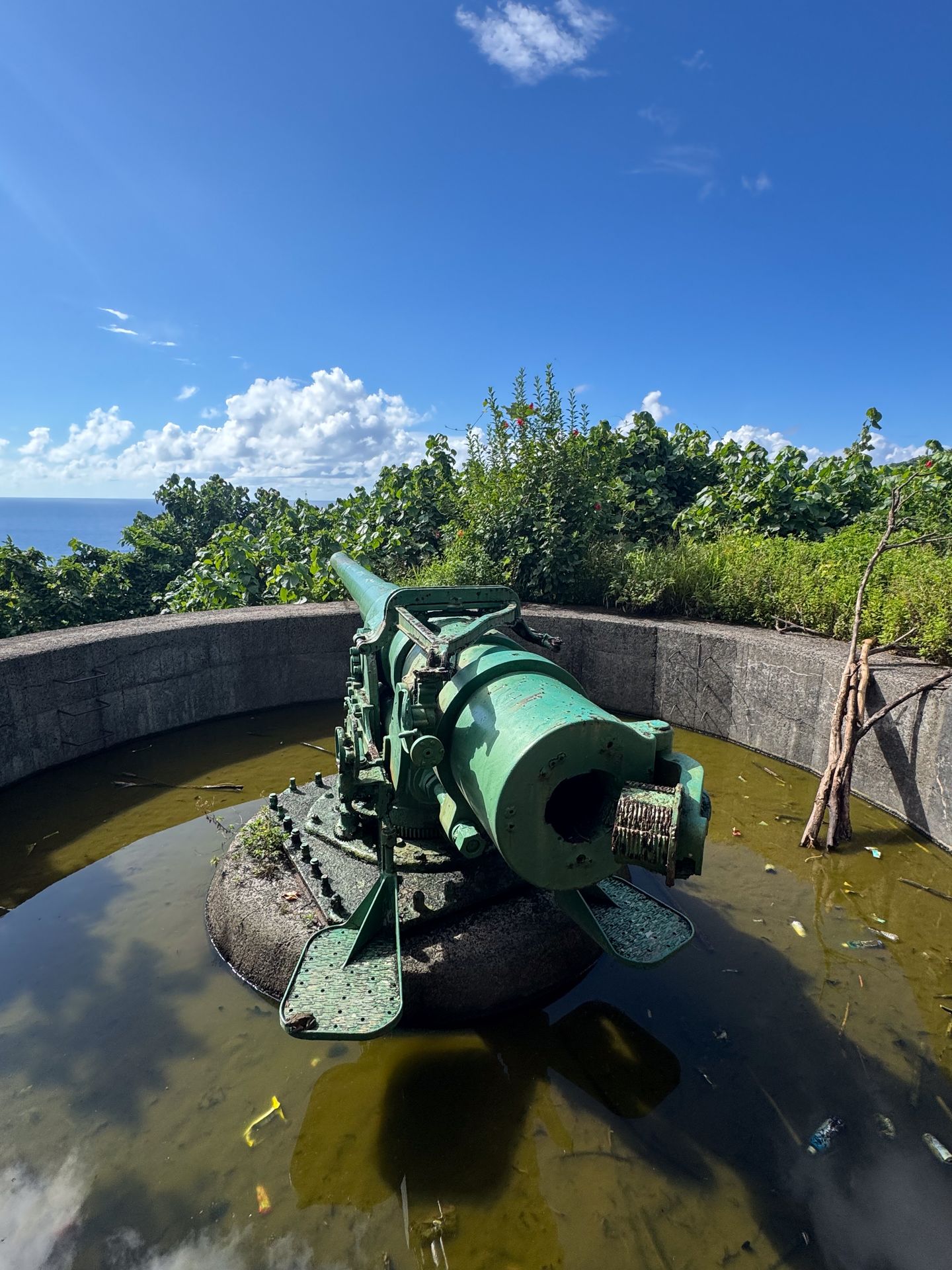
You can hike up a short (but a little bit steep) trail to see the first cannon. Park across the street from the laundromat, then follow the overgrown road to the left and around the bend. You’ll see a water tower at the top that you can hike around to the left, and then the cannon a bit above that. There are also some decent views of the harbor from here.
If you’d like more of a challenge, you can hike the WWII Heritage Trail between Blunts Point and the Tramway. You’ll see other gun batteries and fortifications along the way. However, I’ve read that the trail is quite overgrown and challenging.
Tip: There are signs all over the island pointing out points of interest, such as Blunts Point. This is helpful to know that you’re on the right track!
Visit the Historic Tramway and Cable Car Lookout
It’s worth a stop to see the historic aerial tramway that once went above Pago Pago Harbor and to the top of Mt Alava. This spot is located near Utulei at about these coordinates: -14.278, -170.684.
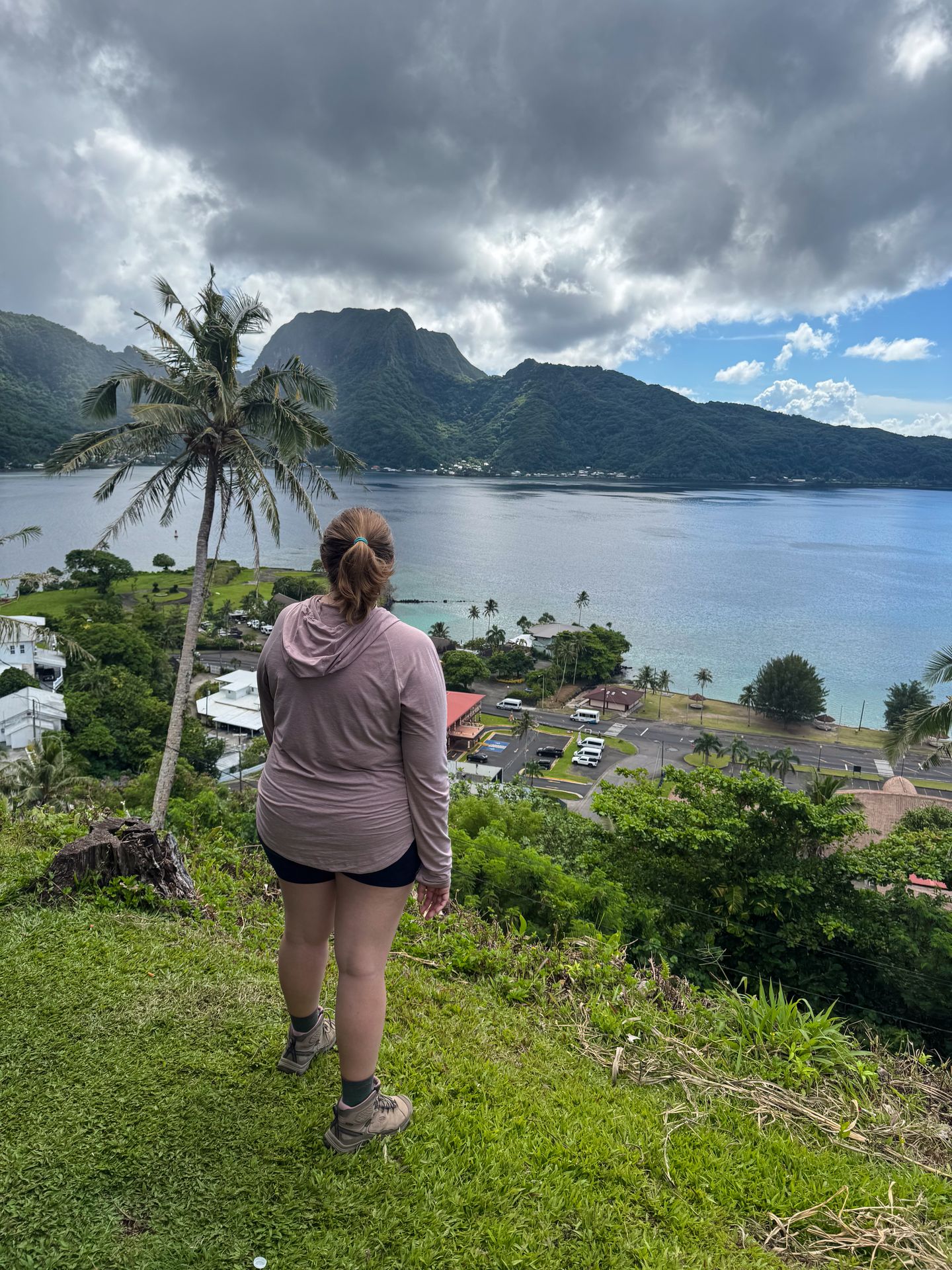
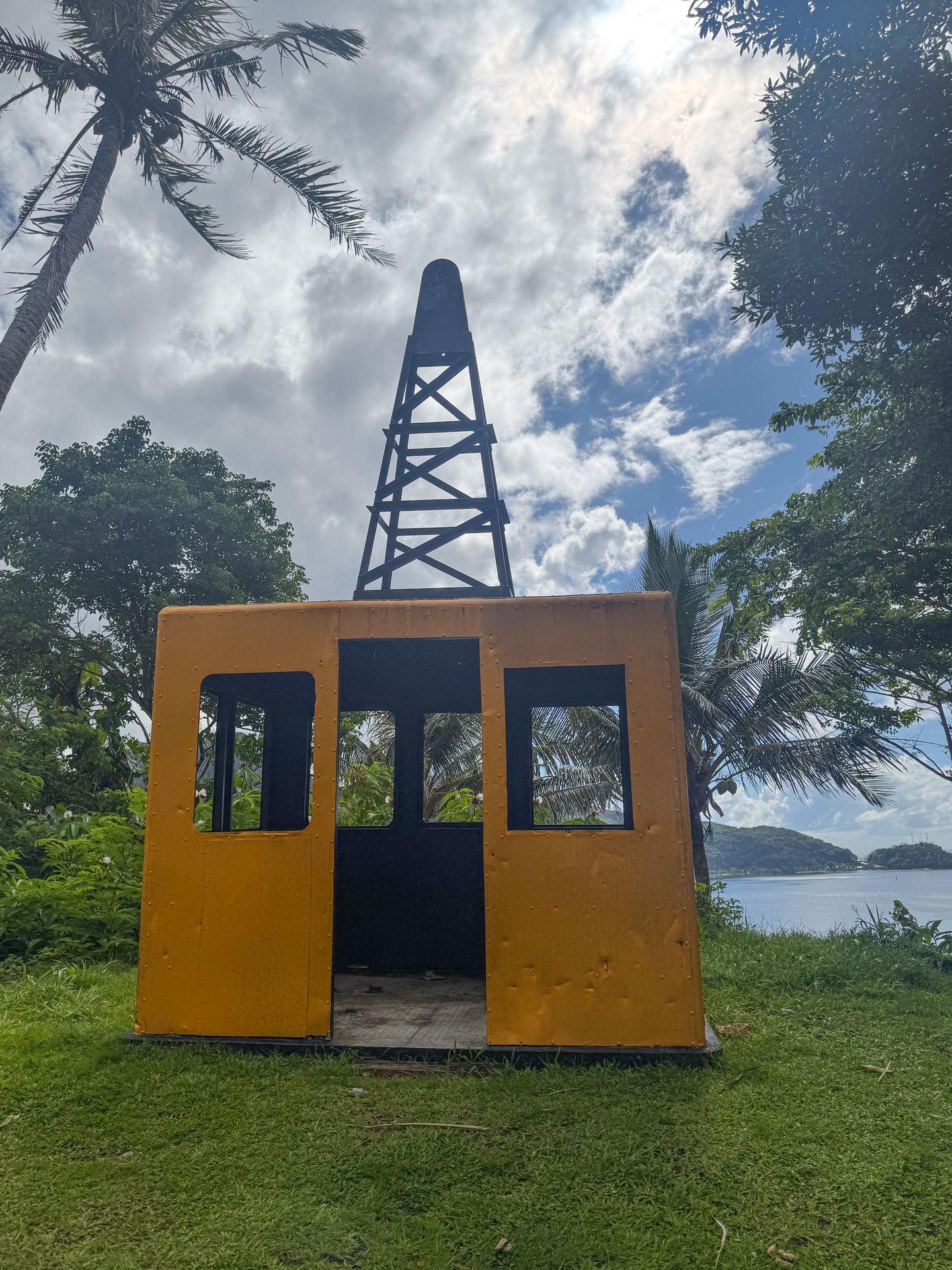
On your way up the road, you’ll see one of the tramway cars. At the top, you can read some signage about the tramway route and see the remnants of the tower that powered the tramway. You can also walk up a small hill to a gazebo, and enjoy amazing views of the Pago Pago Harbor from there.
This is also the opposite point of the WWII trail that leaves from Blunts Point.
Look for Fruit Bats
Be on the look out for fruit bats during your trip to American Samoa! Three different species of fruit bats inhabit the island, and two of them are quite large. Their wingspans can be up to 3 feet!
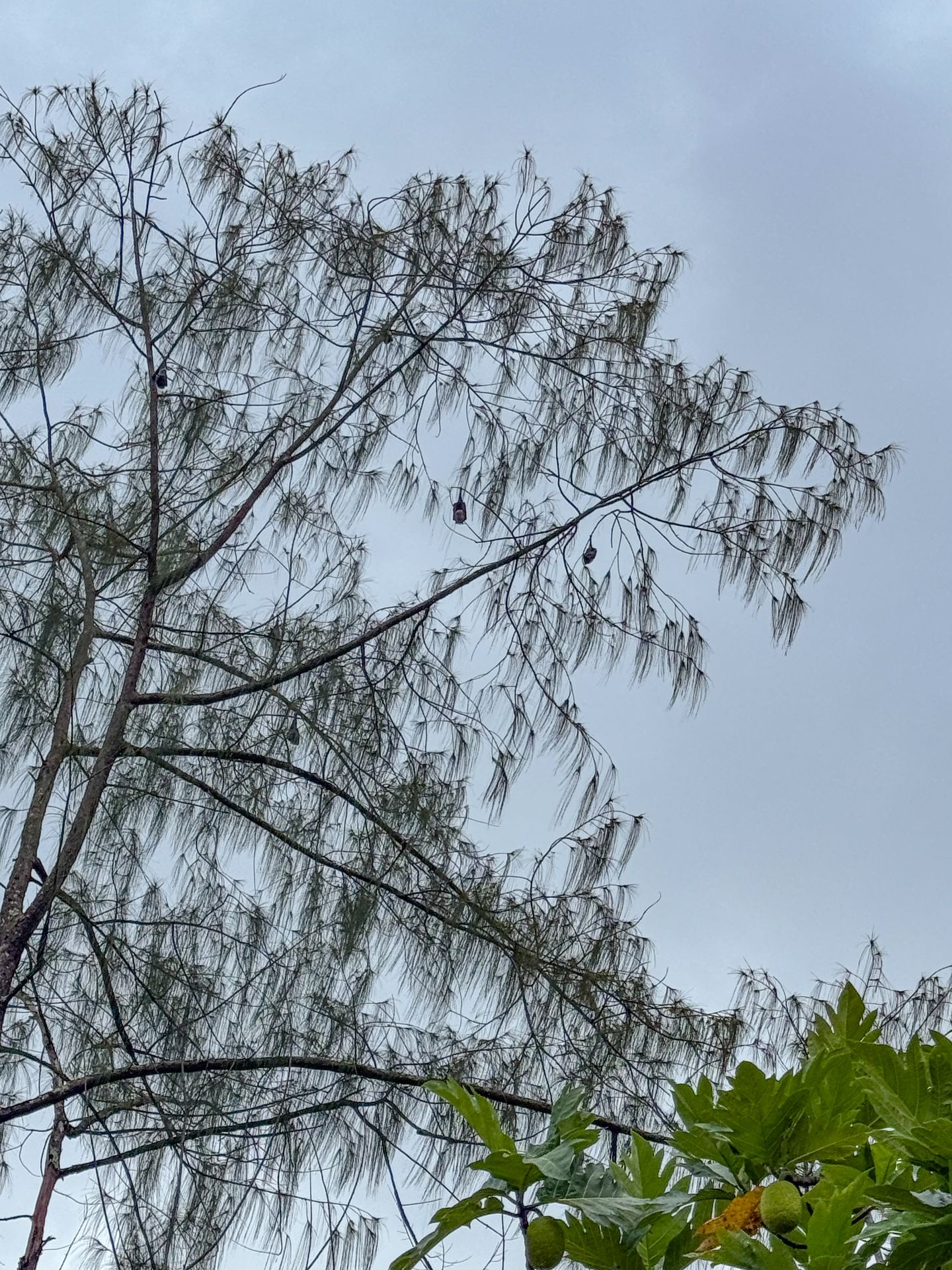
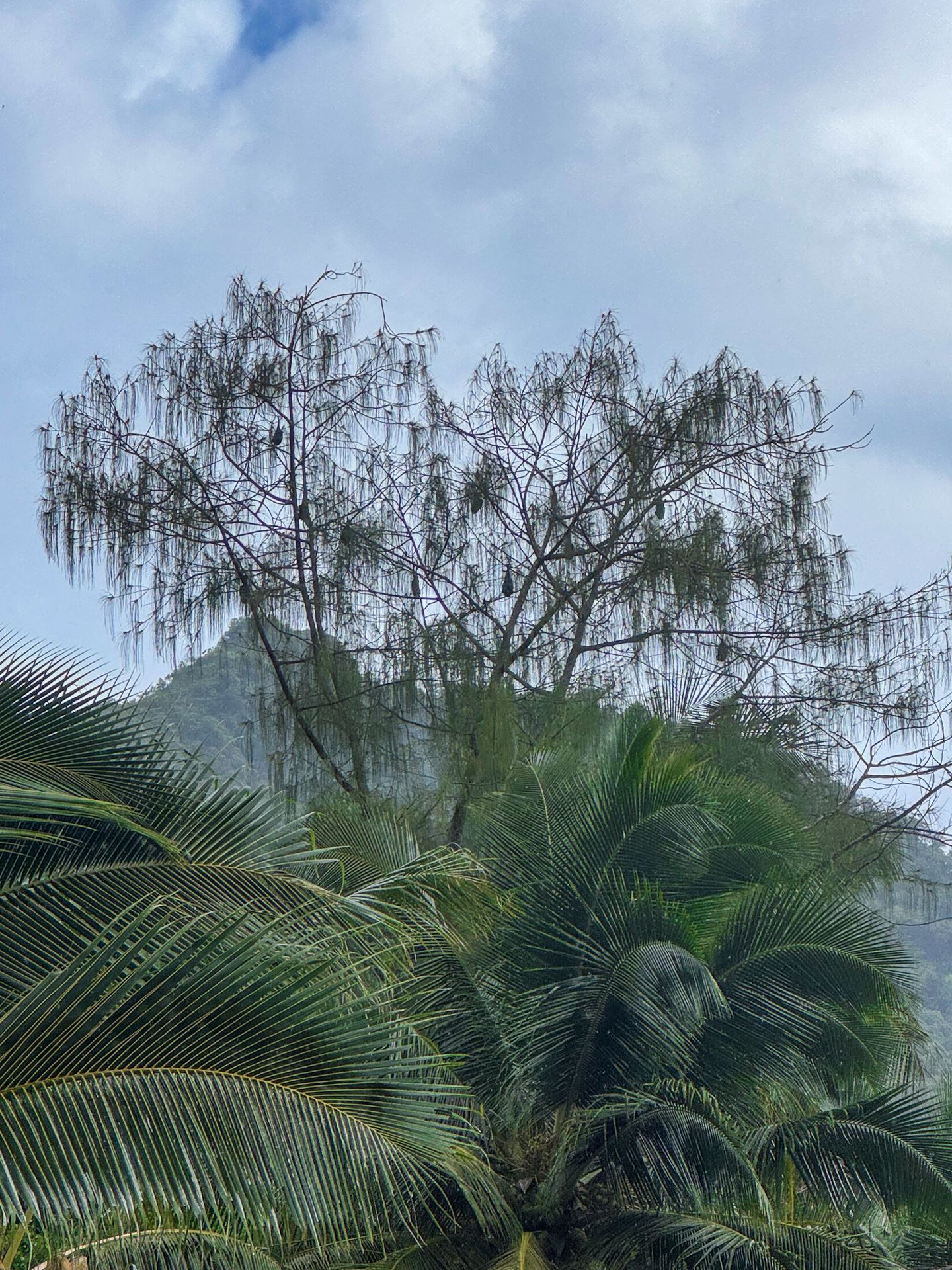
If you keep an eye out, you’ll probably see many fruit bats flying around, especially at dusk. If you’d like to see them hanging from a tree, there is a specific spot that is great for that, located along Route 001 in Aua. It’s labeled as ‘Fruit bat tree’ on Google Maps, and is at these coordinates: -14.270, -170.666.
Visit the Jean P Haydon Museum
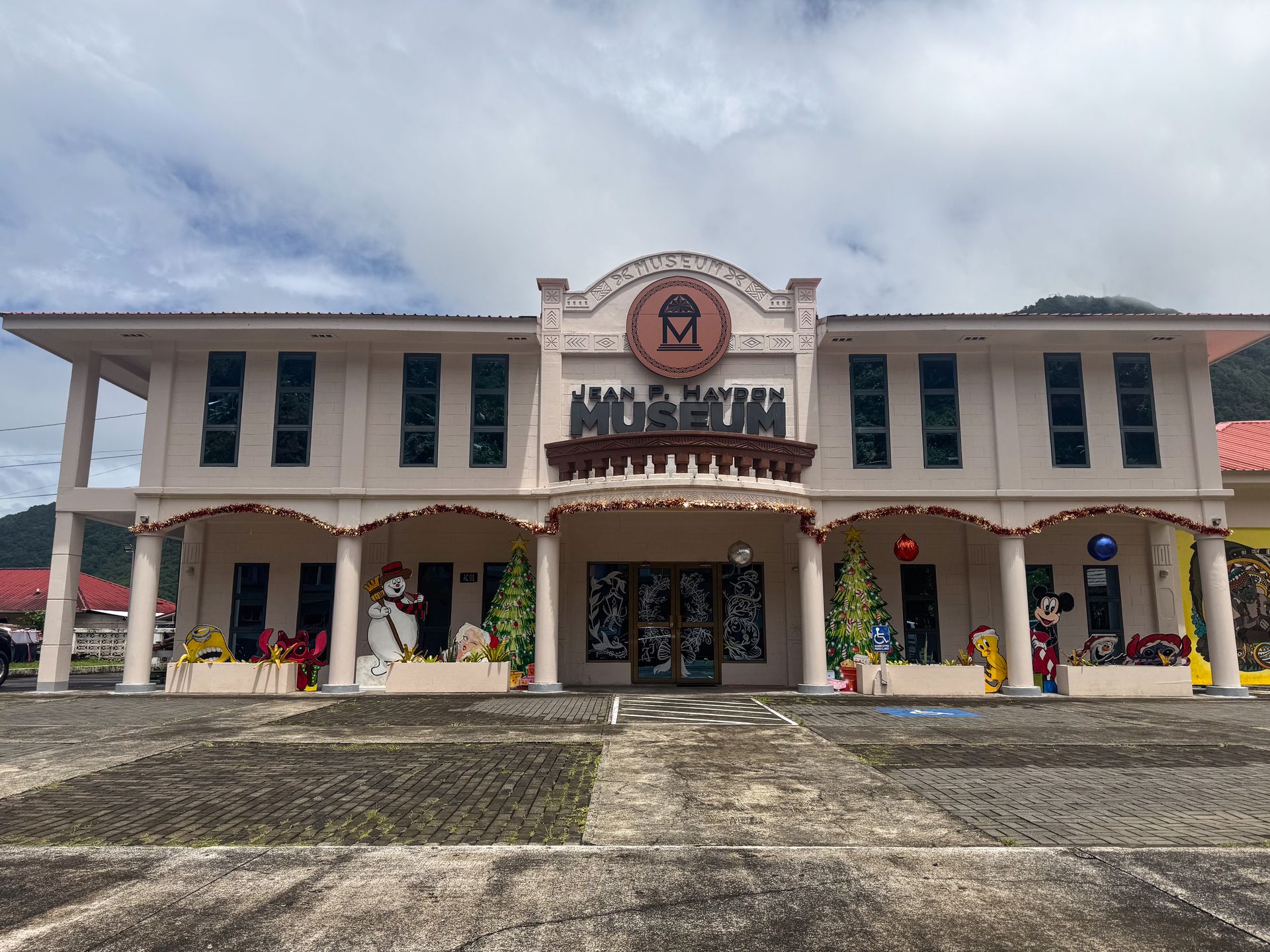
The Jean P Haydon Museum tells of the history and culture of American Samoa and has a series of artifacts. I wasn’t able to visit, but it seems like a great place to learn more about the island, and would be a good activity on a rainy day.
Take a Scenic Drive Around the Island
There are several more beautiful overlooks around the island that I haven’t mentioned yet. Whether you spend a whole day driving around the island or break it up into multiple areas, it’s worth driving to some of the more remote villages and enjoying the views. I was given a very helpful map at the visitor center that showed several overlooks all around the island.
Tip: The speed limits on the island are low, make sure to follow them and drive carefully.
Here are the overlooks that I think are especially worth visiting:
Overlook of Tafuna Area
Approximate Coordinates: -14.314, -170.760, located next to a church
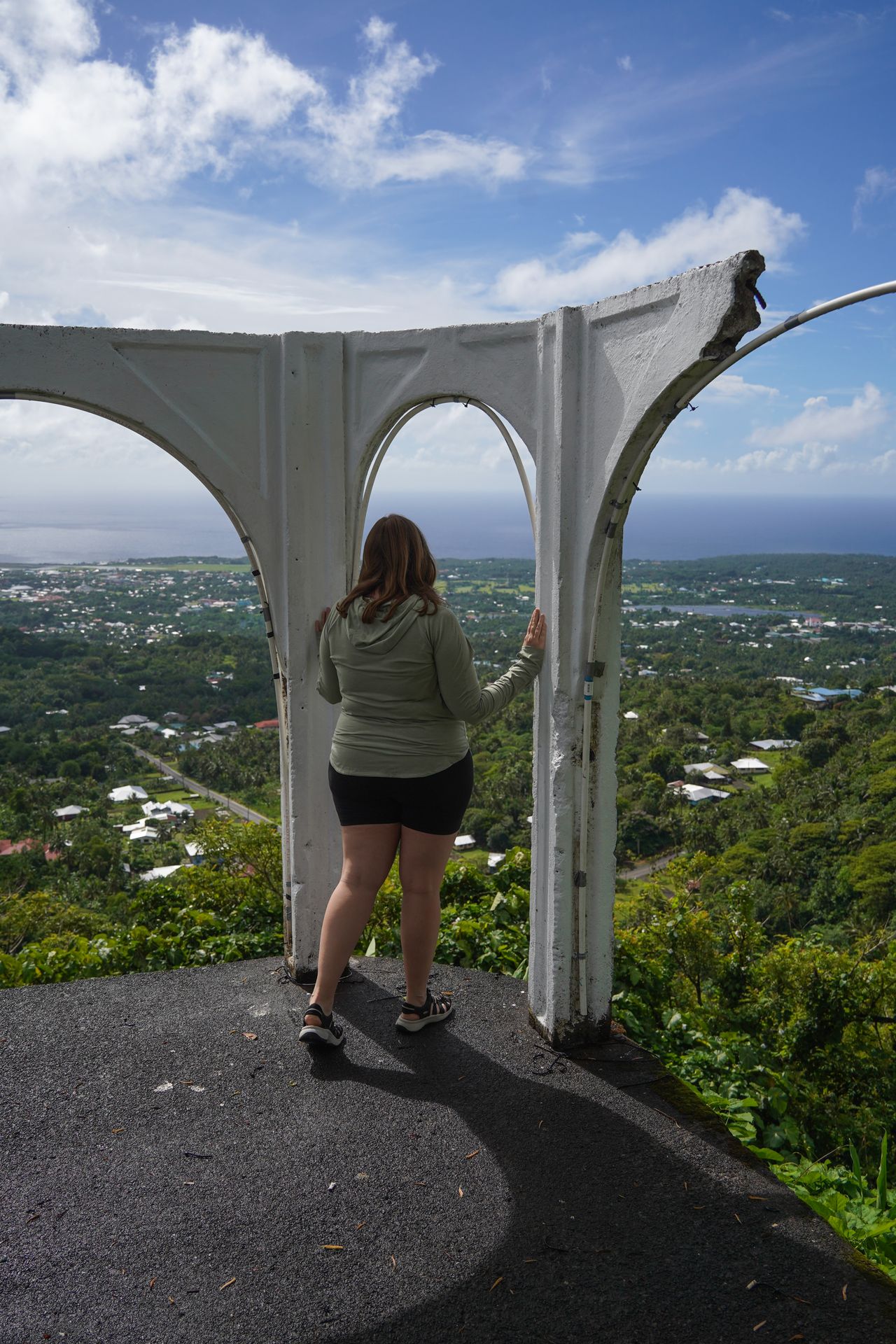
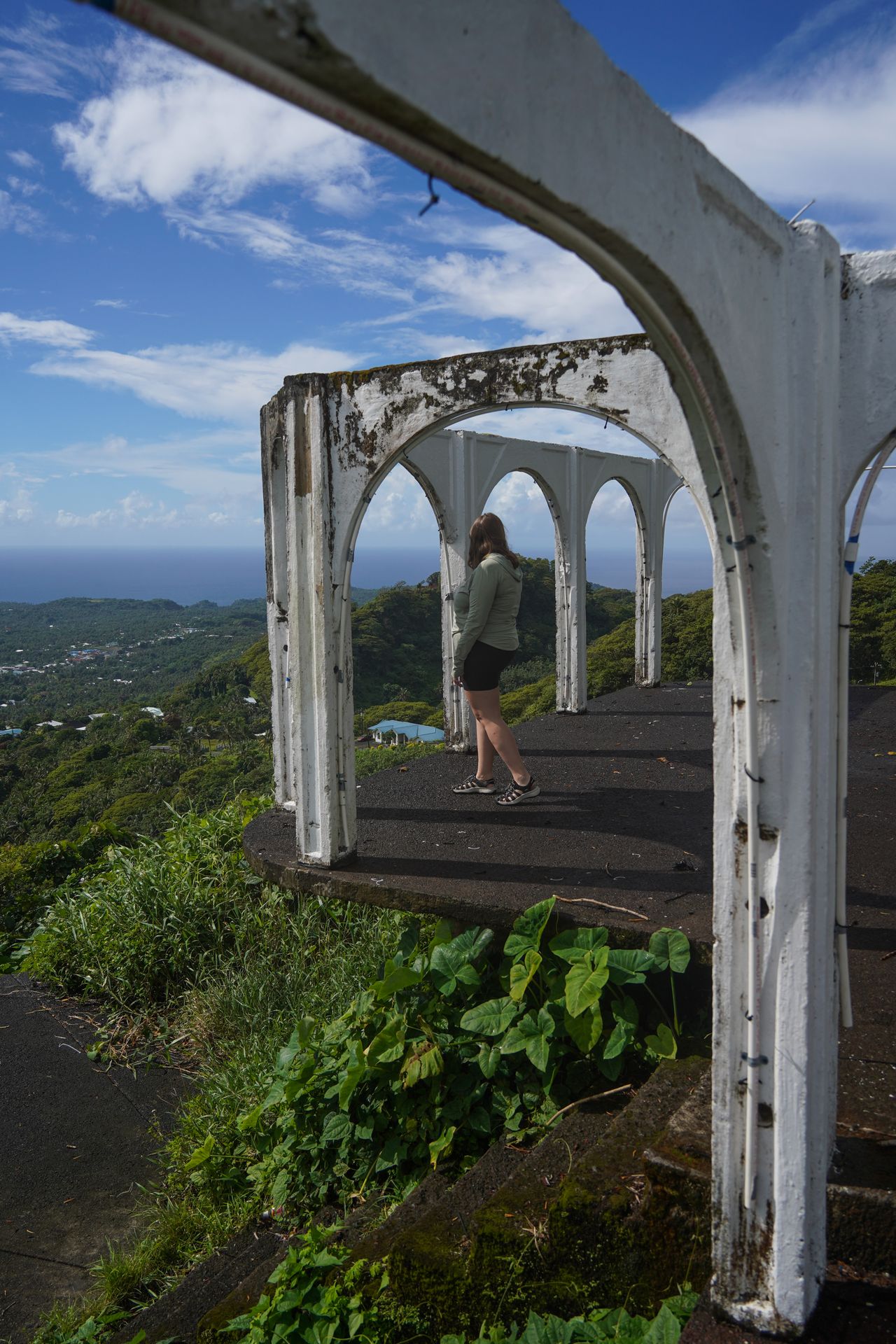
This overlook is located on the way to A'oloau and provides sweeping views of Tafuna, which is where the airport is located. There are ruins here that used to be a building, plus a massive tree. This makes for a great picnic spot.
Scenic View in Sa'ilele
Approximate Coordinates: -14.256, -170.598, there is parking on the side of the road across from a home
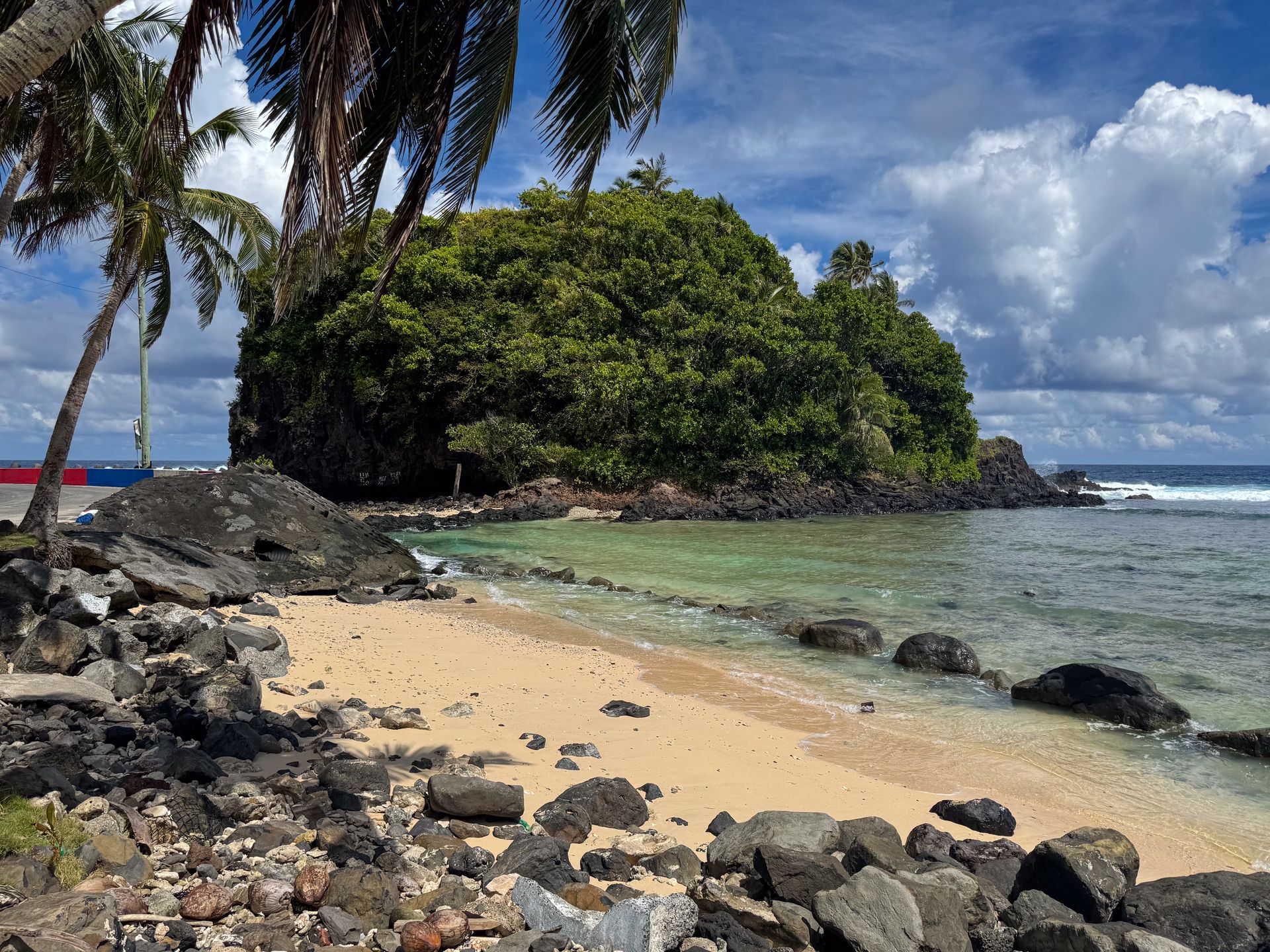
This is a neat spot to see a little island peninsula that extends out into the ocean. This is a quiet and peaceful village. Note that the national park service map indicated that you may need to ask permission to visit this spot, but we did not see anyone around.
Scenic View on the way to Masefau
Approximate Coordinates: -14.256, -170.619, park on the side of the road
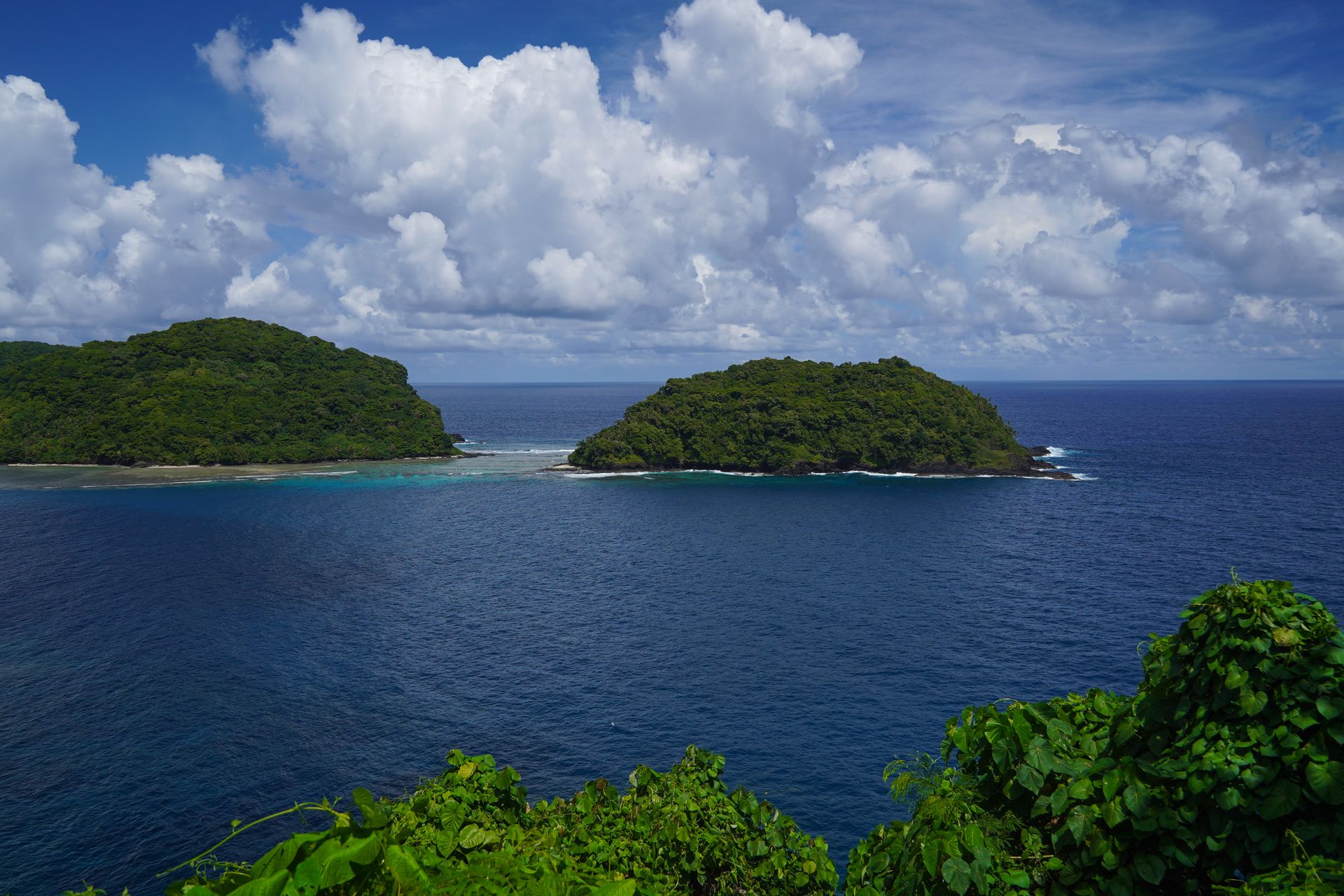
This is a beautiful viewpoint where you can admire the Masefau Bay and a small island. Unfortunately, there was a ton of trash at this overlook (please pack out your trash), but we did see a GIANT coconut crab here, which was cool.
Pola Island View in Onenoa
Approximate Coordinates: -14.250, -170.580
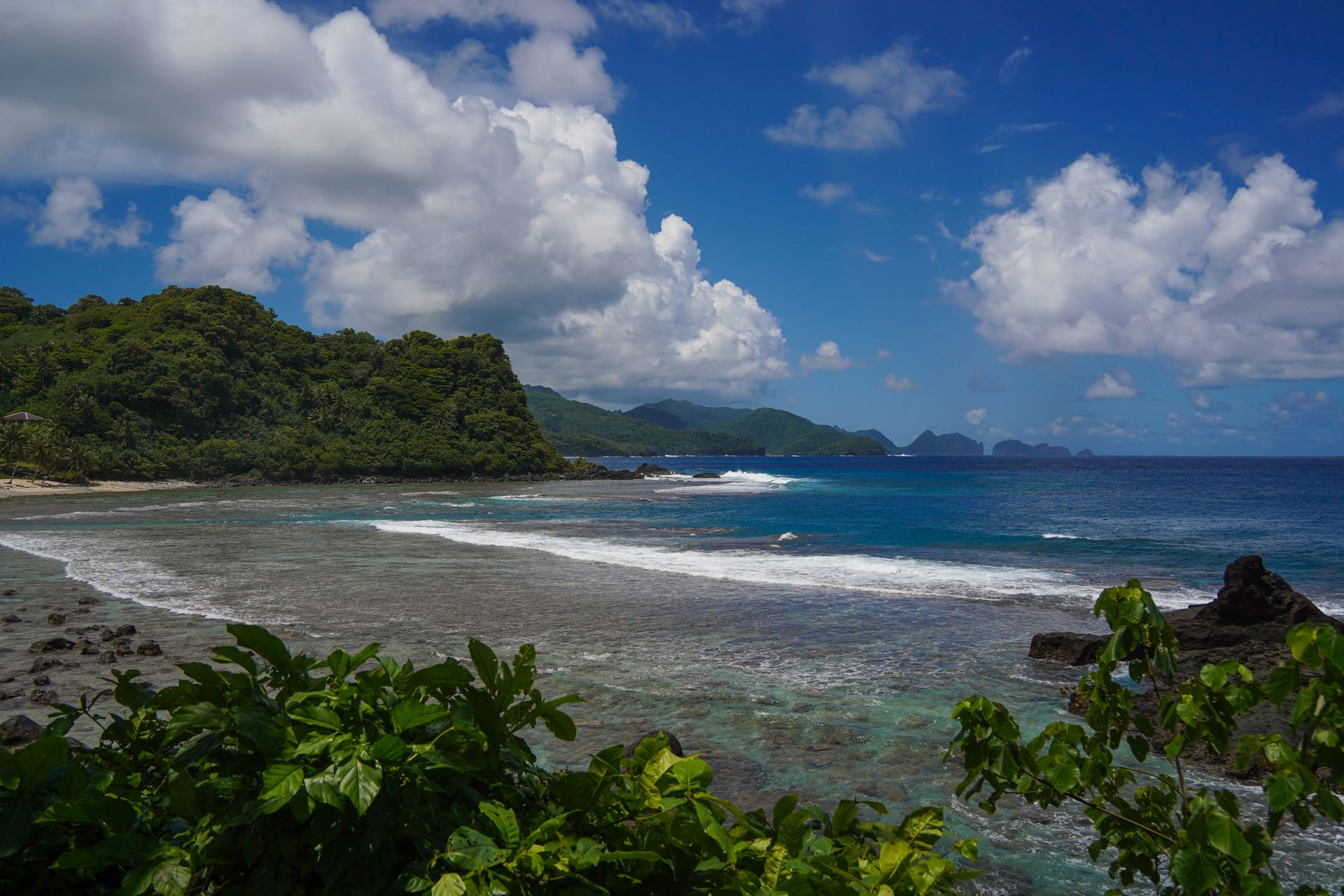
At this viewpoint, you’ll get a nice view of Pola Island from a distance. It’s fun to continue to see the quieter Northern coast of American Samoa from different perspectives. Note that the national park service map indicated that you may need to ask permission to visit this spot, but we did not see anyone around. This is a nice spot for sunset.
The Beach in Tula
Approximate Coordinates: -14.258, -170.562
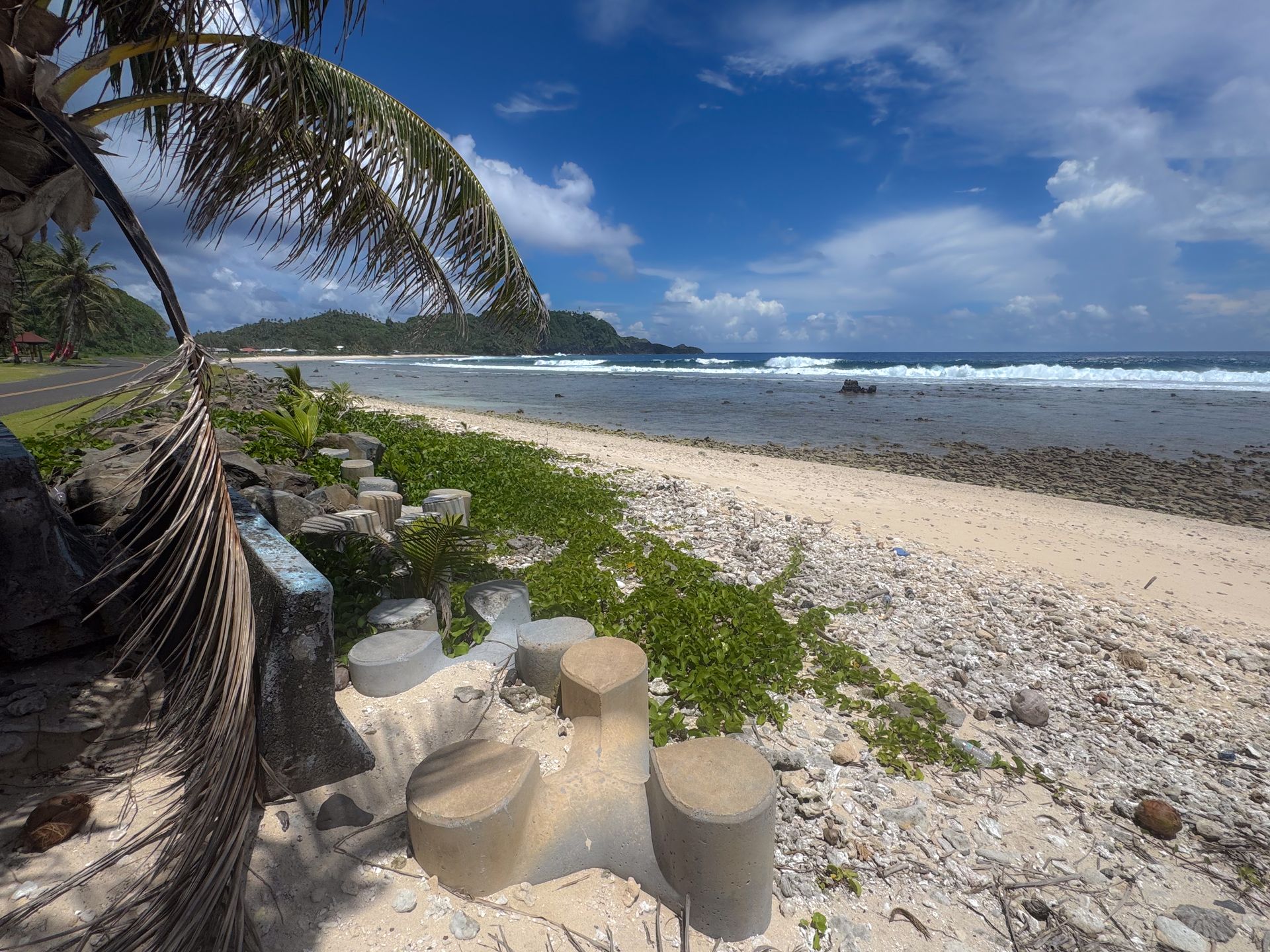
This is a nice stop to enjoy a quick walk on the beach. From this end of the island, you can see Aunu'u Island in one direction, and a cool little peninsula in the other direction. We also saw some kind of ship wreckage in the water. This is a nice spot for sunrise.
Palagi Beach
Approximate Coordinates: -14.325, -170.830
This is a beautiful little protected beach area that can be nice for swimming and snorkeling. We only drove by since it was a Sunday, but it’d be a nice place to spend more time. Note that the national park service map indicated that you may need to ask permission to visit this spot. This is another good spot for sunset.
Where to Eat in American Samoa
Here are a few of the best restaurants in American Samoa. However, keep in mind that I was only looking for places that had vegetarian options.
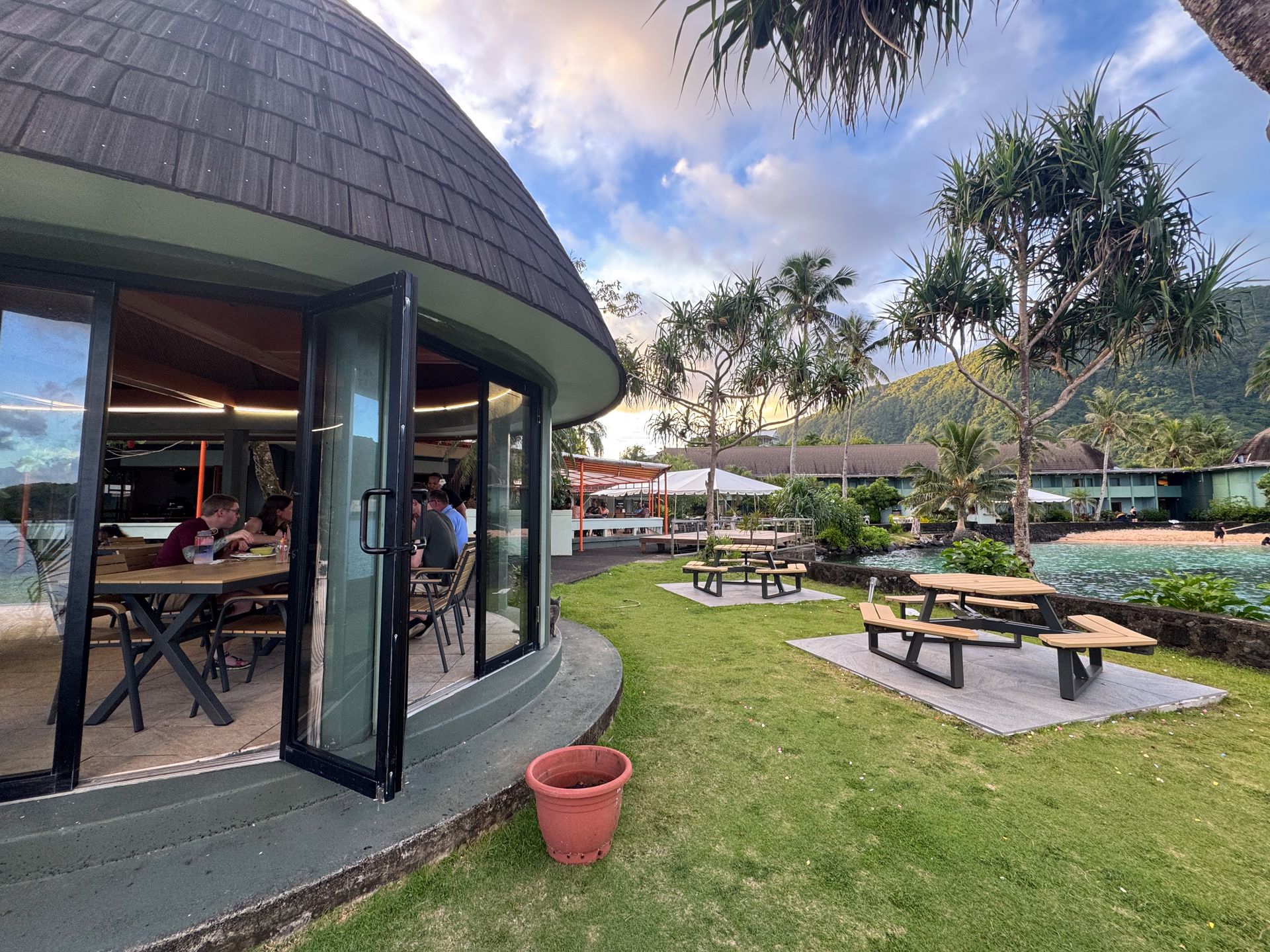
Paradise Restaurant: This spot serves pizza along with a variety of other items, including all day breakfast and local Samoan dishes. It was my personal favorite place that I ate at in American Samoa.
Julia’s Restaurant: A Vietnamese spot located right across from The Tradewinds.
Goat Island Cafe: A restaurant attached to Sadie’s by the Sea that has beautiful views of the water. They didn’t have vegetarian food on the menu, but made me a delicious pasta dish loaded with cheese and vegetables.
Flying Fox Gastropub: I really wanted to eat here, but unfortunately it was closed for the New Year during my trip. The menu includes burgers, rice bowls, sandwiches and more.
Equator Bar: This is the restaurant at the Tradewinds Hotel. I only ate breakfast here, but they had a good selection of hearty and local items, such as Samoan crepes.
Tisa’s Barefoot Bar: I only had the pina colada here, but I wanted to mention again that they have an incredible looking Samoan feast on Wednesday nights. Call ahead to make a reservation for this special event (and ask about dietary restrictions if you have them).
Final Thoughts
I hope this guide helps you plan an amazing trip to American Samoa National Park. Honestly, I cannot wait to return to this island someday. I had such an incredible time. From hiking along volcanic coastlines, to snorkeling among untouched reefs, to meeting friendly locals, this is a destination unlike anywhere else in the United States.
For more US National Park Guides, check out these blogs:
- A Guide to Hawaii Volcanoes National Park
- The Perfect Channel Islands Itinerary
- How to Spend 2 Days in Zion
- The Best Things To Do in Bryce Canyon
- How to Spend 2 Days in Death Valley
- How to Spend 3 Days in Yellowstone
- A Guide to Visiting Isle Royale National Park
- How to Spend 2 Days in Olympic National Park
Thanks for Reading!


Let's stay in touch!
Join the Lost with Lydia email list to get monthly travel guides and tips!