This is no other US national park quite like this one. US Virgin Islands National Park is located within a US territory in the Caribbean, and protects white sand beaches, coral reefs, historic plantation ruins, and a beautiful mix of tropical plants.
The United States purchased three of the Virgin Islands in 1917, creating the US Virgin Islands territory. The United States wanted a strategic military base in the Caribbean during World War I. They purchased Saint Thomas, Saint John, and Saint Croix.
Later, in 1952, Laurance Rockefeller was visiting St. John, and felt that it was one of the most beautiful places he had ever seen. He worked for years to purchase a large portion of land on the island, and gave it to the government for the creation of the 29th US national park. It officially became a national park in 1956. Today, the national park makes up a little over 50% of the island of St. John.
Of course, there is a history of this island from long before the United States purchased it. Semi-nomadic hunter-gatherers lived here thousands of years ago. In 1493, Christopher Columbus arrived in these islands and introduced sugarcane. In 1671, the King of Denmark granted the Danish West Indian Company permission to use St. Thomas, and they later occupied St. John as well.
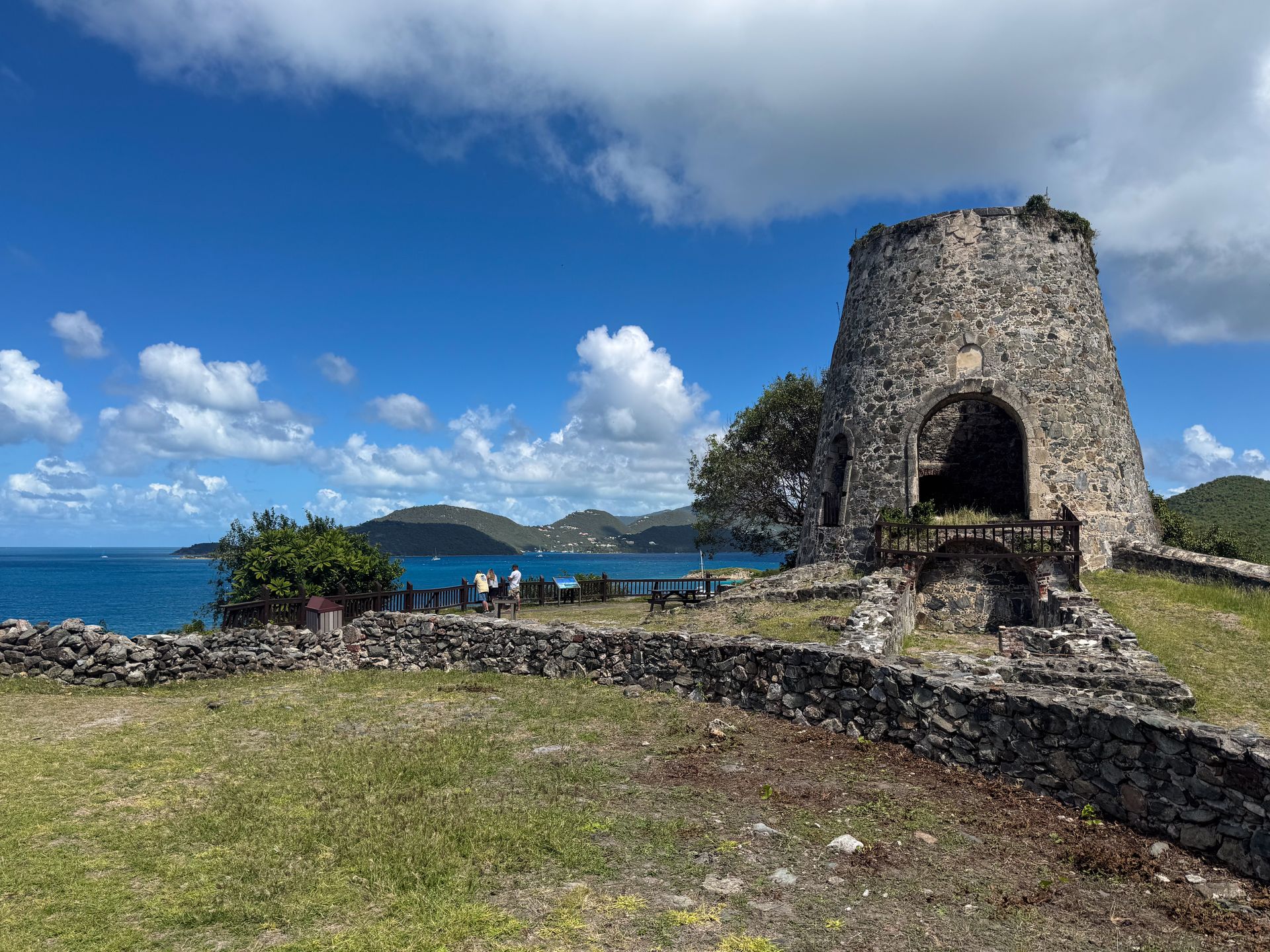
By 1726, there were sugarplane plantations all over St. John, and they ran on enslaved labor. In 1733, there was a heroic attempt of freedom by the enslaved people on St. John. This is known as the Slave Revolt of 1733, and it was one of the most successful attempts of this kind in history. Enslaved people occupied the island for six months. Later, the enslaved people on St. John were emancipated in 1848.
Today, there are plantation ruins all over the island, and I encourage you to learn more about the history here before and during your visit. While this is a stunning beach destination, it’s also a place with a storied past. As you relax on the white sand, think about those who have come before.
This guide shares all about how to get to US Virgin Islands National Park, and what to do while you’re there. I share hiking trails, snorkeling spots, where to stay, and more. This is based on my experience visiting the Virgin Islands in February 2026.
Tips and Things To Know Before Visiting Virgin Islands National Park
- It’s important to wear reef-safe sunscreen when you visit. The chemicals in typical sunscreen can cause coral bleaching and hurt marine life, and it’s banned in the US Virgin Islands. I like the Blue Lizard brand.
- As with any outdoor destination, please make it a priority to leave no trace. Do not feed or approach wildlife, and pack out all of your trash.
- Bring insect repellent. The sand flies were bad in the evenings.
- You can’t fly directly into St. John. Most likely, you’ll want to fly into St. Thomas, take a ferry to St. John, and rent a car to explore. I’ll share more details about that below. Cruises are another way to visit St. John, but I think it’s worth spending more than one day exploring this national park.
- They drive on the LEFT side of the road in the US Virgin Islands. Plus, many of the roads are steep and narrow. Honestly, it’s a bit nerve-wracking, but definitely worth it.
- Lodging is expensive on St. John. I stayed in an eco-tent at the Cinnamon Bay Beach Campground, which I’ll share more about below.
- During peak times, parking is difficult at some of the beaches and trailhead, especially at Trunk Bay and Cinnamon Bay. Arrive early or late to get a spot!
- Bring your own snorkel so that you don’t have to worry about renting. This gives you more flexibility to visit places after the rental shops close.
- The lines to get through security and fly out of St. Thomas can be LONG. We almost missed our flight despite not checking any bags, and having Global Entry. I recommend arriving at least 3 hours early to the airport. While this is a US territory, it’s also smart to bring your passport just in case.
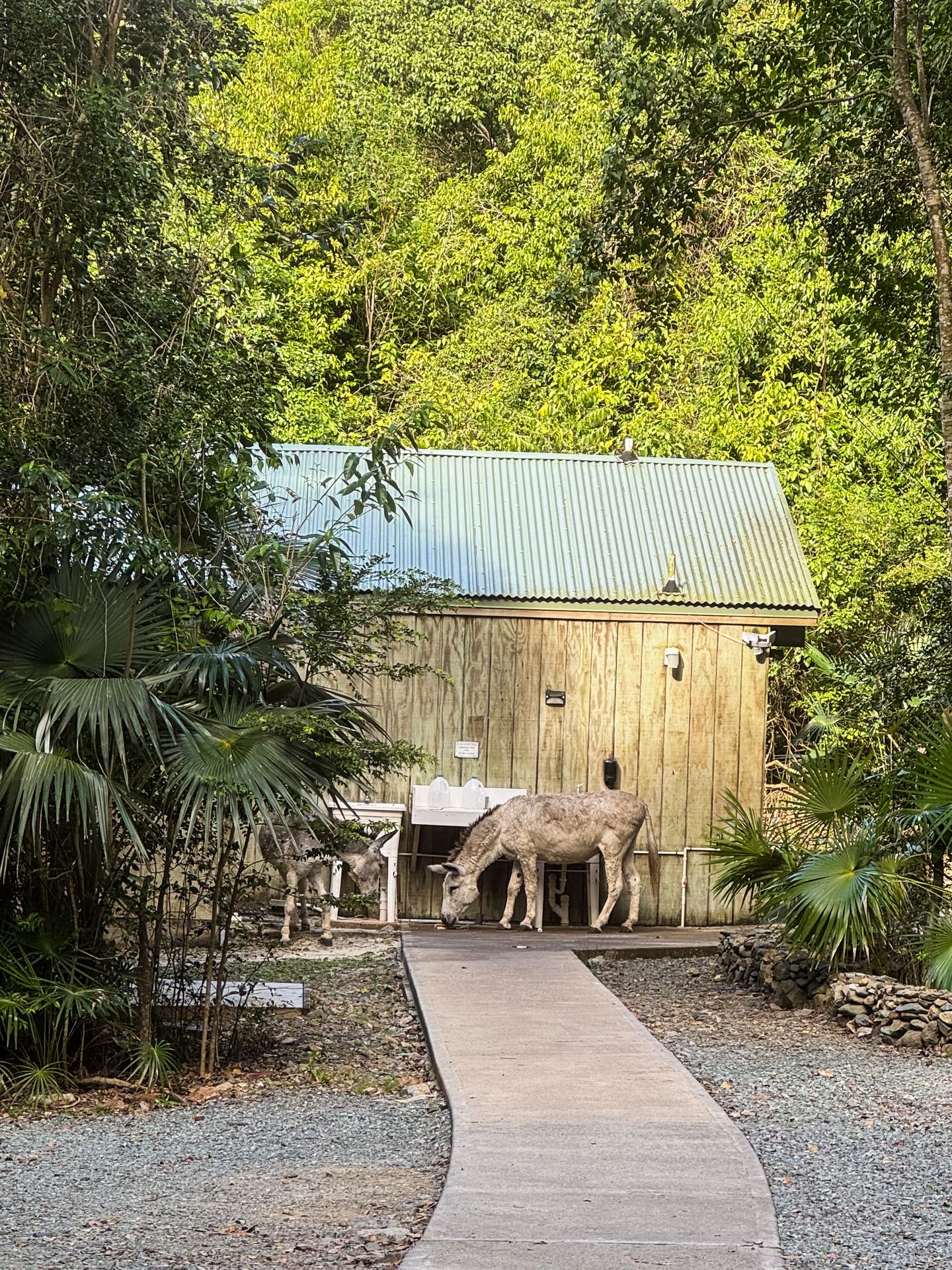
- Feral donkeys roam all over St. John. They were brought to the island to aid in plantation work, and are not native to the island. Please do not feed the donkeys, this teaches them to associate humans with food.
How to Get to US Virgin Islands National Park
The easiest way to get to the US Virgin Islands (without taking a cruise), is to fly into St. Thomas. St. Thomas has direct flights to many cities in the mainland US, including Miami, Atlanta, Dallas, and more.
When you arrive, you’ll need to make your way over to St. John on a ferry. There are multiple options that have their own schedules, and leave from different locations.
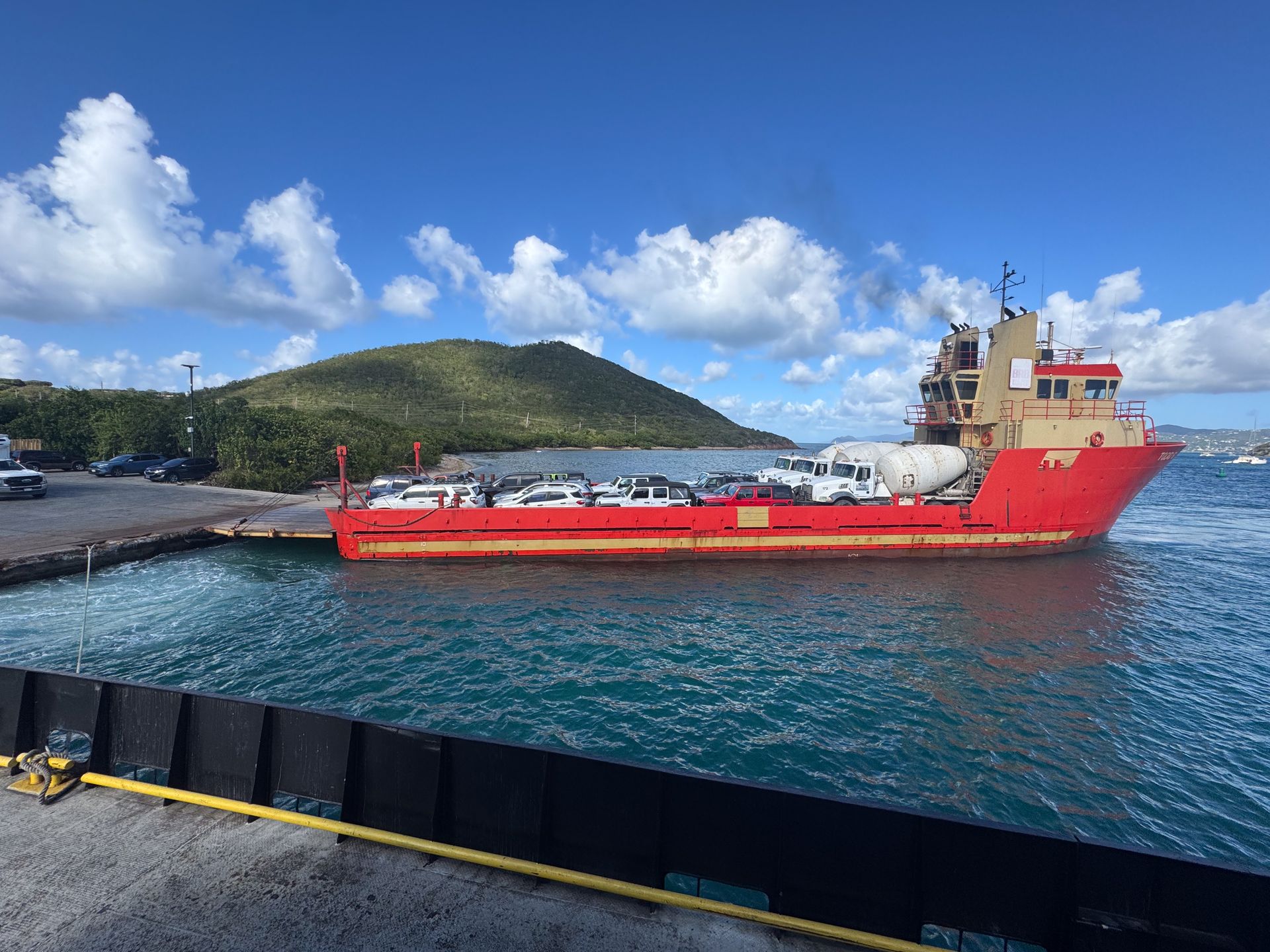
While it’s not totally necessary, I recommend renting a car to get around, especially if you want to hike. If you’ll be renting a car, you’ll need to decide between renting on St. Thomas or St. John. This also affects which ferry you can take, as some are car barges, and others are for passengers only.
I rented my car on St. Thomas, and took it over to St. John. I recommend this because the car rentals are generally cheaper on St. Thomas, and you have a lot more options. I also think that this makes for an easier experience all around, as you can pick up your rental car at the airport, and not worry about taking any taxis.
However, another thing that complicates this decision is the time of your flight. The car ferries do not run as late as the passenger ferries, so you shouldn’t plan to land in St. Thomas, rent a car and make it over to St. John if your flight is in the evening. As of this writing, the car ferries usually have their last ferry to St. John at 7 or 7:30 PM, while one of the passenger ferries runs until 11:30 PM.
Personally, I rented my car from Paradise Rental Car in St. Thomas, and had a great experience with them. I landed around 2 PM, and made it to the 3:30 PM ferry with Love City Car Ferries. If you don’t pay online in advance, make sure you have cash to pay the fee. You also get a discount for paying for a round trip. We paid $80 for a round trip. One way costs $65.
The ride on the ferry takes about 30 minutes, and has some lovely views.
You’ll see a lot of Jeeps on St. John, but a 4x4 is not really necessary. There are a few roads that need 4x4, but it’s easy enough to avoid them. However, it is nice to have some of the steep roads. We rented a Toyota Rav4, but didn’t feel like we needed the AWD.
Honestly, driving in both St. Thomas and St. John was a bit scary at times. Many of the roads are very steep, windy and narrow. Plus, they drive on the left side of the road, but the driver's seat is positioned like American cars, designed for driving on the right side of the road. This can make visibility tough. However, driving is very doable if you take it slow, and pay close attention.
The Best Things To Do in US Virgin Islands National Park
Hiking in Virgin Islands National Park
I’ll start with my favorite thing to do in any national park, hiking! While this park is more known for its beaches, I was impressed with the hiking trails. There are amazing views, lots of plantlife, plenty of wildlife, and a good mix of trails for different abilities.
The Virgin Islands are warm and humid year round, so make sure to pack sun protection (and reef-safe sunscreen) for hiking. You should also carry lots of water, and electrolytes are helpful too. The nice thing is that there are no shortage of beaches to take a dip in before, during and after your hikes.
Ram Head Trail
Ram Head was my favorite hike in the US Virgin Islands. At 2.7 miles, this trail has an amazing pay off for a relatively short adventure. The trail leads to the southernmost point of the island, and has 360-views of the ocean.
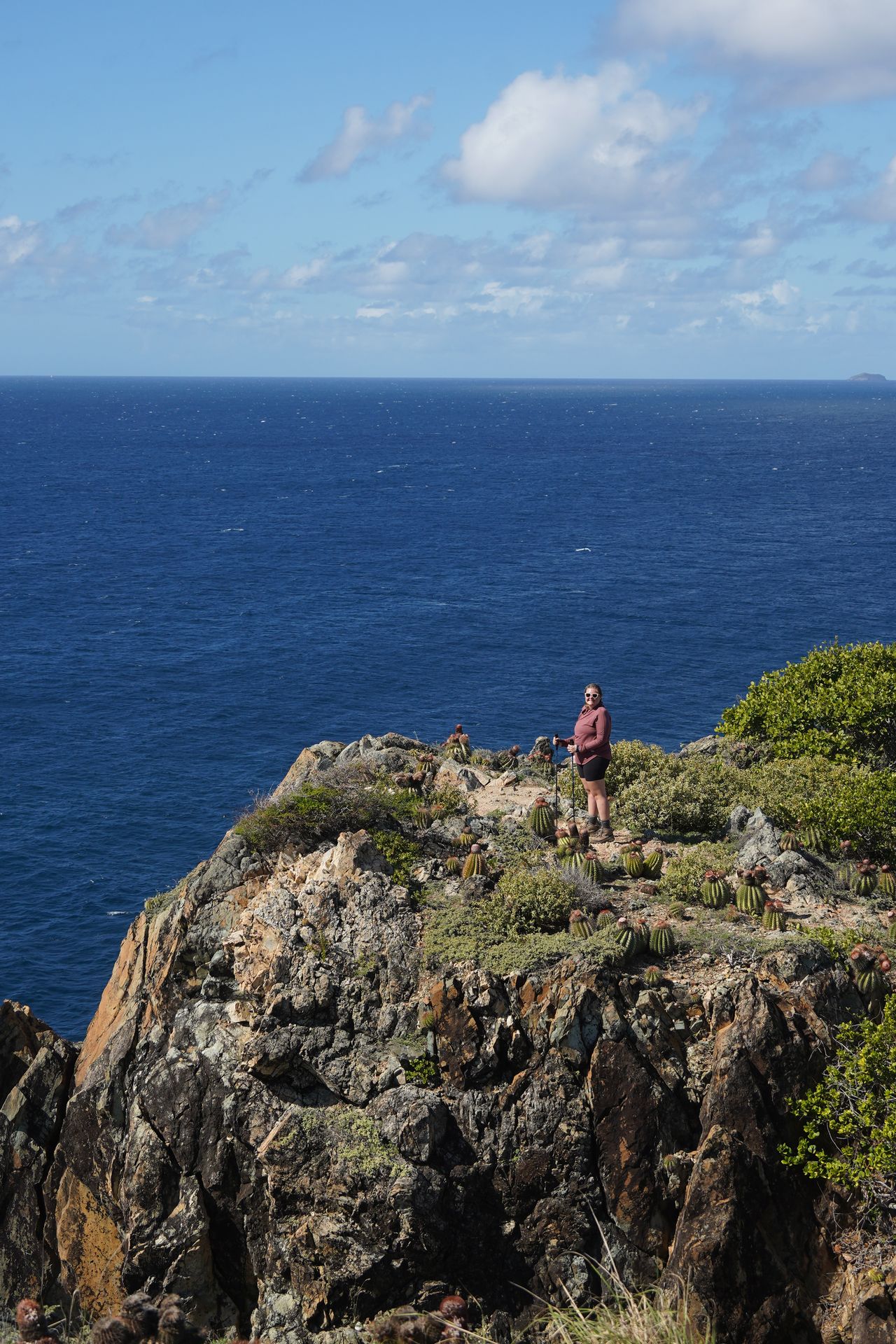
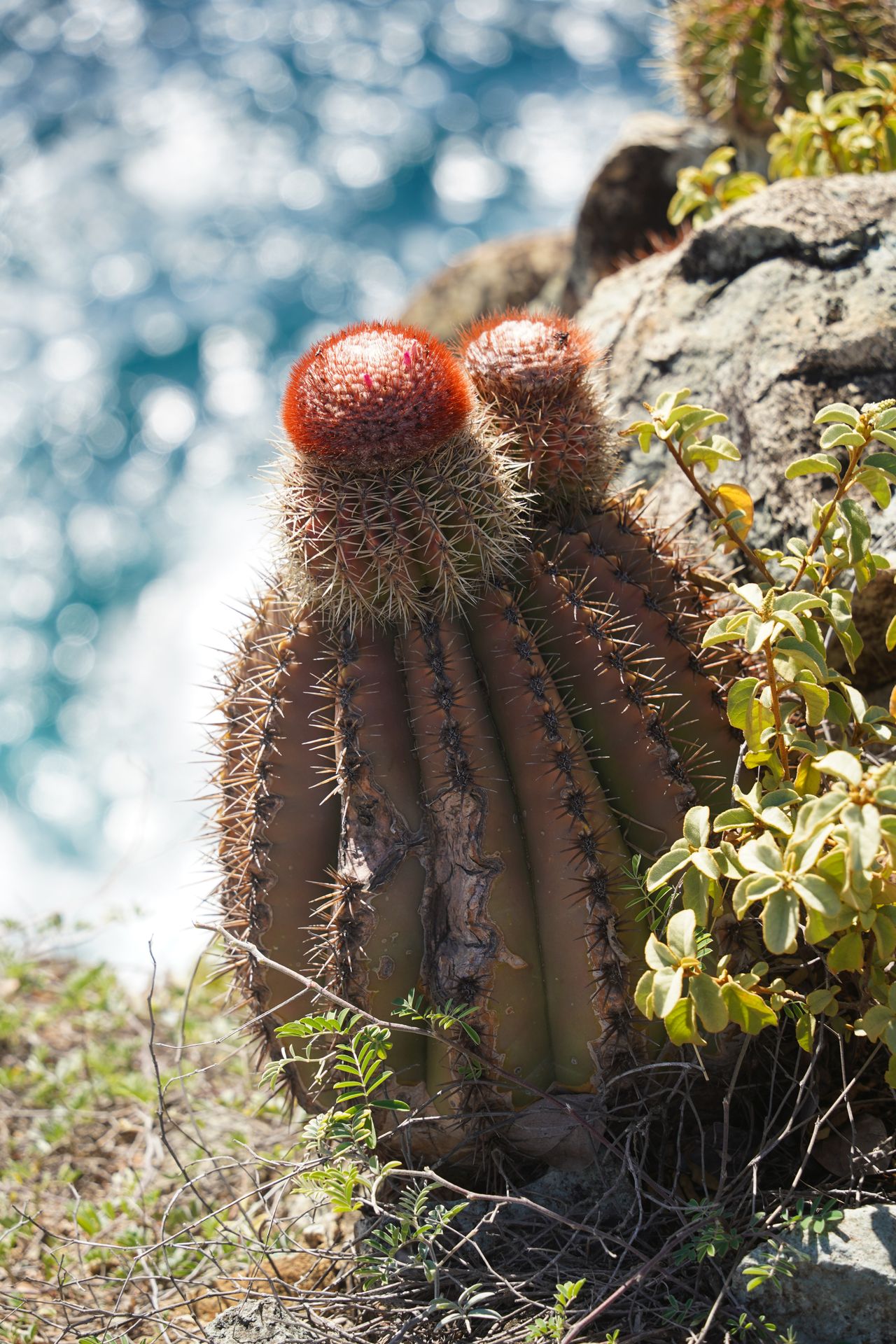
This trail is popular, so arrive early to get a parking spot. As you begin your hike, you’ll first pass by Salt Pond Beach. It’s a peaceful place for snorkeling or enjoying the clear water. After the beach, you’ll soon begin the climb up to the best views. Right by the beach, you can also take a brief detour to enjoy a view of Salt Pond.
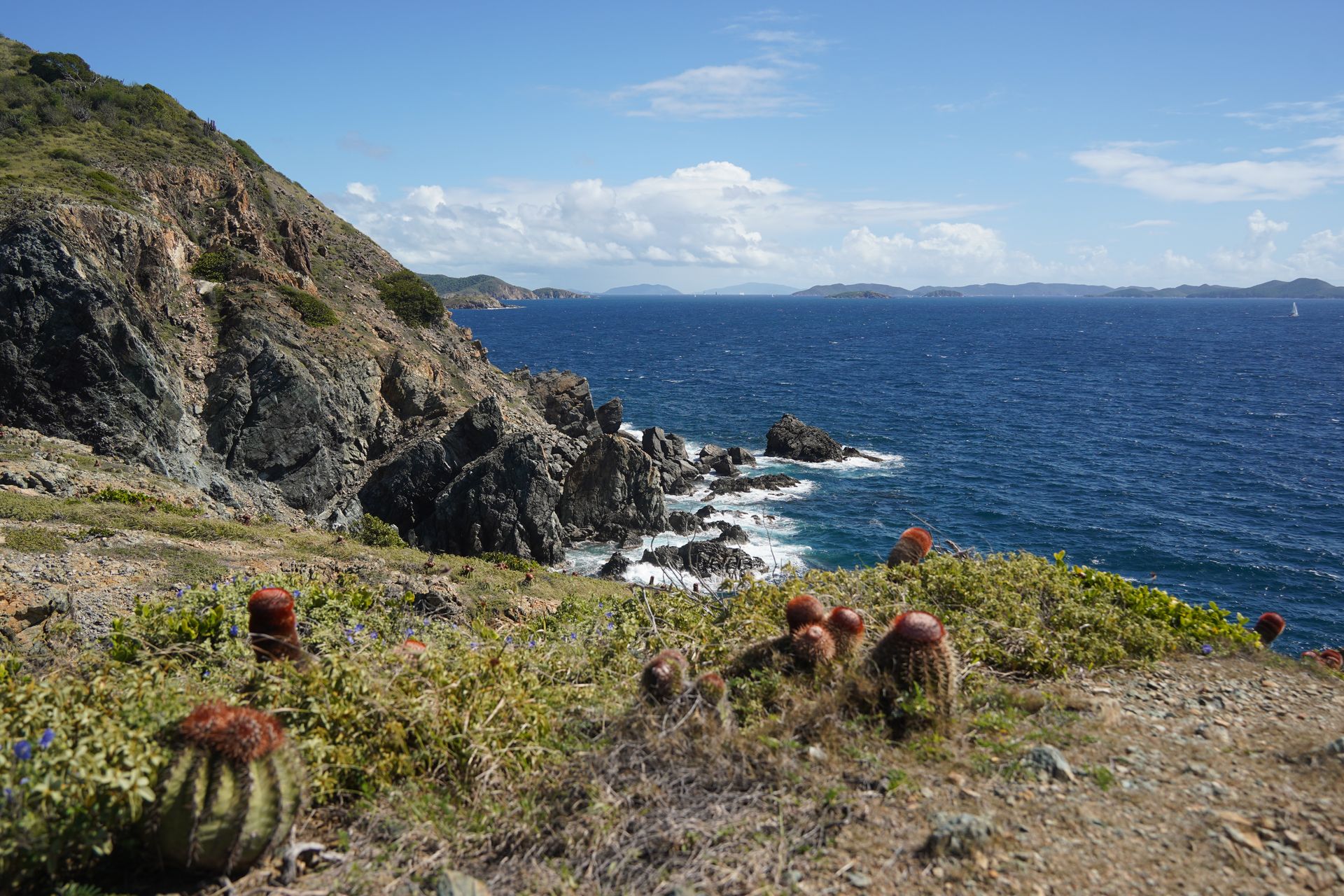
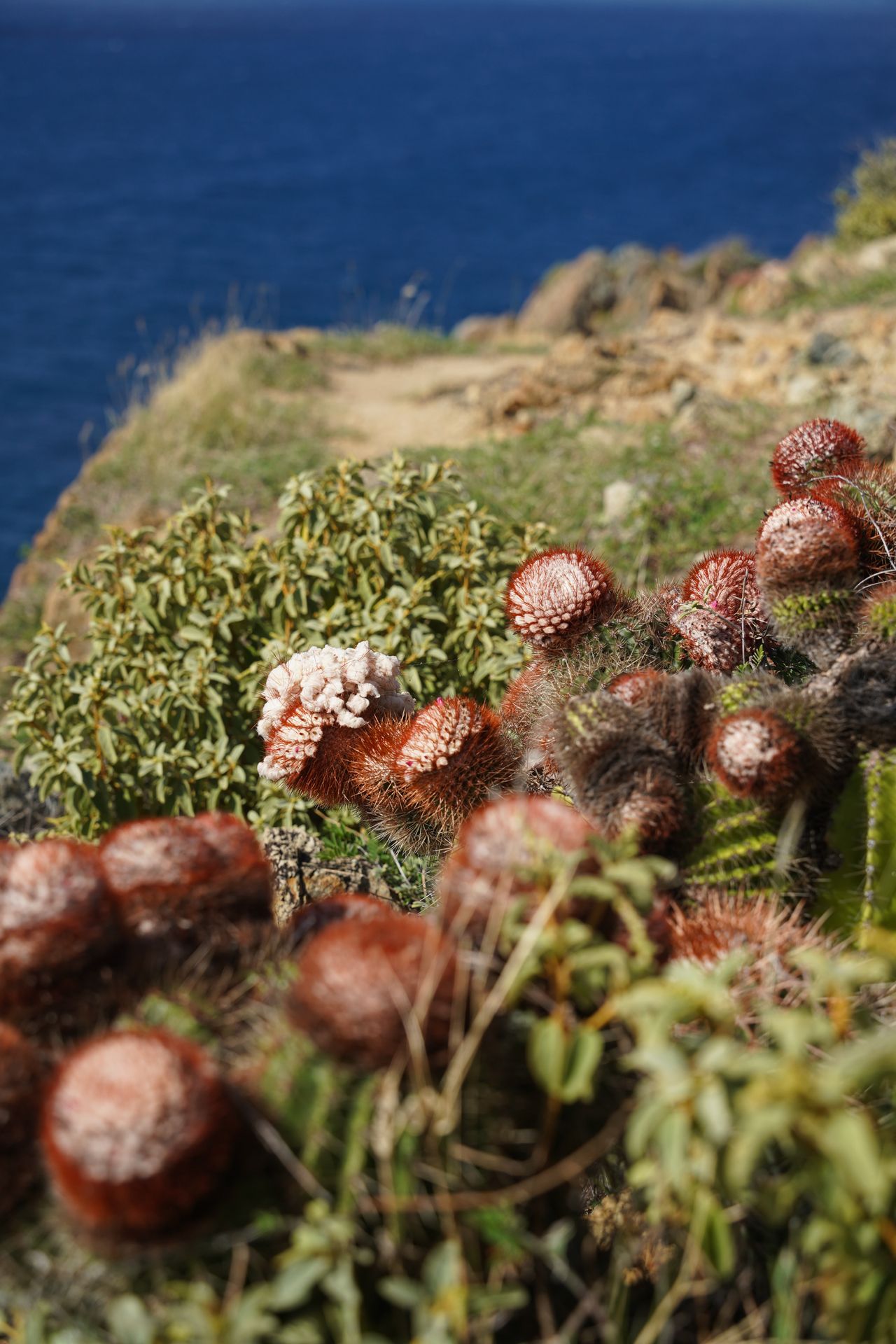
As you climb, there are so many interesting cacti. There are a ton of Turk’s Cap, which is a barrel-shaped cactus that produces bright pink, tubular shaped flowers.
At the top, there are incredible views in every direction. I could see the island of Saint Croix and lots of coastline. This is also the sight of a very important event, and a sign commemorates it. During the African Revolution in 1733, this is where a group of leaders took their own lives in a ritualistic way. This is a sobering reminder of the history of this island.
This hike is rocky and has little to no shade, so make sure to bring sun protection and wear good shoes. On your way back, you can enjoy a dip at Salt Pond Beach.
Reef Bay Trail
The Reef Bay Trail is a hike full of variety, and a great one if you're up for a bit of a challenge. Starting from the Reef Bay Trailhead, you’ll hike downhill to reach a beach, plantation ruins, a waterfall, and more. This means that you’ll need to hike back uphill to return to the start. The total elevation gain is over 1,000 feet, but at least this trail has some shade.
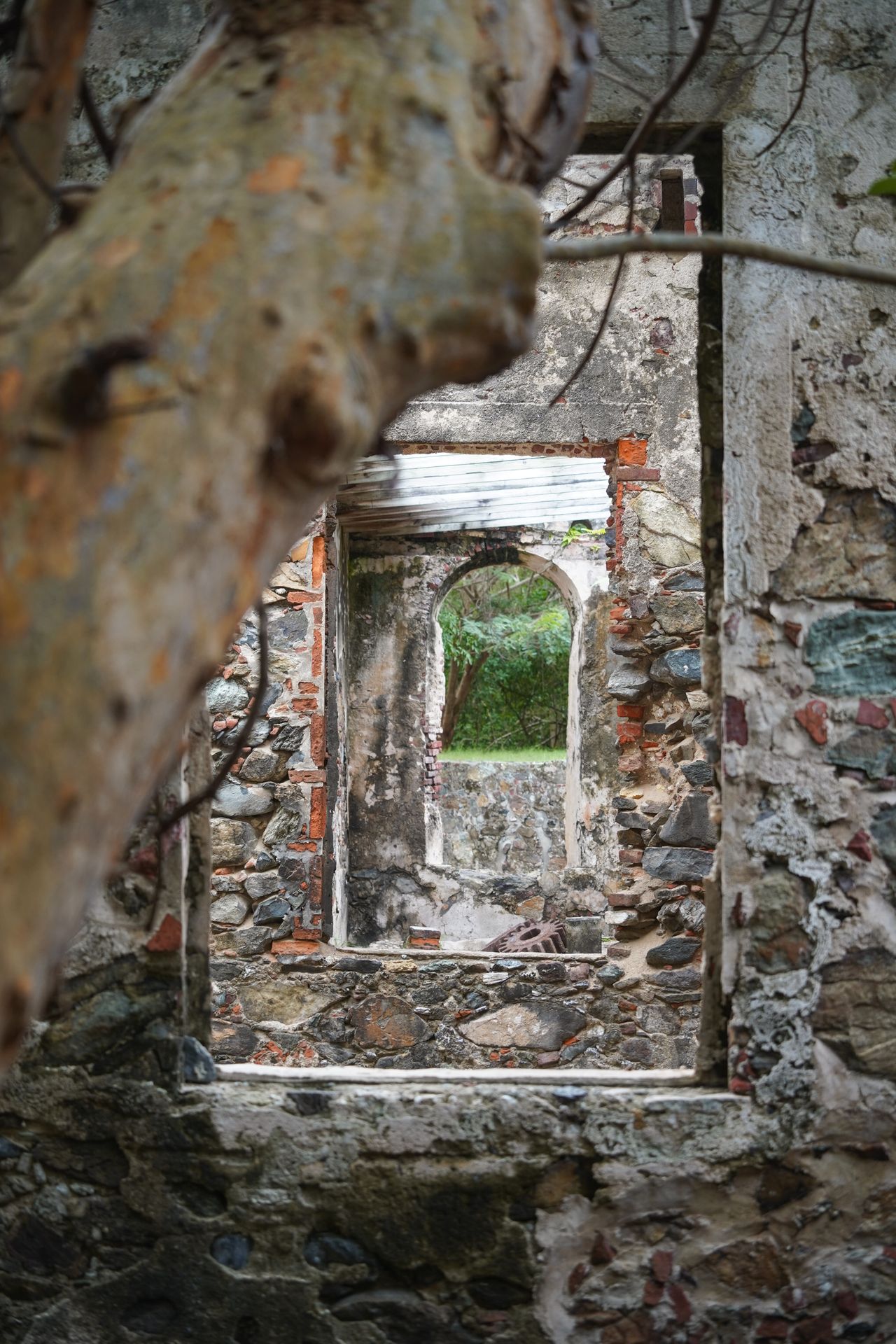
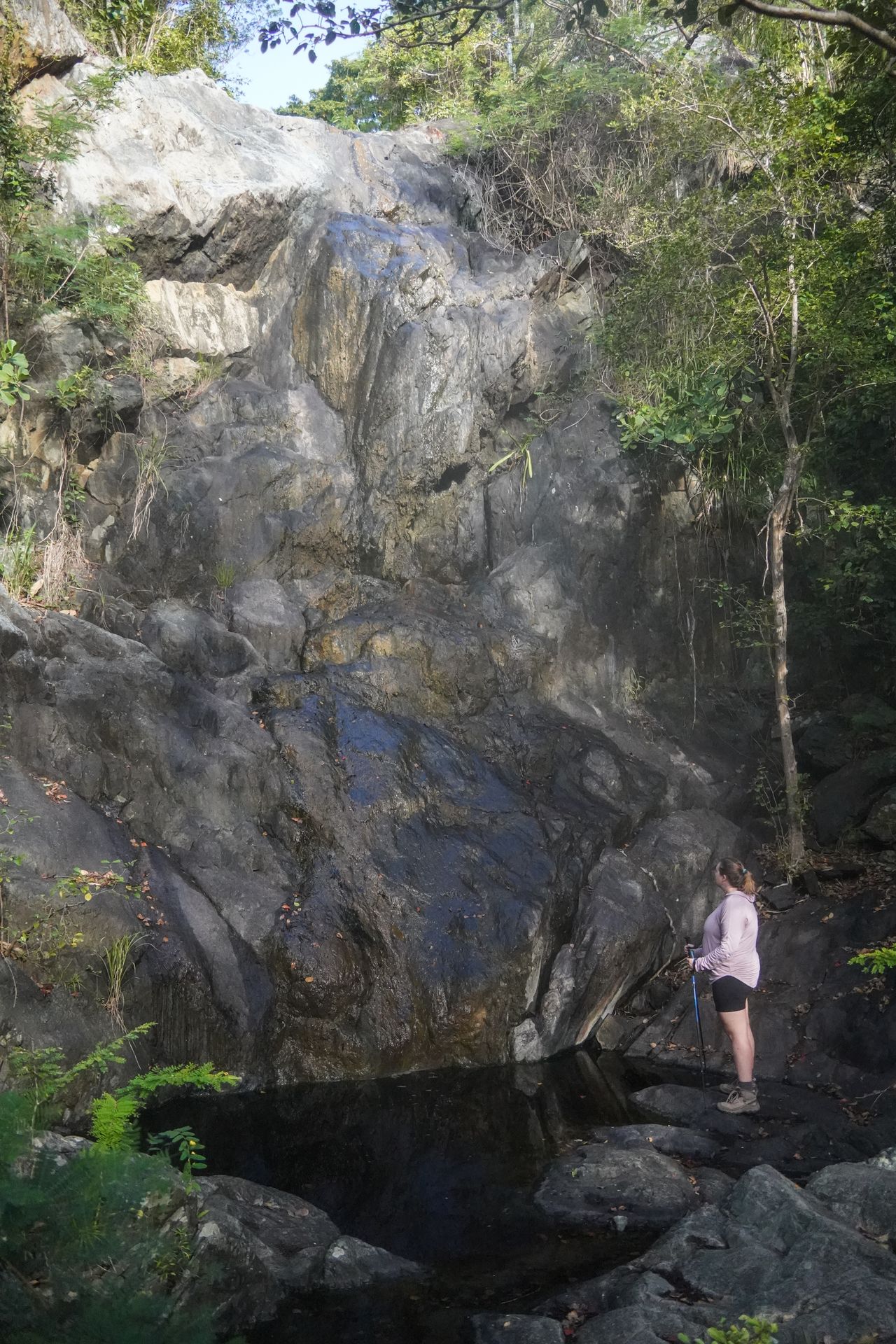
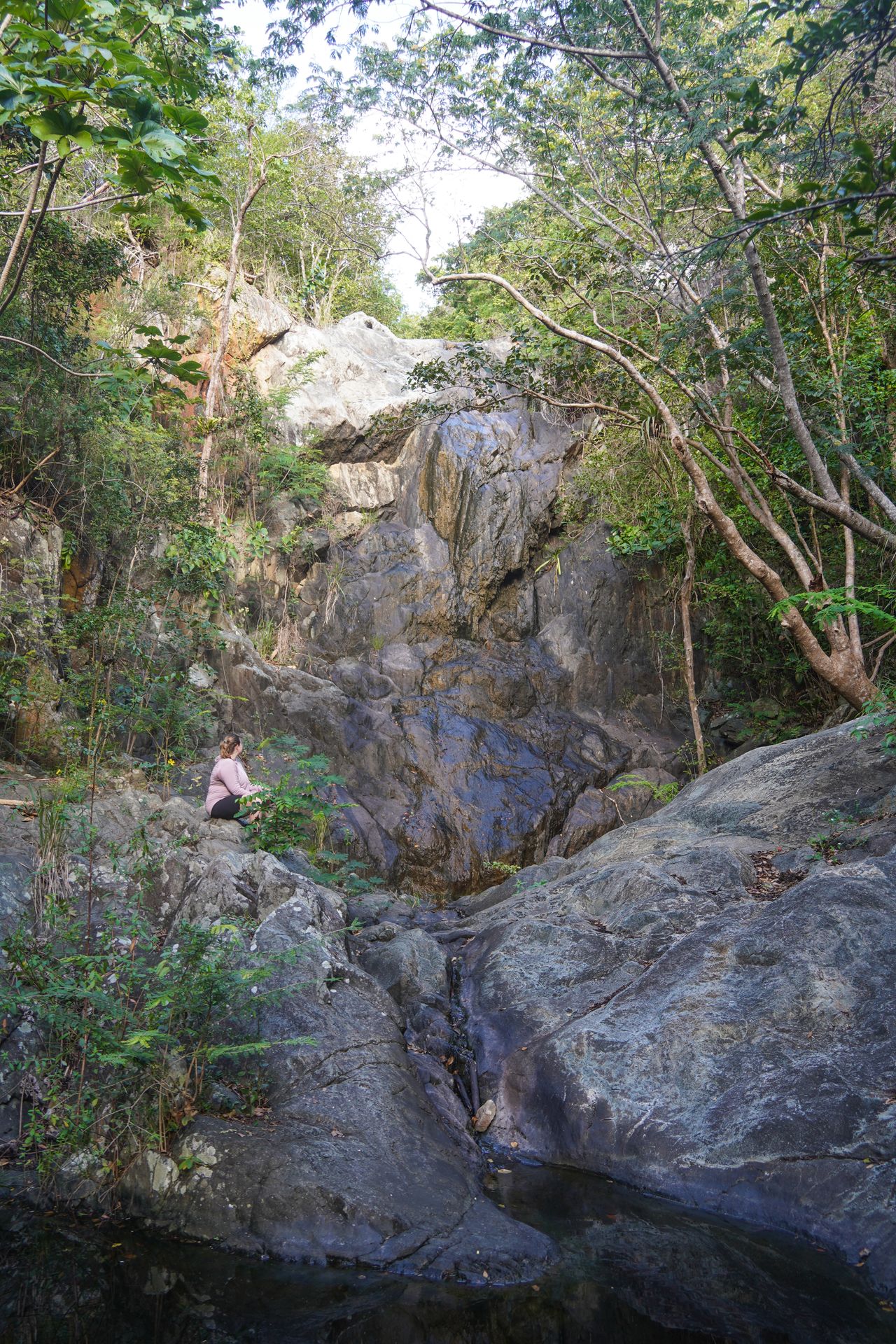
This trail has a ton of variety. You’ll pass by some of the oldest trees on the island, and there is signage that tells you about the plants. Don’t miss the Petroglyph Trail, which is a quarter mile spur off of the main trail. It’s located 1.5 miles from the trailhead.
At the end of the spur, you’ll see a waterfall, and ancient rock cravings left by the pre-Colombian Taino. Look for dots, circles and faces near the edge of the water, on the rocks.
As you continue on to the coast, you’ll reach ruins right next to the ocean. These are ruins from a sugar plantation, and they’re well in tact. You can see a large water wheel, a stone tower, and places where plants have grown into the stones and brick. Just a bit further, you’ll reach a sandy beach, and can take a dip if you’d like.
The trail gets a little steep at times, but I think it’s worth the trek, especially if you’re used to hiking. As with any trail on the island, bring plenty of water, sun protection, sturdy shoes, and insect repellent.
Tip: We saw mongoose on this trail, and all over the island. They are invasive species that were introduced for rat control on the sugar plantations, and they are known to eat the eggs of endangered species of sea turtles on the island.
American Hill via the Cinnamon Bay Trail
The Cinnamon Bay Trail is a great trail for anyone staying at the Cinnamon Bay Campground, as it’s right across the street! The hike to American Hill also has great bang for its buck, as you’ll hike up to a nice view during a relatively short trek.
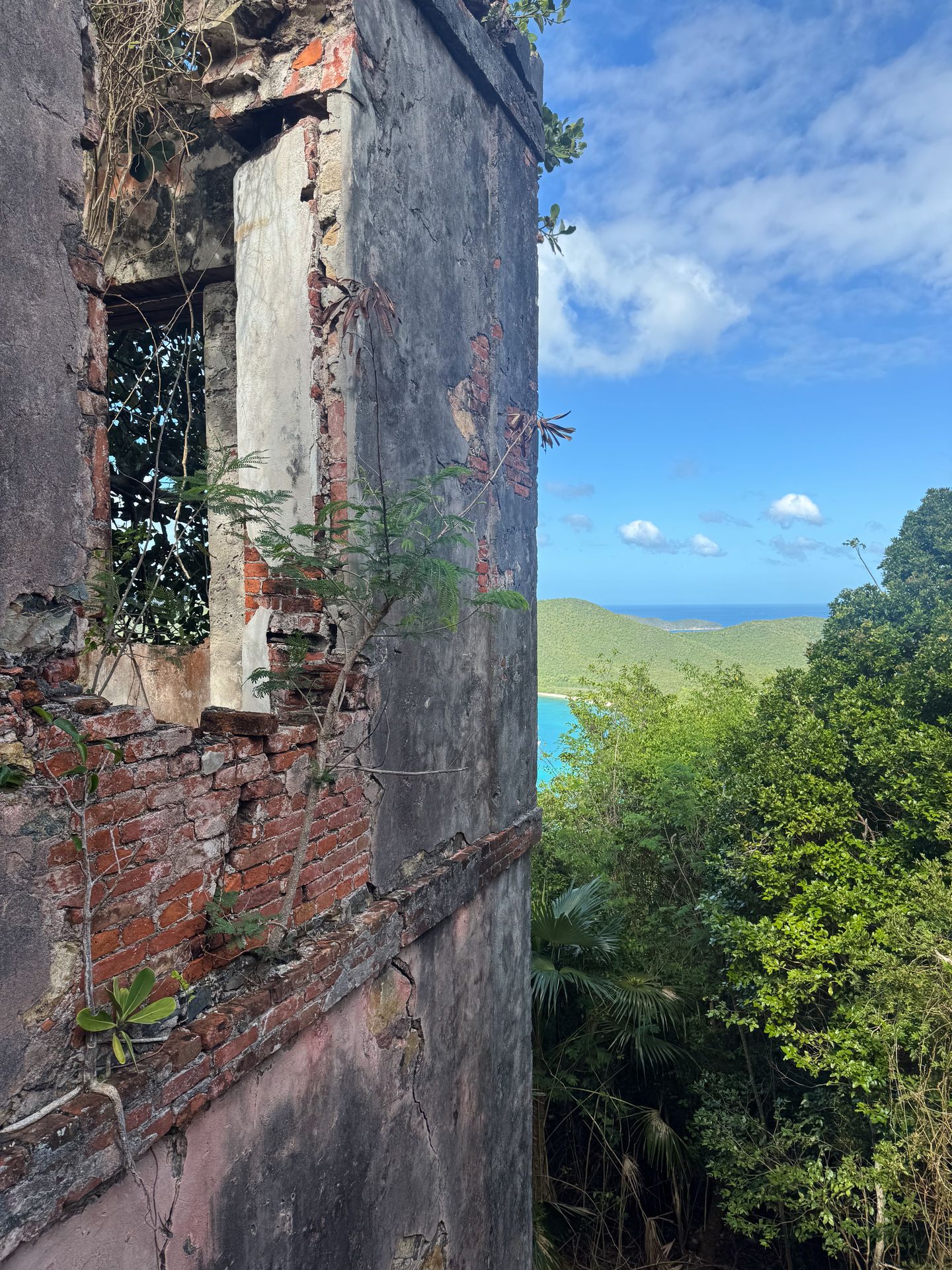
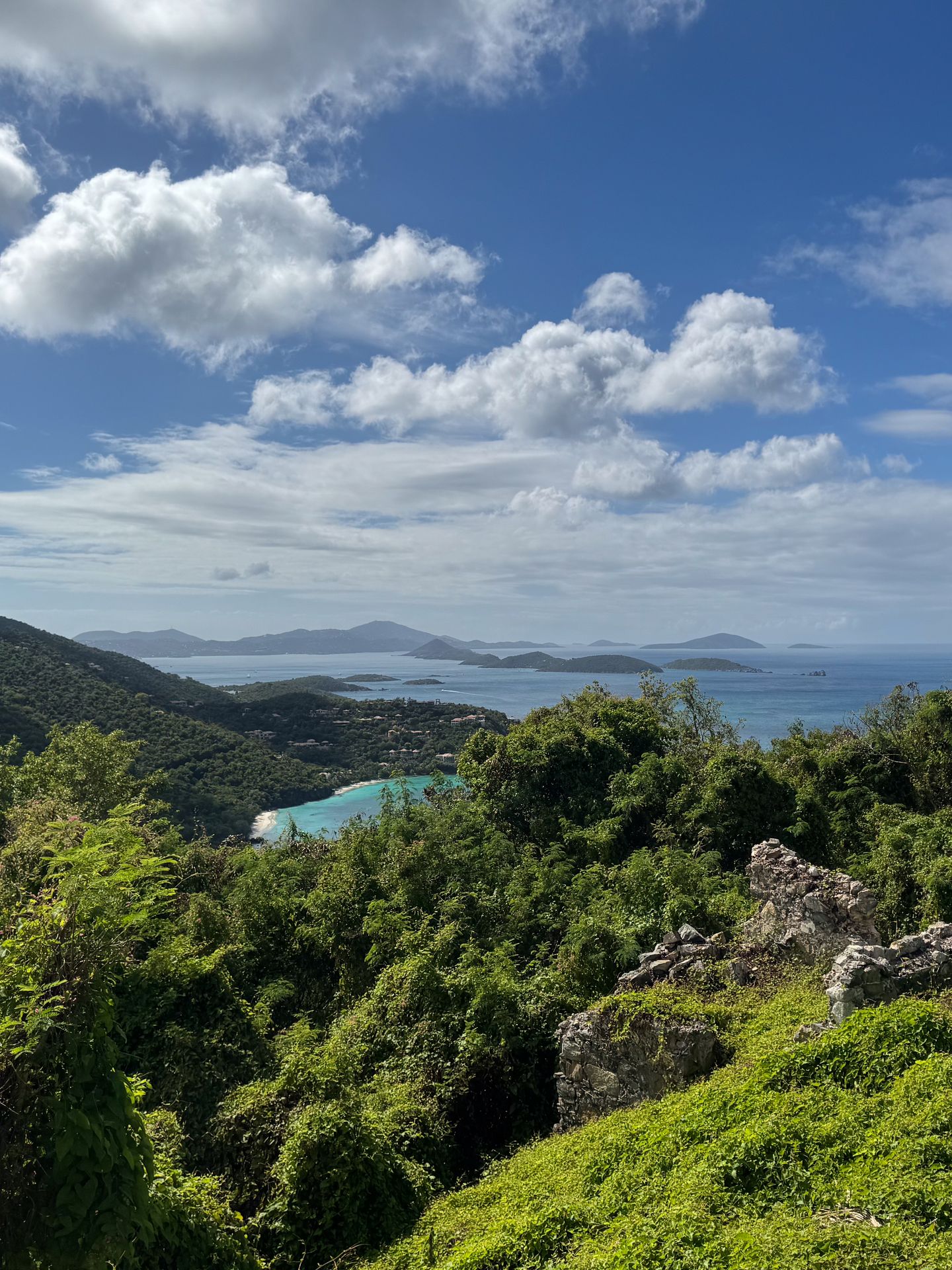
There are ruins at the top of the trail, and you’ll have a view of the ocean and nearby bays in two directions. You can also continue further on the Cinnamon Bay Trail, which has even better views.
This was the least crowded trail I did on the island, so it’s a nice one if you’re looking to escape the crowds. Plus, you can enjoy a dip at the Cinnamon Bay Beach, or food at their snack shack or restaurant, after your hike.
Lind Point Trail to Honeymoon Beach
The Lind Point Trail leaves from the Visitor Center, and has awesome views of Cruz Bay. It leads to Honeymoon Beach, which is another picturesque white sand beach that the island is known for.
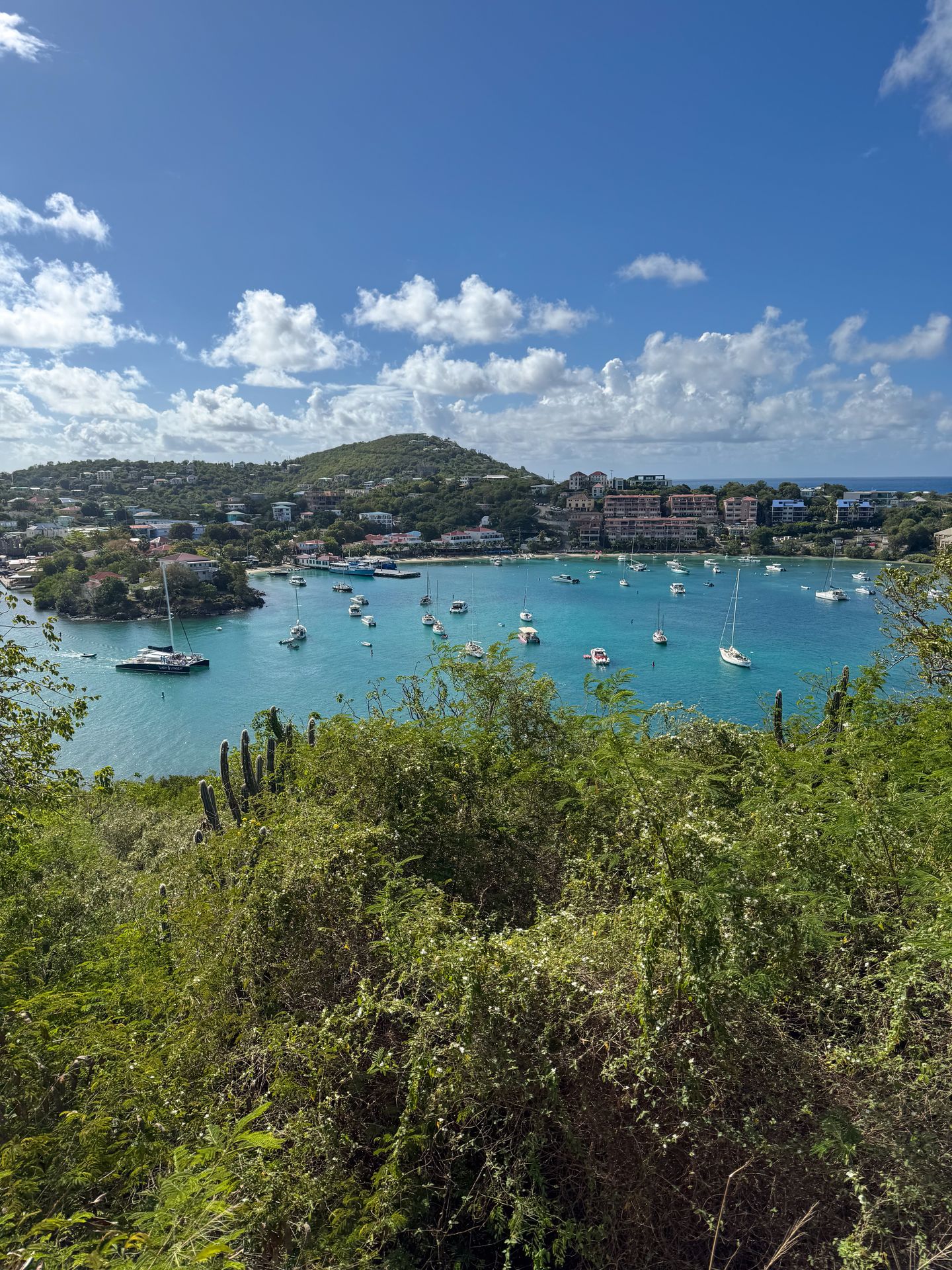
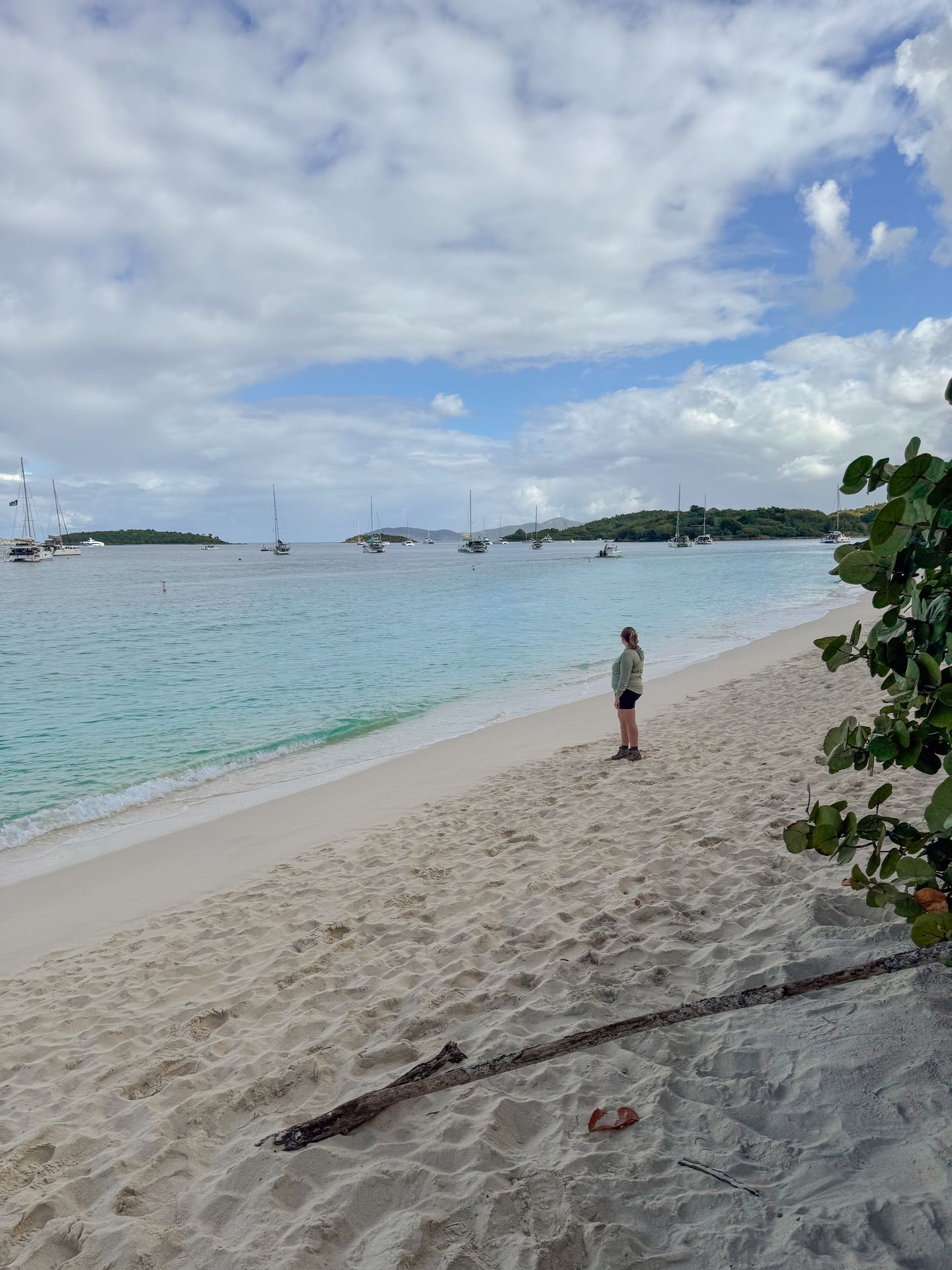
This is a popular trail for cruise ship passengers, as it leaves from right next to a dock. I recommend going early or late to avoid the crowds. This would be a nice trail for sunset views.
There is an upper and lower trail, and the Upper Trail has a great view that overlooks the ocean.
At Honeymoon Beach, you have the option to rent a day pass that includes a lounge chair, snorkel gear, umbrellas, and more.
Tip: If you don’t want to pay for a $49 day pass, make sure to bring everything you need for the beach.
If you’re driving yourself, you can obtain a free parking pass to park at the visitor center. If you’re parking here while the visitor center is closed, read signage carefully about the parking rules. It’s only allowed at certain times.
Snorkeling in Virgin Islands National Park
Virgin Islands National Park has some of the best snorkeling that you could imagine! From colorful coral reefs, to a variety of marine life, there are many snorkeling spots that are easy to access from beaches.
Maho Bay
Maho Bay is one of the best places on St. John to see sea turtles! They have a large seagrass habitat, which is important for sea turtles’ diet. You can rent snorkel gear (among other things) at this beach, and there are food and drink vendors across the street.
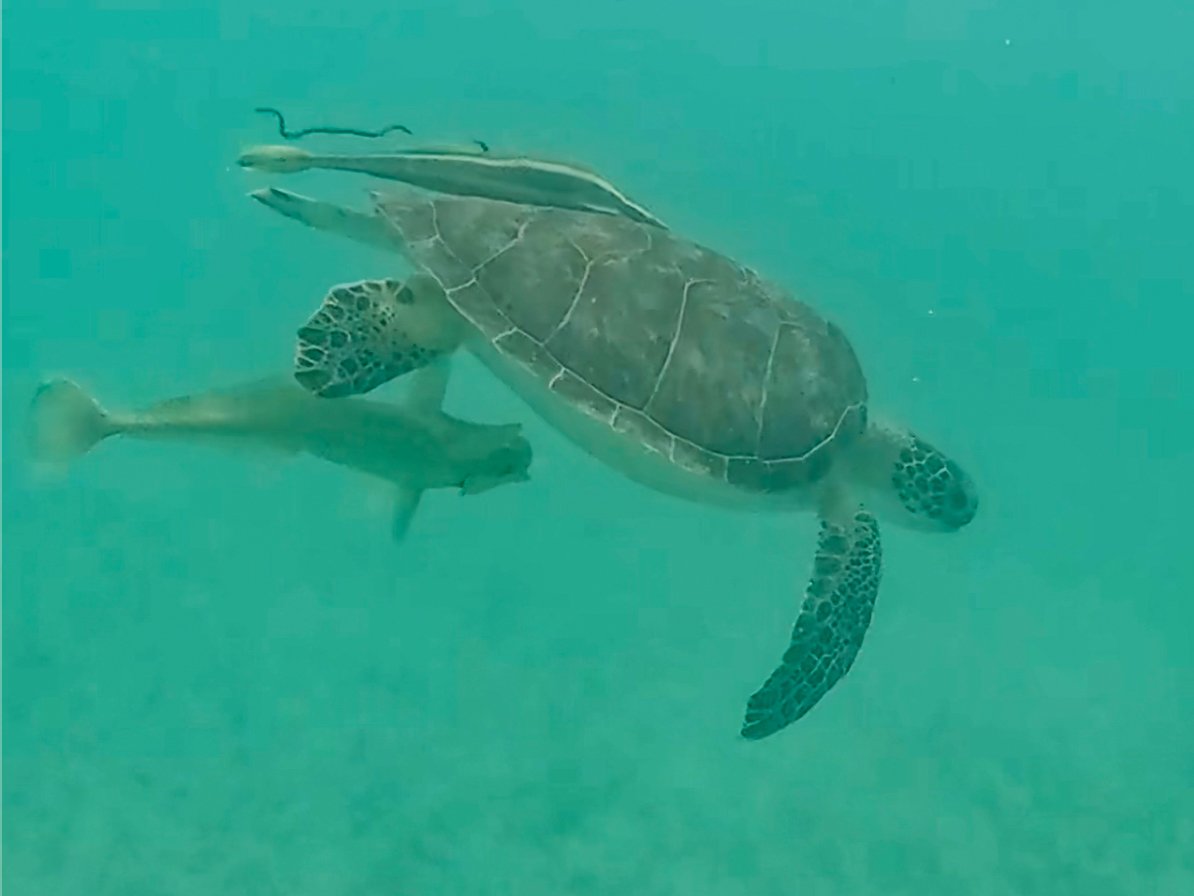
It took some patience, but I finally got to see a beautiful sea turtle swimming around, and it was a lovely experience.
This beach gets crowded, but they have a large parking lot. This is a great place to enjoy the beach and look for the turtles.
Trunk Bay
Trunk Bay is one of the most famous beaches in the US Virgin Islands. In fact, it’s said to be one of the most beautiful beaches in the world. The beach has a wide area of brilliant white sand, and crystal clear water.
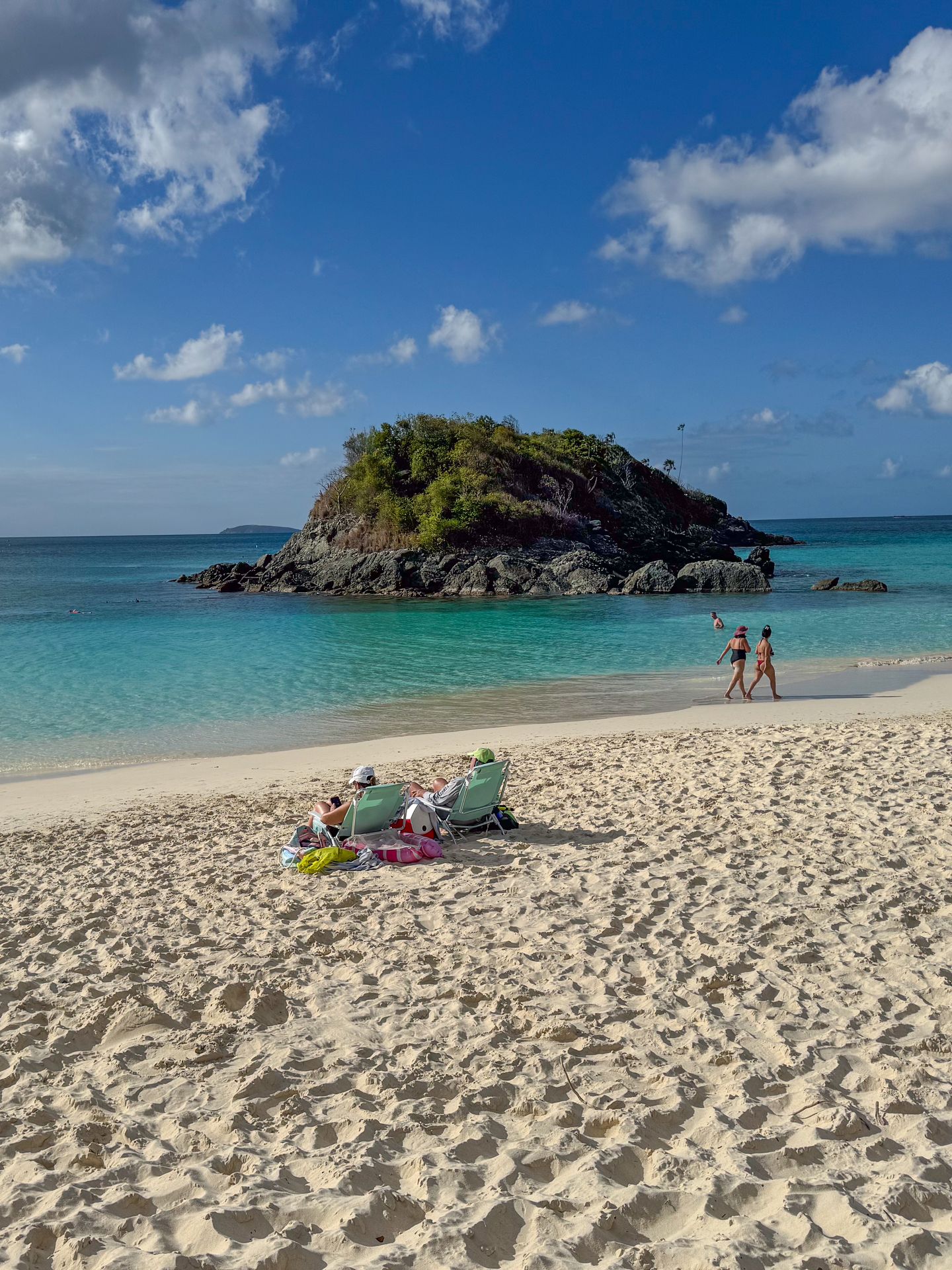
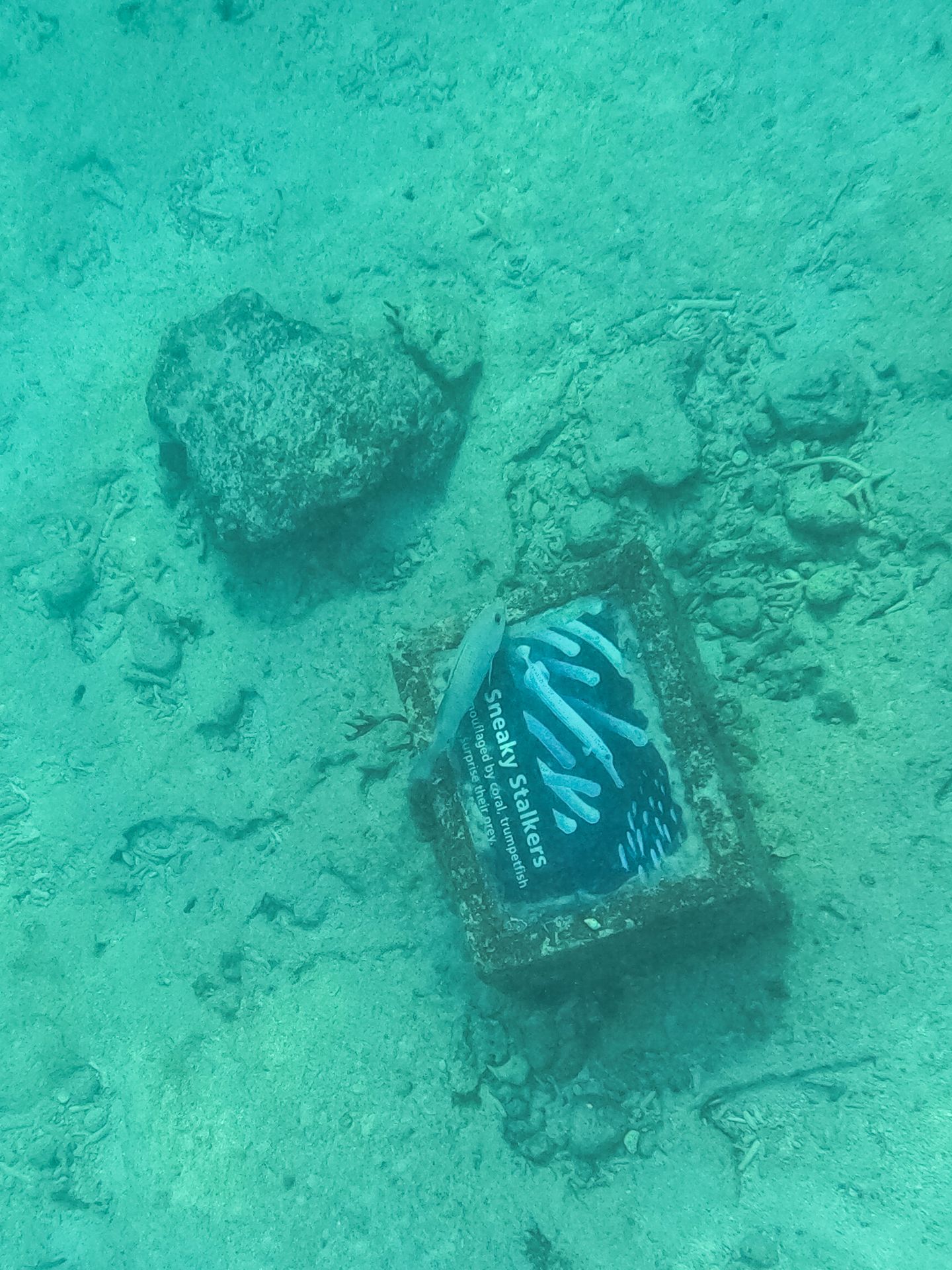
Trunk Bay also has an island located not far off shore, which is a neat sight. For snorkeling, this is easily one of the best spots in Virgin Islands National Park. They actually have an underwater snorkeling trail which has signage underneath the water. Along the trail, there is lots of colorful coral, and marine life.
Trunk Bay offers rentals for snorkel gear, chairs, and more. However, parking is super difficult here. I drove by multiple times and parking was always impossible in the peak of the day. I ended up visiting around 4PM, which was a great time. Luckily, I had my own snorkel gear, because the rental places were closing by then.
Trunk Bay charges a $5 fee to enter. The national park itself is free, but this is an expanded amenity fee. If you have an Interagency Senior or Access pass, the fee is discounted to $2.50.
Waterlemon Bay
Waterlemon Cay is a beautiful place to snorkel and see coral, fish, and enjoy crystal clear water with fewer crowds. This spot is reached via a short hike on the Leinster Bay Trail. It’s about a mile to reach the snorkeling spot, and then you’ll want to swim across the bay to snorkel near the Waterlemon Cay Island.
The hike leaves from the same spot where you can visit the Annaberg Sugar Plantation ruins. I didn’t make it to this snorkeling spot, but it’s high on my list for next time!
Historic Sites in Virgin Island National Park
There are many instances of plantation ruins all over St. John. Along with the ones that I’ve mentioned on hiking trails, here are a couple that I visited by car, and recommend.
Annaberg Plantation Ruins
Sugar plantations, kept afloat by enslaved labor, dominated life on St. John in the 18th and 19th century. The Annaberg Plantation offers the best preserved ruins on the island. There is signage available to learn more as you walk around the site. You’ll see a former mill, sugar factory, enslaved quarters, a garden, and more.
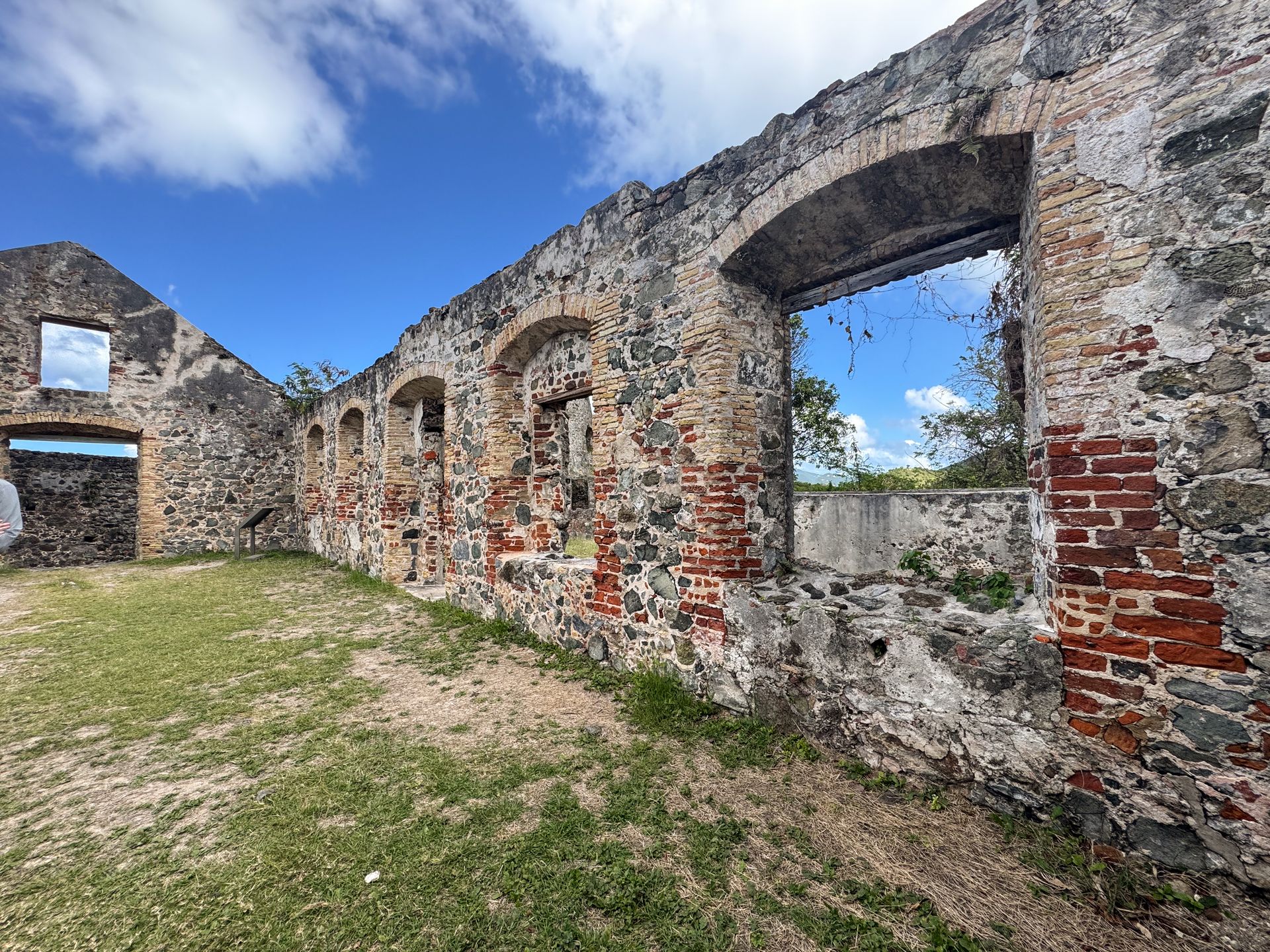
To reach this site, you’ll park in a lower lot and need to walk up some steps. However, there is a road that allows you to be dropped off closer.
Catherineberg Estate Ruins
Another interesting site for plantation ruins is the Catherineberg Estate. There is very little signage here, but there’s a large mill, and well preserved ruins that have been overtaken by tropical plants.
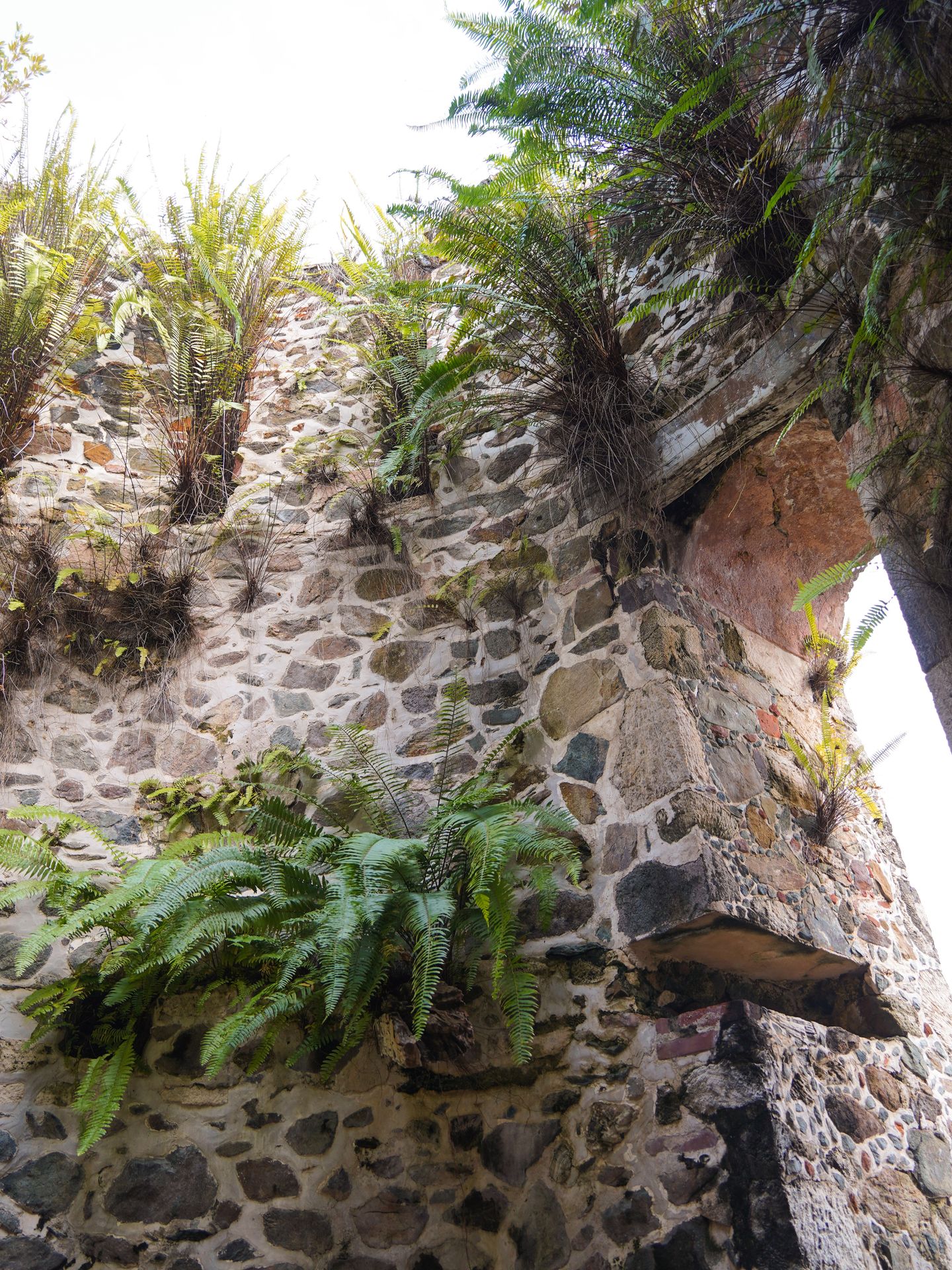
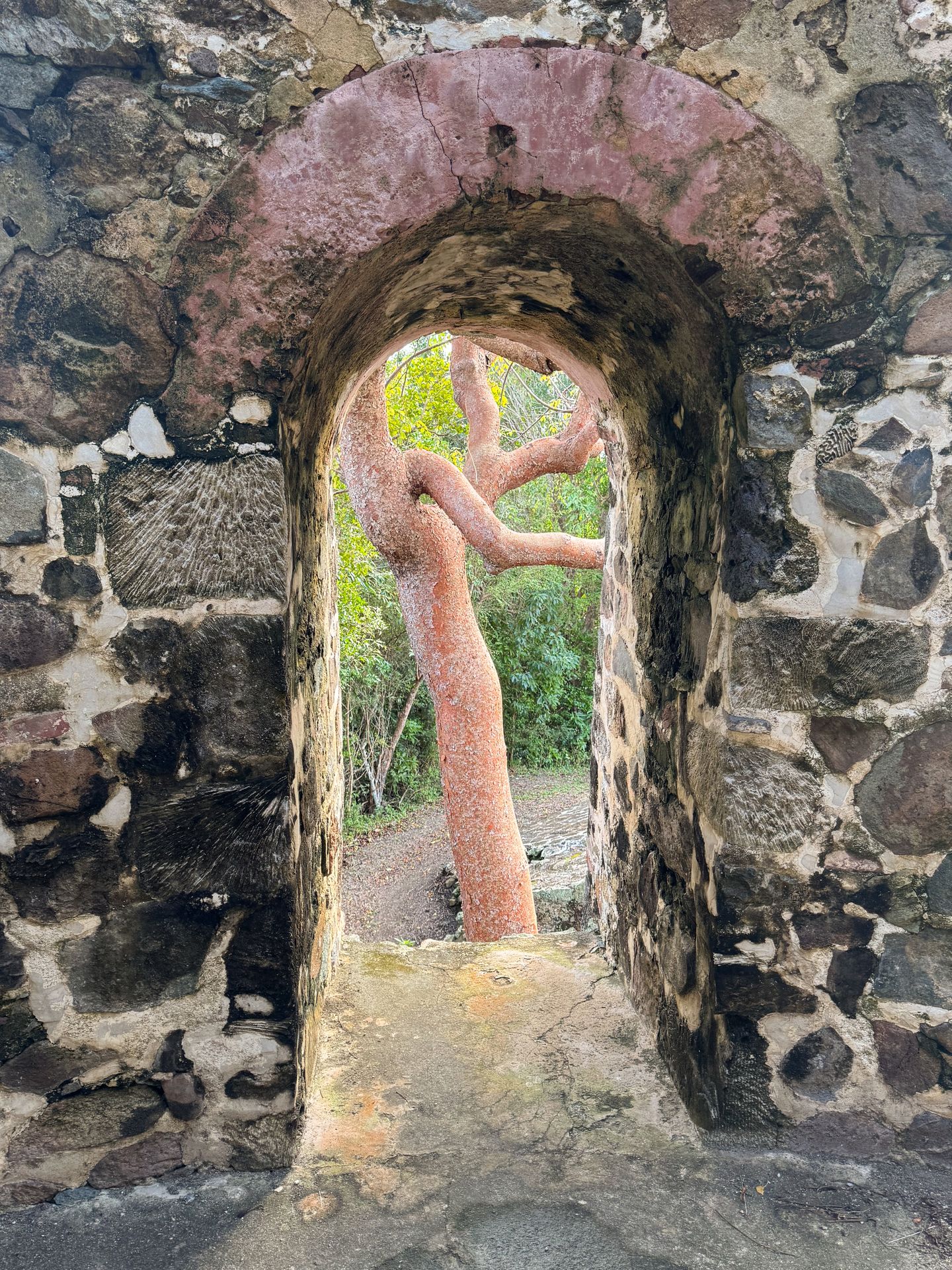
This spot is not far from the Windmill Bar, so it’s worth a stop if you’re headed there. You can access this site from the Centerline Road, but if you decide to take Highway 206 (the fastest way from Cinnamon Bay), you’ll be driving up a very steep, one lane road (that I don’t recommend).
More Beaches and Scenic Views in Virgin Islands National Park
I’ve covered a lot of beaches already, but here are a couple more that I haven’t mentioned yet.
Cinnamon Bay
Cinnamon Bay is another one of the most popular beaches in the national park. It’s the longest beach in the park, and has white sand, great snorkeling, and lots of amenities. They have a campground, a souvenir shop, cabins, showers, a snack bar, and more.
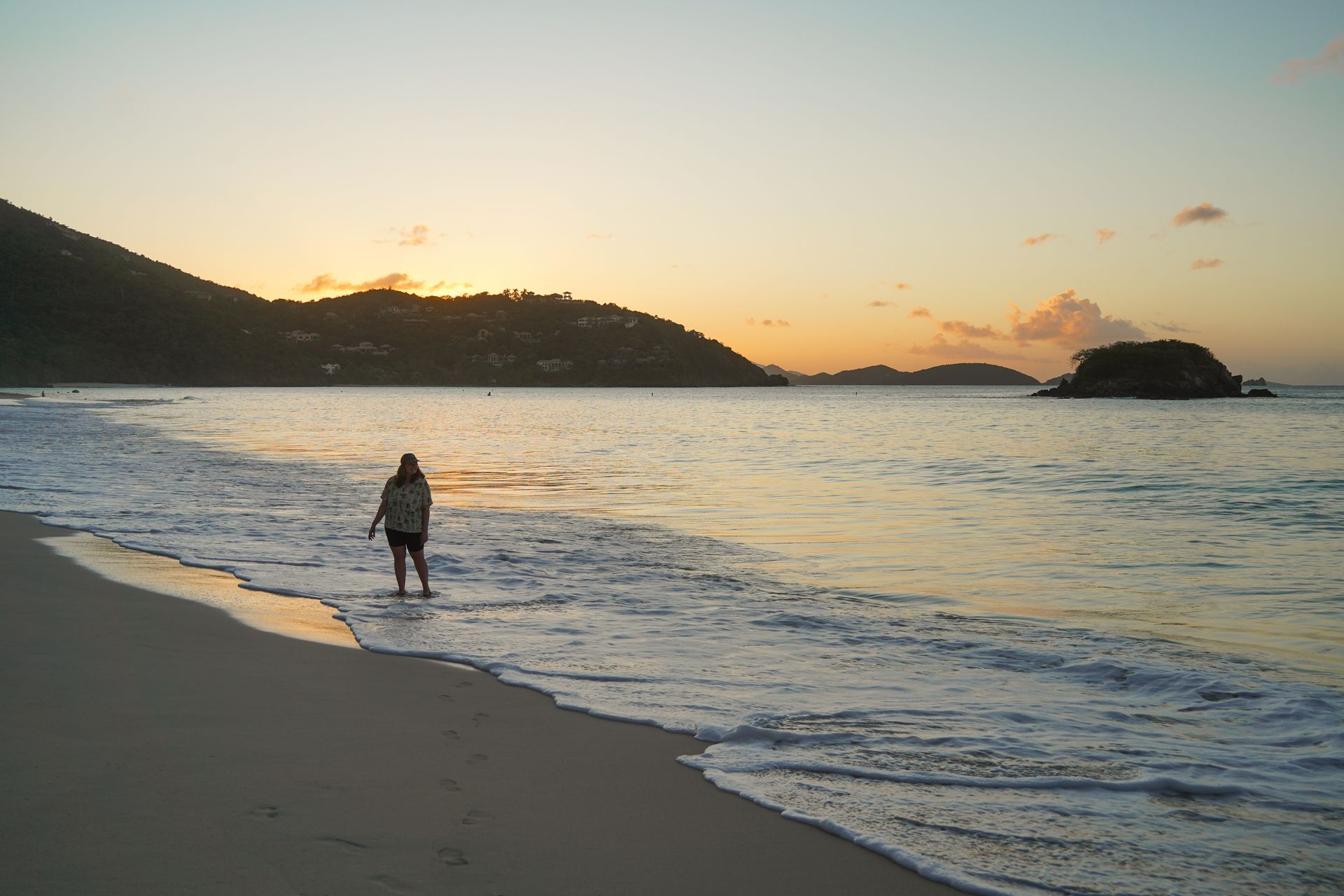
I stayed at the campground, and enjoyed hanging out at the beach at sunset.
Hawksnest Beach
Hawksnest is another popular beach with soft, white sand. It’s a smaller beach and doesn’t offer as good as snorkeling, but can be a nice alternative to Cinnamon Bay or Trunk Bay if you’re looking for a less crowded beach to hang out.
Trunk Bay Overlook
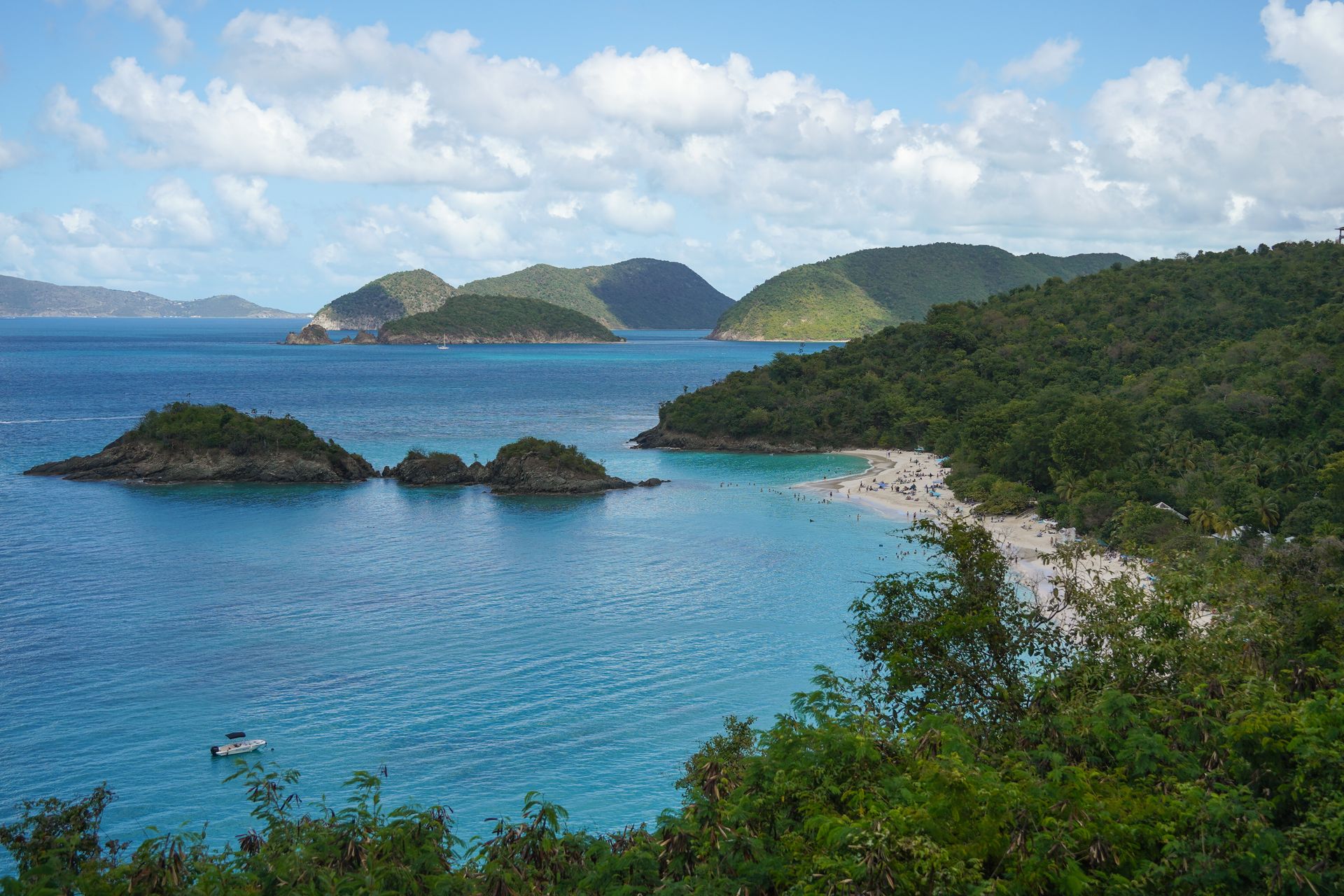
Make sure to stop along North Shore Road about a quarter mile west of Trunk Bay. There is a pull out with space for a few cars. This viewpoint offers an amazing view of Trunk Bay, and it’s one of my favorite views in the park. You can also find other overlooks along the winding road.
Visit the Cruz Bay Visitor Center
As with any national park, make sure to stop by the visitor center! Virgin Islands National Park has a visitor center in Cruz Bay, but it’s only open during the week. It’s open most of day from Monday-Thursday, with more limited hours on Friday.
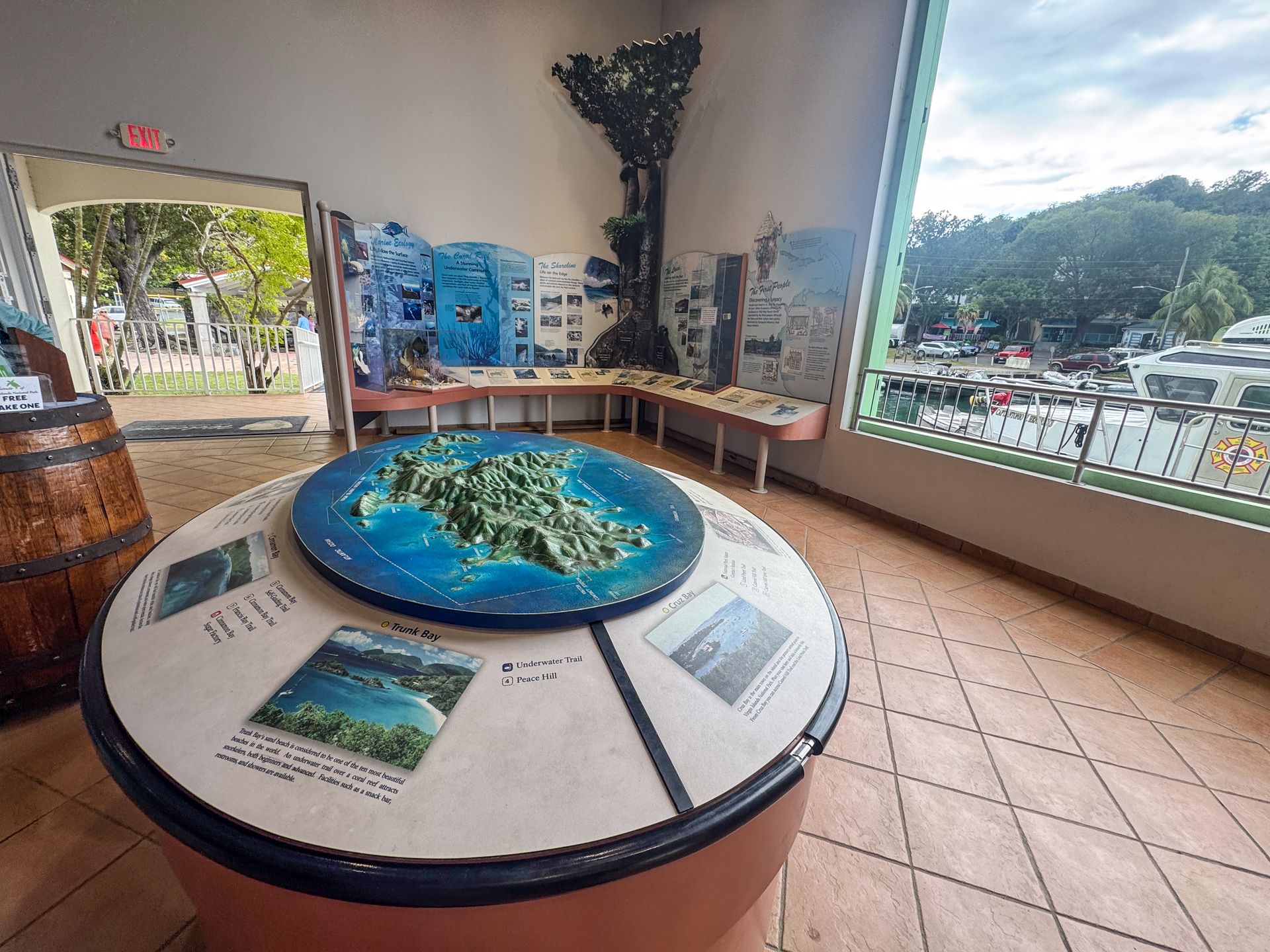
The visitor center has a gift shop and some exhibits to learn about the park. This is also where you’ll want to park to hike the Lind Point Trail to Honeymoon Beach. In order to park here during the hike, you’ll need to obtain a free parking pass from inside.
Where To Stay on St. John
St. John is a relatively small island, so lodging is expensive and limited. I stayed at the Cinnamon Bay Campground, and really enjoyed my stay. I paid $190 per night to stay in one of their eco-tents.
The eco-tents are a bit like glamping. You’ll have a queen sized bed with linens, and the room is equipped with a ceiling fan, power, sides that can be zipped or unzipped, a porch area, and a lock. The stay also comes with a cooking kit that includes a cooking stove and other cooking necessities. You will be sharing a public bathhouse with other campers. The bathhouse had showers with hot water and potable water.
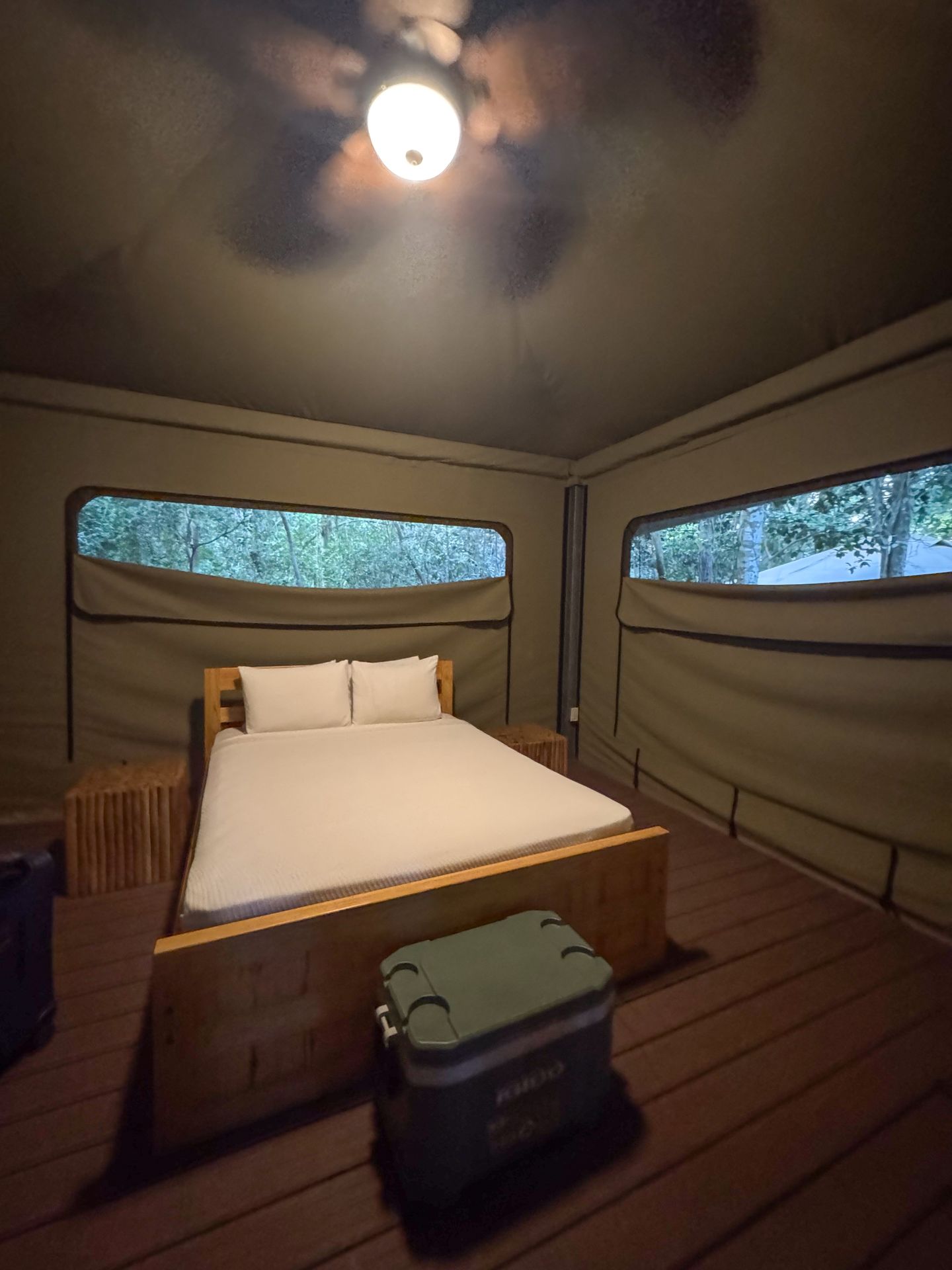
I know that a lot of people are concerned about being hot at night in places like this. The tent was not air conditioned, but personally, I felt that the ceiling fan, plus the ability to unzip the walls of the tent, provided plenty of cooling for February. Temperatures don’t fluctuate that much throughout the year, but the hottest month tends to be August, while the coolest months tend to be January and February.
Pro Tip: Depending on which tent you’re assigned, it can be a long walk between the parking area and your site. They provide carts to help you transport your things if needed.
In addition to the eco-tents, Cinnamon Bay Campground also rents out bare sites, where you can set up your own tent, and cabins.
They also have a restaurant and general store on site. The area near the restaurant is the only place where wifi is available, and I had no cell reception at my campsite.
Cinnamon Bay also offers laundry, a snack shack during the day, and a gift shop. The dinner menu at the RainTree Cafe changes daily, but they seem to always have one vegetarian option.
I really enjoyed my stay here, and recommend it to anyone! Along with being steps away from the beach, we saw giant hermit crabs, deer, donkeys, birds, and more wildlife around the campground.
If you’d prefer a hotel, some of the options in Cruz Bay include The Saint Resort and St. John Inn.
Where To Eat and Drink on St. John
The Windmill Bar
This is probably the most famous restaurant and bar on the island, and for good reason. The Windmill Bar sits high up on a hill, and has an incredible view of the ocean and coast. It’s extremely popular at sunset. I arrived 1.5 hours before sunset and felt lucky to get a decent table.
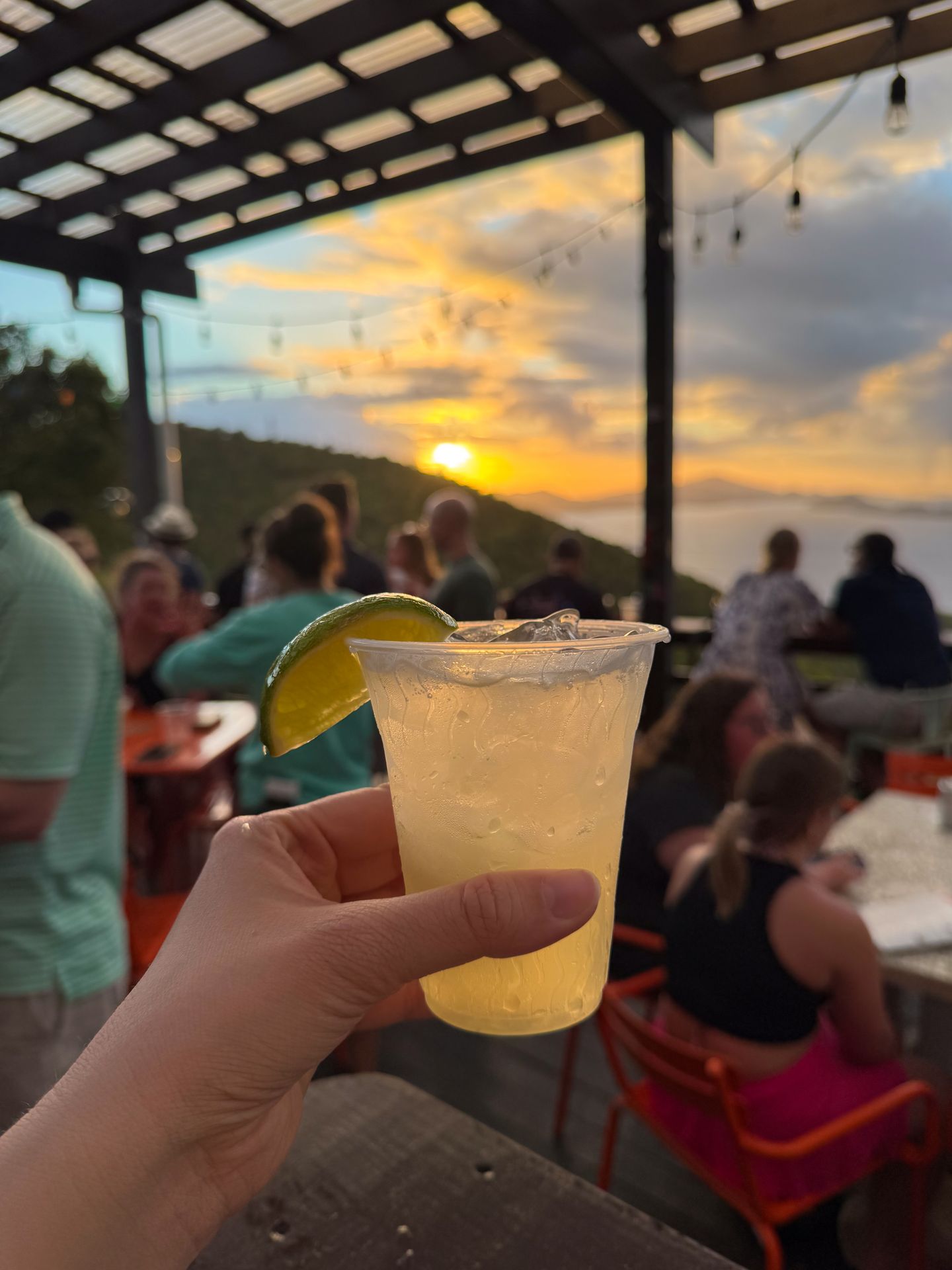
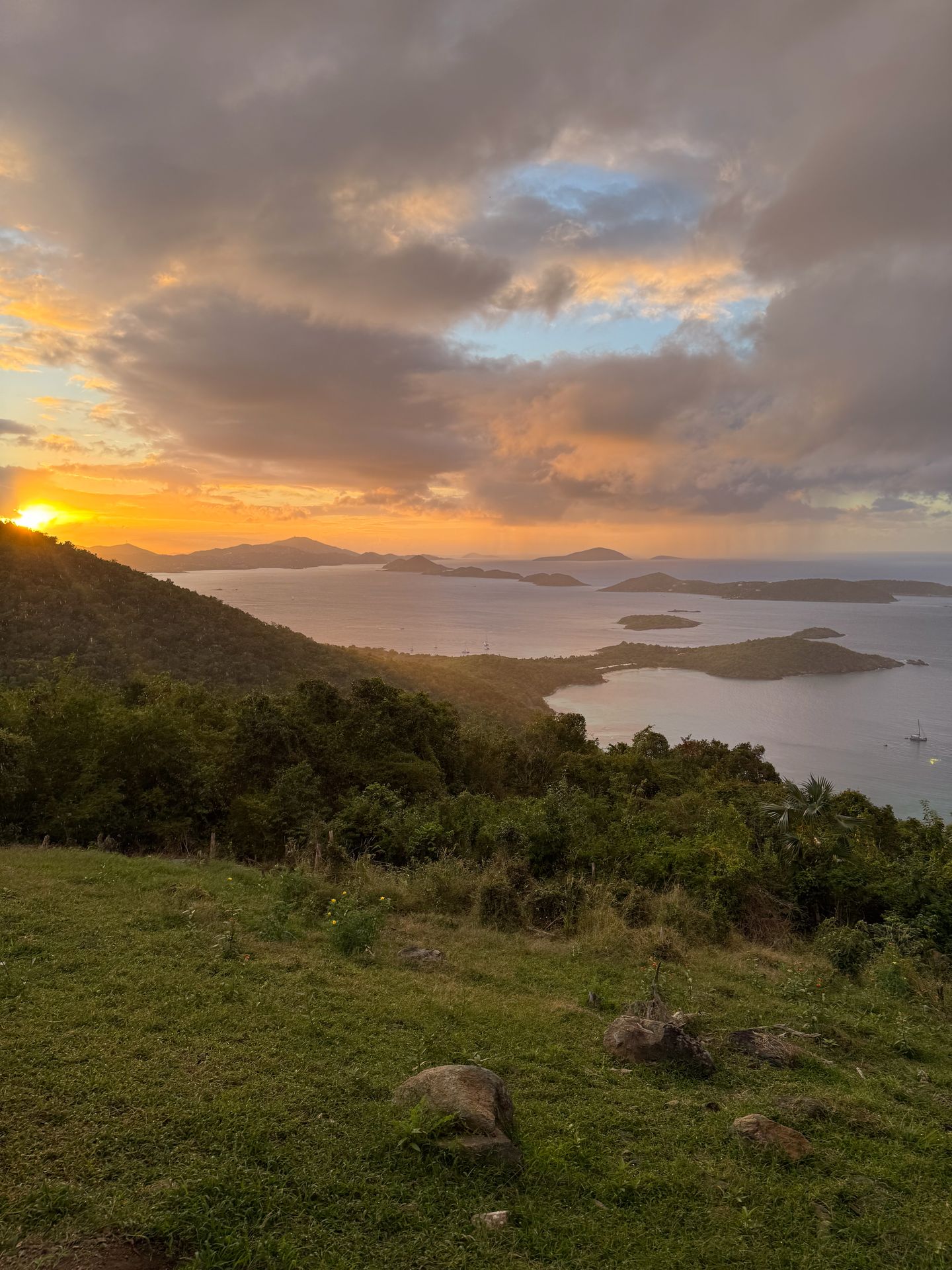
Along with incredible views, they have live music, and plenty of food and drink options. I had a bowl with chickpeas, pineapples, black beans, and more, along with a plantain appetizer. Of course, they also have an extensive drink menu, and I enjoyed their margarita.
If you’re willing to deal with the sunset crowds, this is a great spot to hang out after a day of hiking and swimming.
Roti King
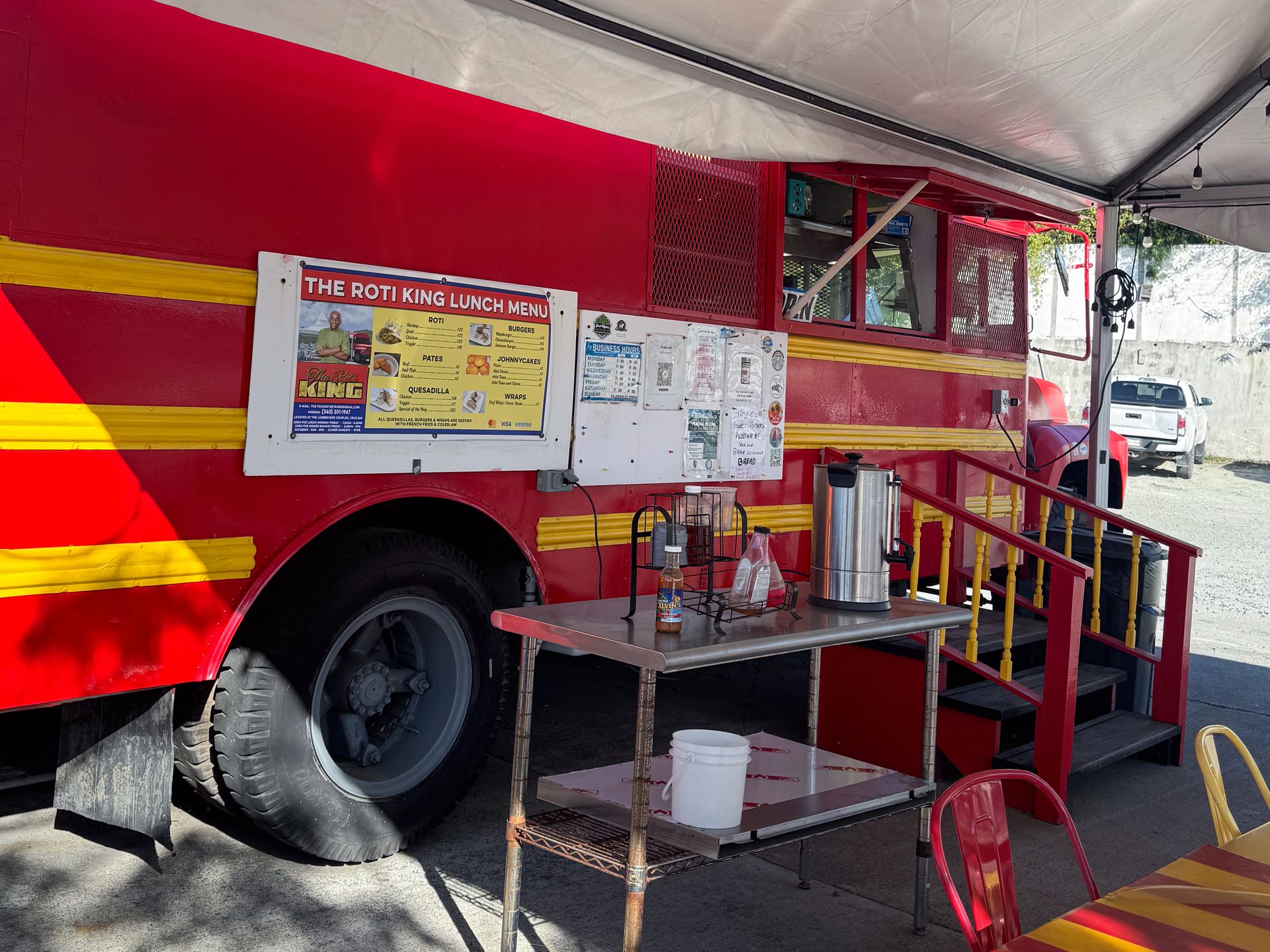
Roti King is an awesome food truck that overlooks the bay in Cruz Bay. I enjoyed their veggie roti. Roti is a flatbread, and these are served as wraps. The veggie wrap was filled with curry, vegetables, and potatoes. They also have burgers, quesadillas, and more. Keep in mind that parking can be expensive, and hard to find, in downtown Cruz Bay.
St John Brewpub
The St John Brewers taproom in Cruz Bay is a great place for pizza and beer. They have a variety of beers, and are especially known for their tropical mango pale ale. They also serve cocktails, house made sodas, wine, and more. When it comes to the food, they have a variety of American food, such as burgers and pizza. I really enjoyed the spinach artichoke pizza, which had the unique addition of banana peppers.
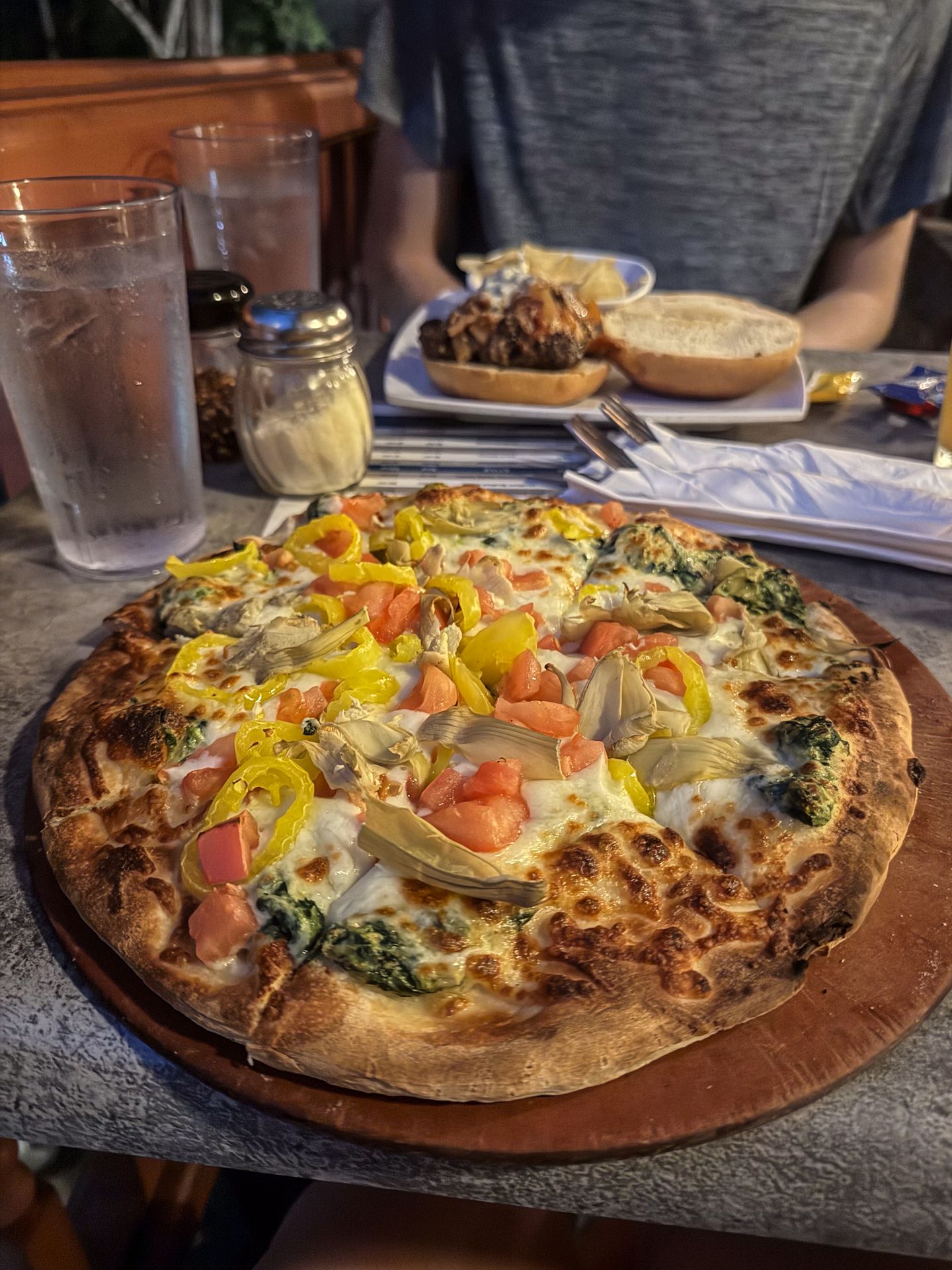
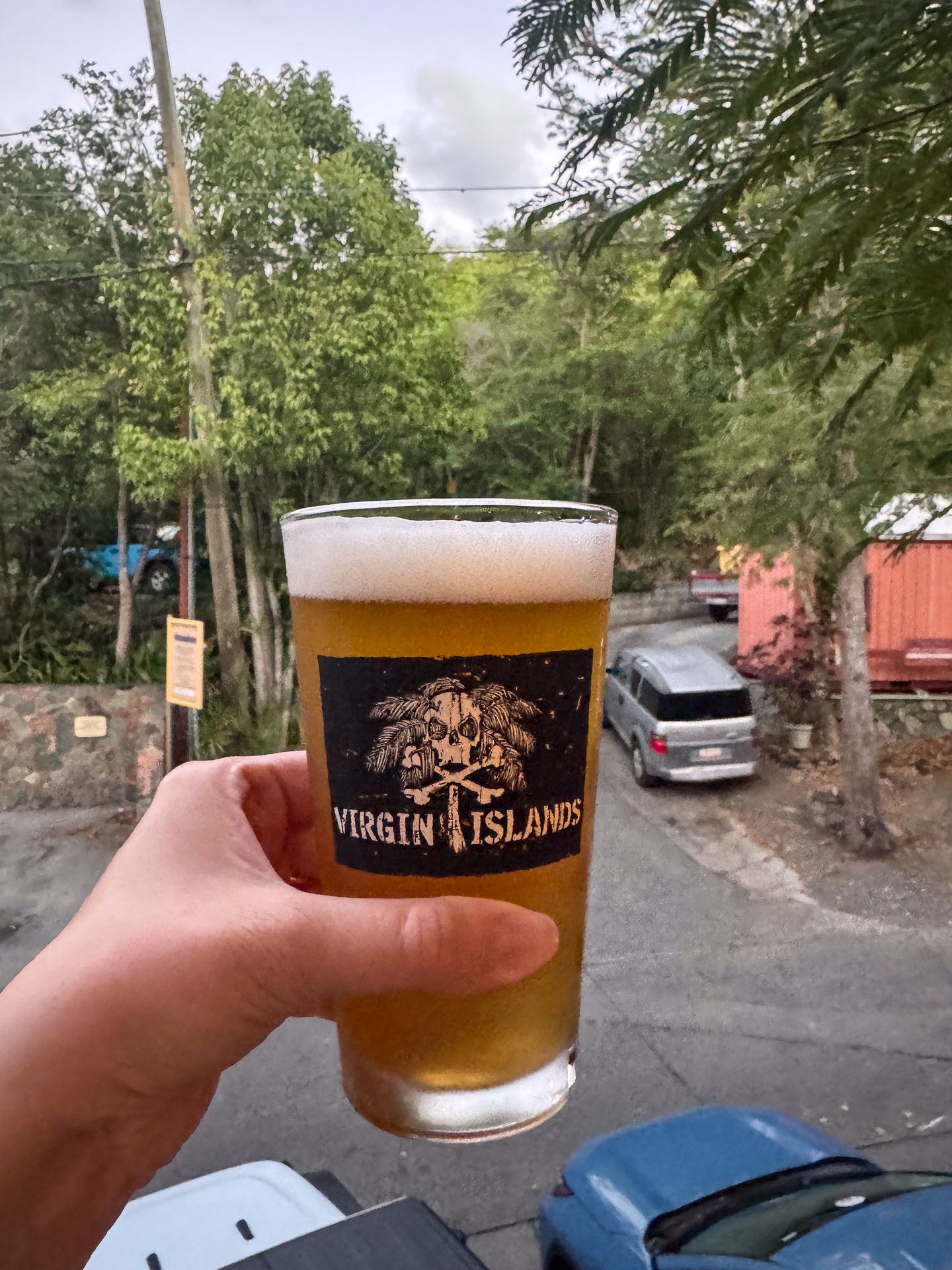
If you’re not too full, grab some ice cream at St. John Scoops (underneath the brewery) after your meal.
RainTree Café
Rain Tree Cafe is the restaurant onsite at the Cinnamon Bay Campground. They rotate the menu with a new theme each night of the week. Examples include prime rib night, BBQ night, south of the border night, and Caribbean night. They also have a vegetarian option on each menu.

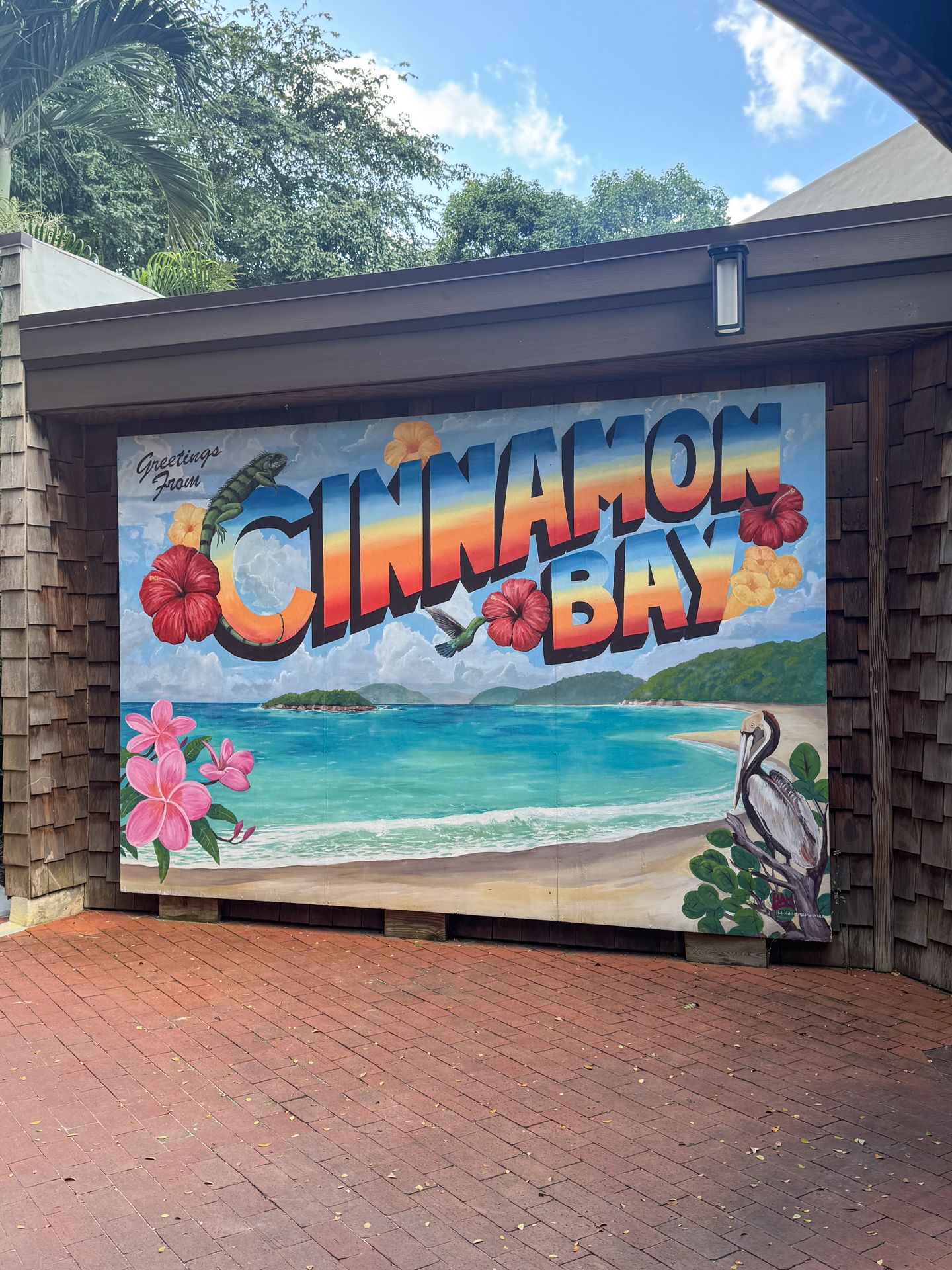
Along with the rotating main dishes, they have sides, desserts, and drinks. You’ll find key lime pie, salads, margaritas, and more.
I’m a vegetarian, and they ran out of the vegetarian dish before I had a chance to order when I ate here, so I could only eat a house salad. This place gets crowded, so go early if you have dietary restrictions.
Lime Out
I didn’t make it here, but it’s such a unique concept, and I’d love to do this next time. Lime Out is a floating restaurant that you’ll need to reach by boat. You can book one of their shuttles to reach the floating restaurant, and you’ll sit on an inflatable raft while you eat. They have several taco options, along with cocktails, beer, and more.
They have locations both on St. John and St. Thomas. Keep in mind that this is quite pricey. The cheapest shuttle is $30 per person, and the tacos range from $10 - $16 per taco.
The same owners also have a highly rated restaurant called Lime Inn in Cruz Bay.
When To Visit Virgin Islands National Park
The best time to visit the US Virgin Islands is between December and June. July to November is the hurricane season and the rainy season, and a lot of restaurants and tour operators close between mid-August and October. September and October are the highest risk times for hurricanes, but this time can mean less crowds and lower prices. If you’re planning to visit during hurricane season, I highly recommend having travel insurance in place.
Personally, I visited at the end of February and thought it was a good time overall. It was hot and humid during the day, but not too bad at night. It did rain a bit, but it was short lived. It was pretty crowded, but I’m not sure how it compares to other times. I’ve read that March - May is the best sweet spot for the nicest weather with fewer crowds.
How Long Do You Need to See Virgin Islands National Park?
How long to spend in Virgin Islands National Park really depends on your travel style. I spent 3 days, and while I got to see most of what I wanted, I wished I had been able to spend another day or two. If you’re the type of person who wants to have some relaxing beach days along with other activities, then I think you could easily spend a week on St. John. You can also extend your trip by visiting St. Thomas, St. Croix, and/or the British Virgin Islands.
If you only have one day to visit Virgin Islands National Park, the places I recommend the most are Trunk Bay, Annaberg Plantation Ruins, and Ram Head.
Final Thoughts
I hope this guide helps you plan your trip to Virgin Islands National Park! It’s such a unique national park, and has a wonderful mix of white sand beaches, snorkeling opportunities, history, and hiking. It’s a special place that is worthy of your USA bucket list.
For more island-based US National Park Guides, check out these blogs:
- A Guide to Visiting National Park of American Samoa
- A Guide to Hawaii Volcanoes National Park
- The Best Things To Do in Haleakala National Park
- The Perfect Channel Islands Itinerary
- A Guide to Visiting Isle Royale National Park
- How to Take a Day Trip to Dry Tortugas
- The Perfect Day Trip to Cumberland Island National Seashore
Thanks for Reading!


Let's stay in touch!
Join the Lost with Lydia email list to get monthly travel guides and tips!